Sakana AI Launches Sakana Translate, a Namazu-Powered Japanese–English–Chinese Translation Tool With Transl…
What it does
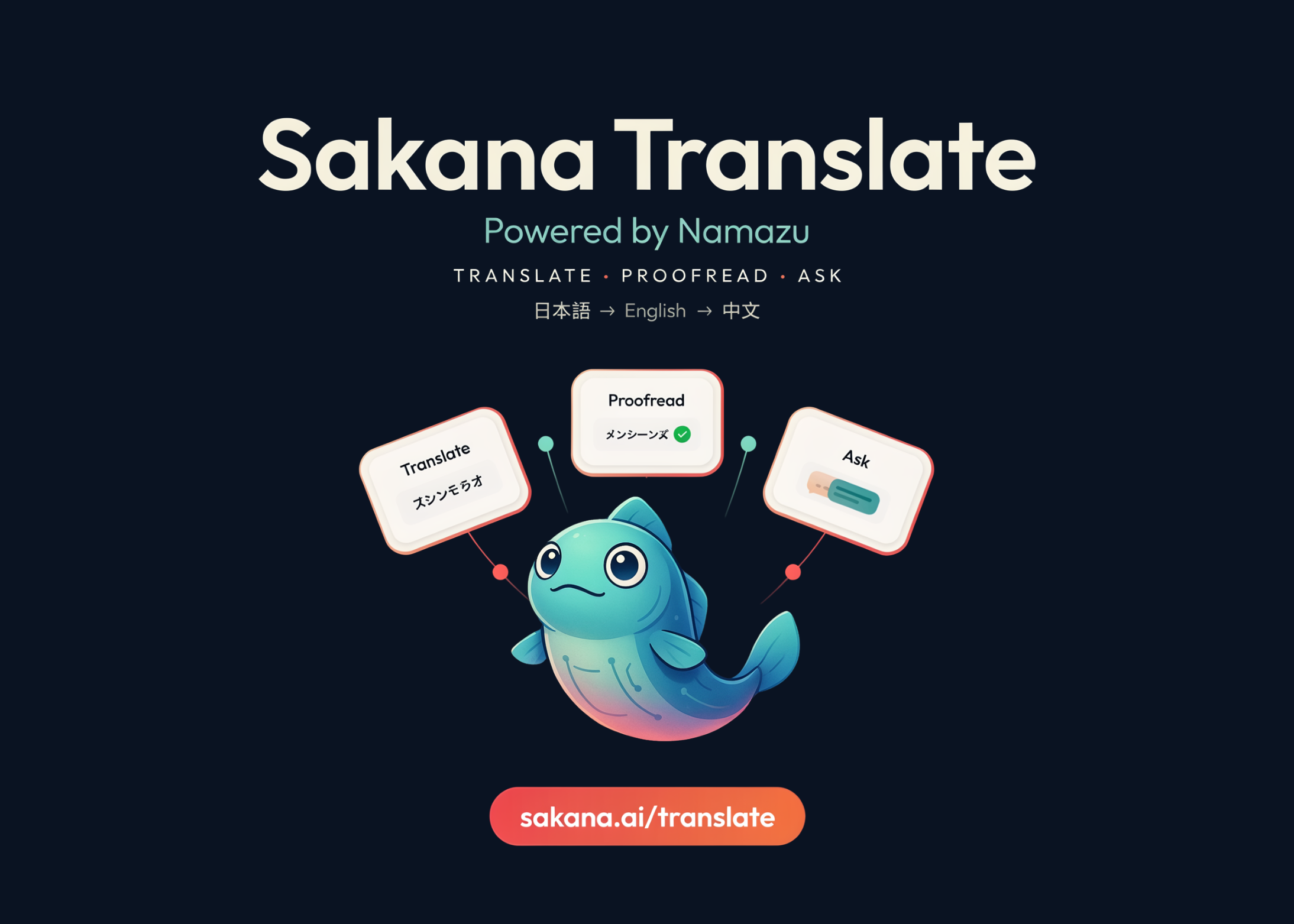
Sakana AI has launched Sakana Translate, a multilingual translation tool integrated into Sakana Chat. It operates on the Namazu model series and offers bidirectional translation between Japanese, English, and Chinese. The tool features three distinct modes: Translate, which converts text across the three languages; Proofread, which checks and refines translations or user input; and Ask, which allows users to query language-related questions or clarifications. This bundled approach aims to cover typical language workflow needs beyond simple translation.
Why it matters
Sakana Translate tightens the gap between translation and contextual understanding for practitioners working in Japanese, English, and Chinese environments. For businesses or content creators dealing with these languages, it introduces an integrated, AI-powered tool that not only translates but also proofreads and provides language insights in one package. This reduces reliance on multiple tools and streamlines workflows, especially for international teams or client-facing roles requiring language accuracy and quick clarification. The use of the Namazu series suggests strong technical foundations tailored for these languages, not a generic multilingual model.
Who it is for
The tool targets operators, content creators, translators, and customer support teams needing fast, reliable Japanese-English-Chinese language support. It could also appeal to developers or founders integrating language services into apps or products who want a higher quality, proven model on top of standard translation APIs. The built-in Proofread and Ask modes add value for anyone who must ensure linguistic correctness or address language questions without switching platforms.
The catch
Details on latency, pricing, or API access remain unclear, which could affect adoption for real-time or high-volume use. The tool’s effectiveness outside the three core languages or for dialectical variations is unknown. Also, while bundles of Translate, Proofread, and Ask modes reduce tool switching, the actual integration depth and user experience need validation in practical deployments. Performance claims based on the XCOMET-XL benchmark offer a good starting point but could differ in everyday business settings.
What to watch next
Tracking user uptake and feedback will reveal if Sakana Translate delivers tangible time and error reductions in multilingual workflows. Expansions beyond the current languages or API offers could broaden adoption significantly. Watching how Sakana AI positions Namazu compared to dominant translation models might signal shifts in regional AI language tooling power or partnerships. Operators should also monitor updates on pricing and integration options to assess real-world operational value.
AI Quick Briefs Editorial Desk