LlamaIndex ‘legal-kb’: Agentic Retrieval over Index v2 with retrieve, find, read, and grep Tools
What it does
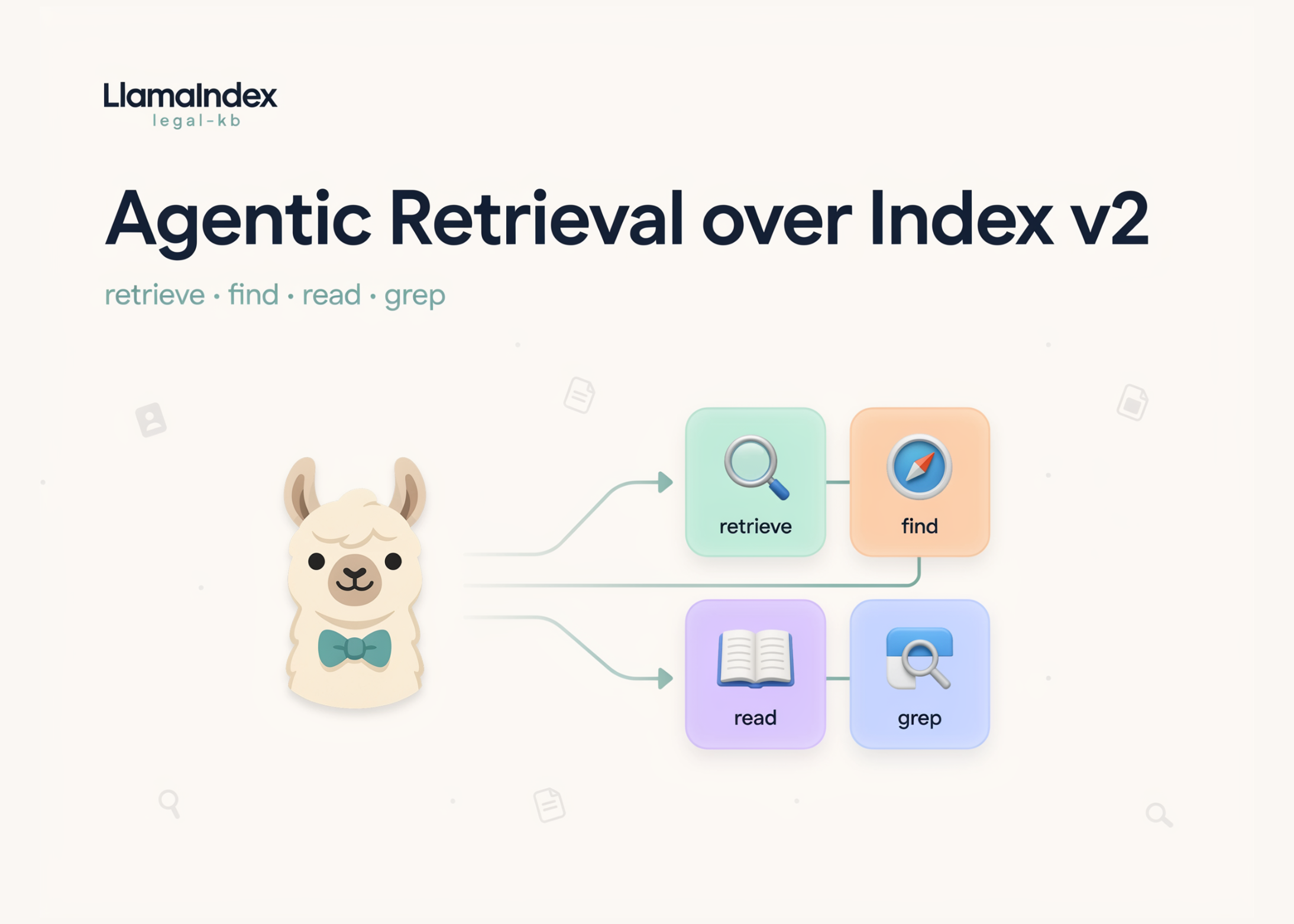
LlamaIndex’s legal-kb is a public reference app designed to give AI agents filesystem-style access to document knowledge bases built on Index v2. It provides agent tools named retrieve, find, read, and grep, allowing complex document interactions beyond simple search. Retrieve mixes hybrid semantic search to pull relevant files, find pinpoints data within those files, read extracts exact text, and grep scans for pattern matching. The system includes automatic versioning per file and visual citations to track sources.
Why it matters
Legal-kb moves AI retrieval from one-dimensional search toward agentic, multi-tool workflows. This matters for builders who want to build agents that act more like research assistants able to comb legal or business document sets systematically. Versioning and citations add needed transparency and traceability, critical for compliance-heavy fields. The file-centric design gives a more natural user experience compared to treating text as undifferentiated data blobs. Altogether, it tightens quality and control over AI-driven knowledge work.
Who it is for
This system targets developers and teams building knowledge management solutions in regulated or data-sensitive industries like legal, finance, compliance, and enterprise documentation. Operators wanting to deploy agents that can query, verify, and cite evidence in complex repositories will find the hybrid search plus multiple retrieval tools useful. It fits use cases where precision, traceability, and multi-step data exploration are key.
The catch
Legal-kb builds on several components—TanStack Start, AI SDK 6 (ToolLoopAgent), Prisma, and WorkOS—that may require familiarity or integration effort. It’s optimized around Index v2, so teams must align their data ingestion and encoding strategies. The system is public but specialized, so it demands operational know-how on agent tooling and legal knowledge workflows. It also raises expectations for auditability in AI-driven document research, which some teams may find challenging to implement fully.
What to watch next
Look for broader adoption of agentic retrieval featuring integrated tools like grep and read in sector-specific AI apps. Legal-kb’s versioning and citation approach could pressure competitors to improve transparency in AI-driven knowledge bases. Development around toolkits like AI SDK 6 will shape how builders compose and control agents over knowledge graphs or document indices. Monitoring how integrations like WorkOS support enterprise security and compliance in these stacks will be critical as real-world use expands.
AI Quick Briefs Editorial Desk