OpenAI’s first hardware is a macro pad for Codex coders
What changed
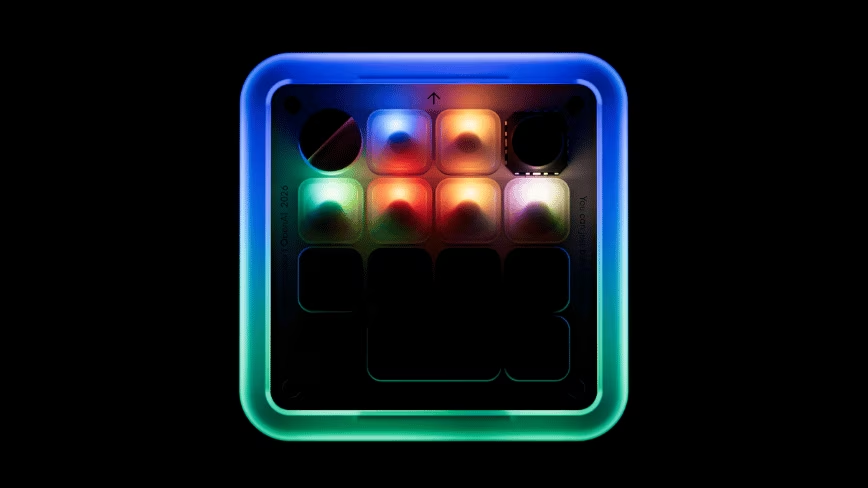
OpenAI launched its first hardware: a compact macro pad designed for programmers who spend time coding with Codex, its AI coding assistant. The device features a small grid of buttons that can be programmed to execute commands or automate repetitive tasks via Codex prompts.
Why builders should care
This hardware targets developers relying heavily on AI code generation and assistance. By providing dedicated keys mapped to AI commands, it speeds up workflows, cuts down on switching between keyboard and mouse, and reduces friction when working with AI coding tools. For builders integrating AI into their coding routines, this device may streamline interactions and save precious time.
The practical takeaway
Instead of waiting for an advanced AI gadget or robot from OpenAI, developers get a simple, focused tool that enhances their daily work with AI code generation. It makes the AI assistant feel more tactile and responsive. Builders who automate coding tasks or invoke repetitive prompts will find this macro pad a practical productivity boost rather than a novelty.
What to watch next
Check if OpenAI expands this into a broader hardware lineup or integrates it tightly with their software tools. Watch for user feedback on whether the device meaningfully reduces coding time or just adds another input method. Also, see if competitors follow with similar physical tools to support AI-assisted development workflows.
AI Quick Briefs Editorial Desk