Model Context Protocol Explained in 3 Levels of Difficulty
Quick take
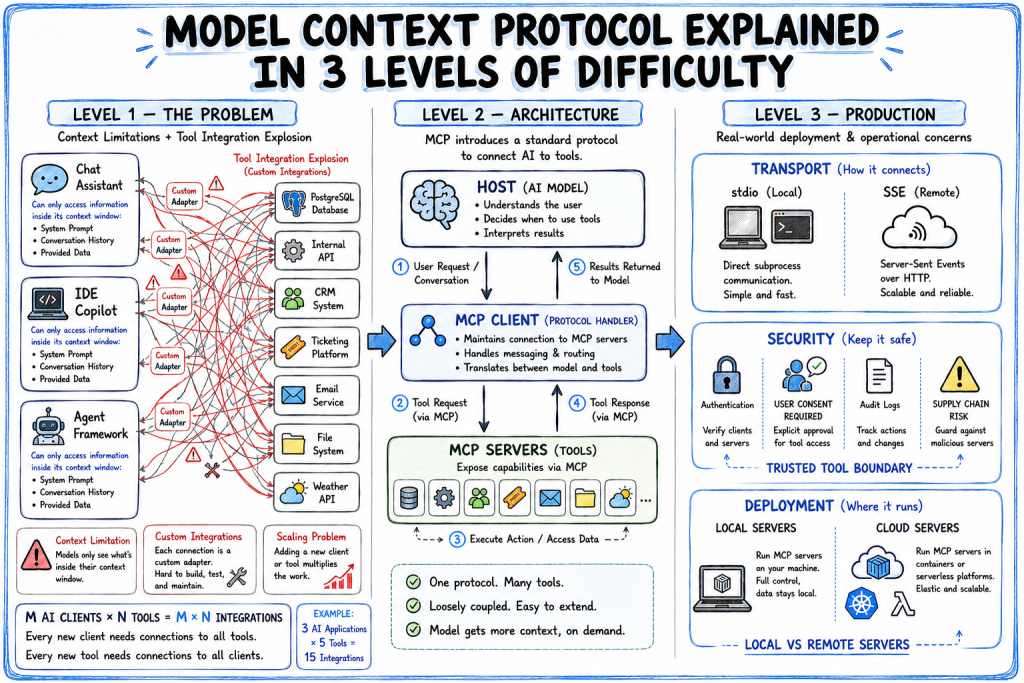
Model Context Protocol (MCP) sets a clear standard for how AI models and external systems communicate. It defines three levels of complexity for exchanging model context, allowing different AI applications and tools to understand each other’s inputs and outputs in a consistent way.
MCP breaks down from a beginner level that covers basic metadata sharing, to intermediate, which includes richer context like usage constraints and provenance. The advanced level encompasses detailed task, domain, and performance info. This layered approach helps different systems—from simple integrations to complex AI workflows—work together without ambiguity.
Why it matters
The lack of a common language for AI context has slowed integration between models and external applications. Without standard protocols, every new connection risks misinterpretation, wasted effort rebuilding context handling, or locking systems into proprietary formats.
MCP forces discipline and clarity on how AI context is represented and shared. This reduces friction and errors when combining AI services, especially as workflows involve multiple models or external data layers. Builders can save time, reduce bugs, and increase trust in complex AI pipelines.
For operators and founders, MCP means better interoperability. It pressures vendors toward open standards or risk isolation. It also strengthens governance by making model context transparent and easier to audit, which helps with compliance and risk management.
The protocol’s tiered approach also lowers the barrier for adoption. Teams can start with basic context handling and evolve as complexity grows, without rebuilding from scratch. This could accelerate adoption of AI in regulated or safety-critical environments that need strong context controls.
AI Quick Briefs Editorial Desk