DeepSeek Releases DSpark, a Speculative Decoding Framework That Accelerates DeepSeek-V4 Per-User Generation…
What changed
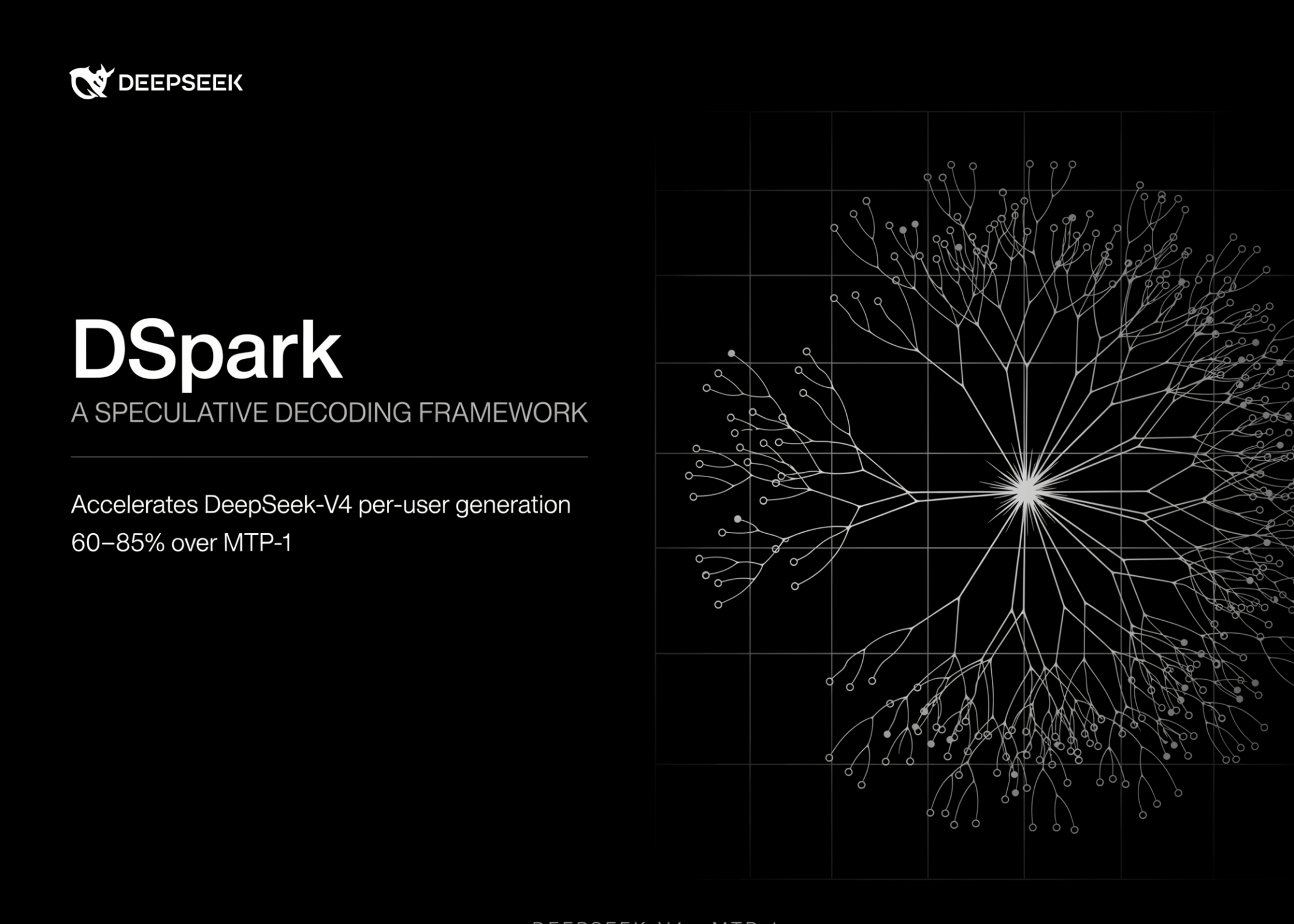
DeepSeek open-sourced DSpark, a speculative decoding framework designed to speed up generation on DeepSeek-V4 models. DSpark adds a draft module alongside existing DeepSeek-V4 weights, combining a parallel draft backbone with a lightweight Markov chain head. This approach cuts suffix decay — the common problem where model quality declines toward output ends. It then applies confidence-scheduled verification that adjusts the number of checked tokens based on real-time GPU load, balancing speed with accuracy.
Why builders should care
DSpark tackles an operator pain point: generating long, high-quality outputs efficiently on large models. By boosting accepted output length offline by 16 to 31 percent versus previous methods like DFlash and Eagle3, it reduces the frequency of costly regeneration or quality drops. In production, DSpark accelerates per-user generation times by 57 to 85 percent compared to the MTP-1 baseline while maintaining output quality without loss. This means faster response times and better throughput on existing hardware without sacrificing reliability.
The practical takeaway
Operators running DeepSeek-V4 models can integrate DSpark to materially improve latency and throughput, making it easier to serve more requests per GPU and reduce infrastructure costs. The confidence-scheduled verification feature is especially practical because it adapts token checking load dynamically, avoiding wasted compute during periods of high demand. The open-source DeepSpec training repository also allows teams to customize and extend the framework for specific use cases or models, reducing vendor lock-in.
What to watch next
Watch how DSpark adoption spreads beyond DeepSeek-V4 and whether other model providers or open-source projects introduce similar speculative decoding approaches. Keep an eye on reported gains in real-world deployments, particularly on GPU efficiency and cost savings. Also track future updates to DeepSpec tools that might broaden DSpark’s applicability or improve ease of integration. If the framework gains traction, it could set a new baseline for low-latency, high-fidelity generation workflows in production.
AI Quick Briefs Editorial Desk


