Meta’s Astryx Brings a CLI and MCP Server to an Open-Source React Design System Agents Can Read
What changed
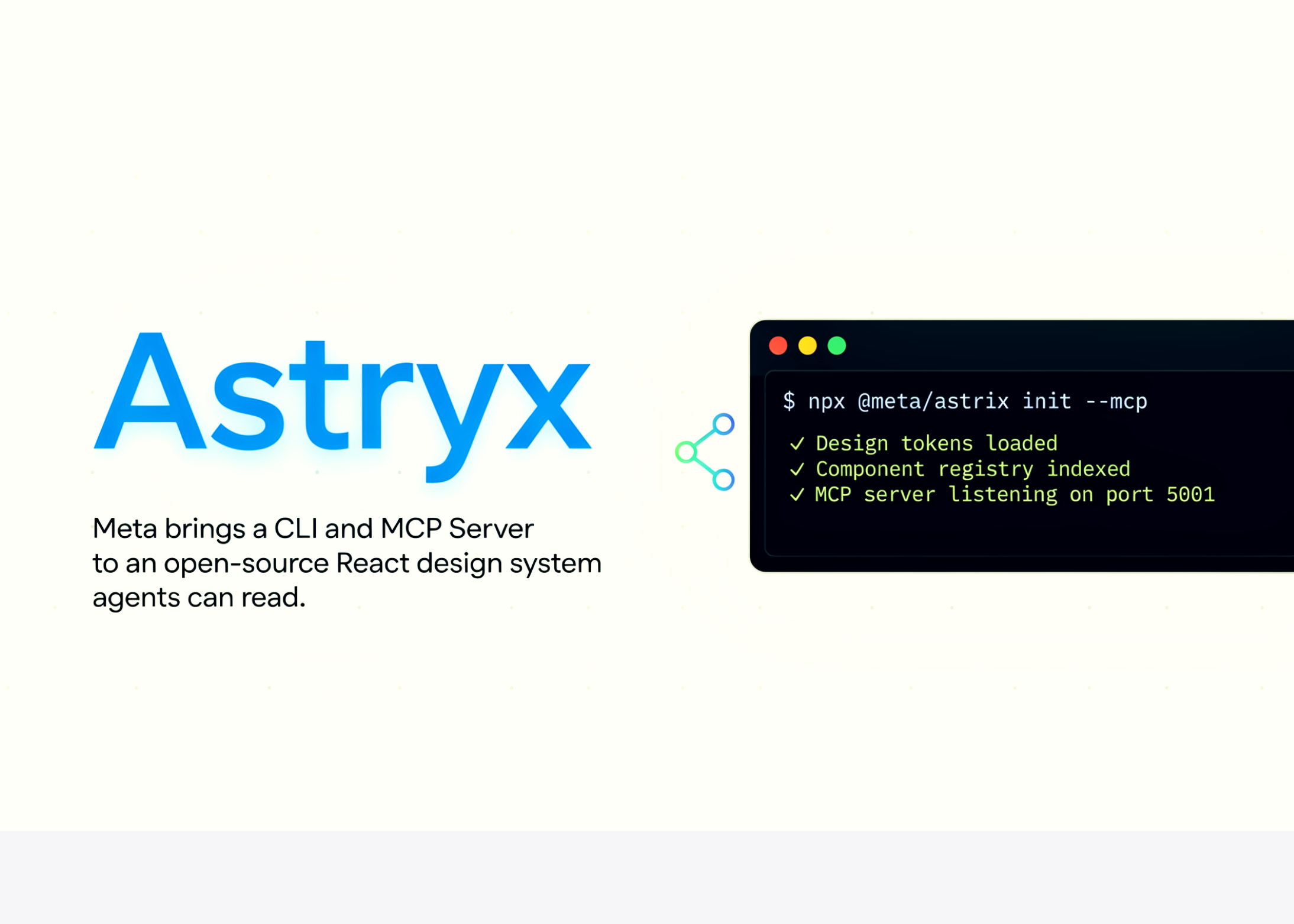
Meta launched Astryx, an open-source React design system built on its internal styling framework StyleX. Unlike typical UI kits, Astryx combines a CSS-variable theme cascade with a command-line interface (CLI) and a multipurpose control plane (MCP) server. This setup allows both engineers and AI agents to build and maintain interfaces using the same API layer. It grew out of eight years of development inside Meta and is now available under an MIT license in Beta.
Why builders should care
Astryx addresses a growing friction point in design and development workflows: the disconnect between how humans and AI agents consume design systems. By exposing the design system through a CLI and MCP server, Astryx lets AI tools directly read, understand, and apply component APIs and theme styles. This alignment can smooth out collaboration between engineers and automation agents, reducing redundant work and integration errors.
The system’s reliance on CSS variables means themes can cascade dynamically, giving real-time customization without rewriting components. For teams experimenting with AI-assisted coding or building autonomous agents that generate UI code, Astryx offers a structured, open platform that supports those use cases natively.
The practical takeaway
Astryx is not just another React component library. It’s a developer-centric infrastructure that bridges the gap between human and AI workflows in UI development. Builders depending on AI for interface generation or automated UI updates can leverage Astryx’s consistent, API-driven approach, ensuring that both manual code and machine-generated code stay in sync with design standards.
Its MIT licensing removes a barrier to adoption for startups and enterprises wanting to integrate AI-enhanced UI automation while maintaining control over design tokens and theming. Early adopters will gain insight into how design systems evolve when accessible by AI, potentially speeding up prototyping and iterative UI refinement.
What to watch next
Look for community uptake and contributions as Astryx develops beyond Beta. The real test will be how well the MCP server and CLI tools integrate with popular AI coding assistants and pipeline automation tools. Observing which AI platforms adopt or extend Astryx support will reveal its staying power.
Also, watch for tooling that leverages Astryx’s API to generate or refactor code in real time, showing whether AI agents can effectively replace tedious aspects of UI development. Finally, track how competitors respond because aligning humans and AI in design systems could become a baseline expectation.
AI Quick Briefs Editorial Desk
