Building Browser-Using AI Agents in Python
What changed
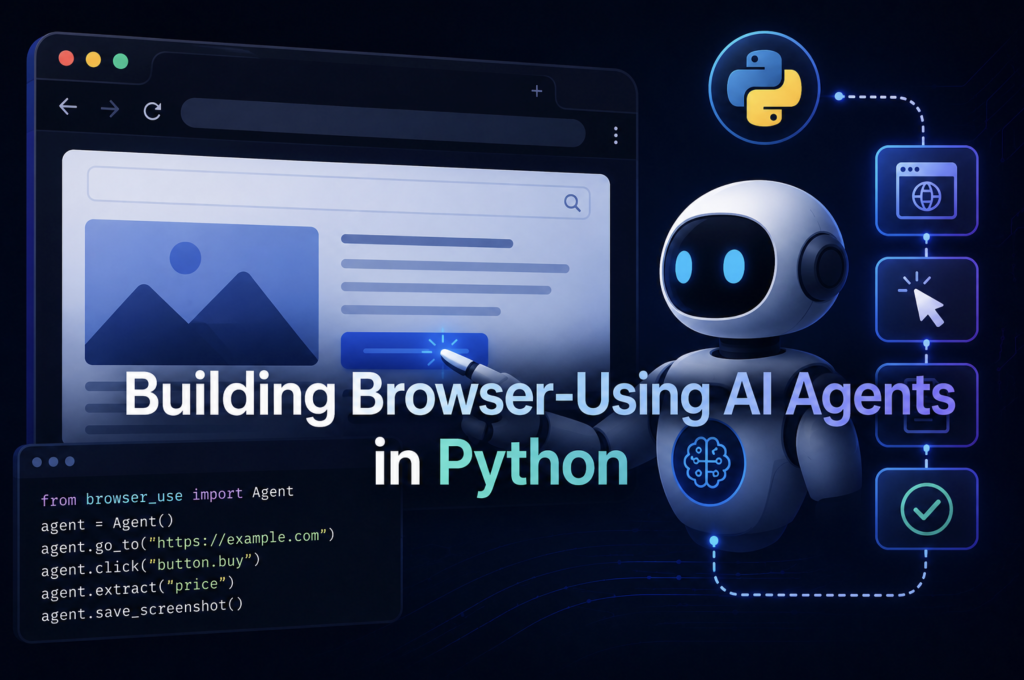
Most AI agent tutorials rely on APIs to interact with data and applications. This approach limits AI agents to predefined endpoints and structured data. The recent guide on building browser-using AI agents in Python flips that model by showing how to build agents that operate an actual web browser autonomously. This technique opens access to the full web environment, including dynamic content, client-side scripts, and the unstructured information that APIs often miss. Using Python libraries like Playwright or Selenium, developers can script AI agents to navigate pages, click buttons, fill forms, and extract data directly from web pages.
Why builders should care
Allowing AI agents to use a real browser raises the bar on automation capability. It breaks through API barriers and can integrate with any web application regardless of the provider’s API rules or availability. For technical operators and founders, this means AI agents can tackle higher-value, real-world tasks such as complex form submissions, multi-step workflows, and live data scraping. It also pressures providers who rely on APIs to improve or risk losing control over how their services are accessed. This approach can reduce integration costs and speed up agent development by exploiting existing web interfaces without needing explicit API support.
The practical takeaway
Building browser-using AI agents in Python requires more setup than simple API calls but delivers much richer interaction capabilities. This method is well suited for operators who need AI agents to handle complex web tasks that go beyond data queries—such as e-commerce automation, customer support bots interacting on websites, or competitive intelligence collection. It also allows AI builders to experiment with new workflows that blend human-like browsing patterns with AI reasoning, potentially automating entire job functions traditionally considered manual. However, it comes with trade-offs on reliability, scaling, and compliance depending on the websites targeted.
What to watch next
Watch for open-source tools and frameworks that package these browser interacting techniques into more accessible AI agent modules. Expect provider pushback or legal shifts to address how autonomous browser agents interact with protected websites. Also follow advances in integrating browser-using AI agents with large language models to create agents capable of reasoning through complex multi-step web-based tasks. Investors and operators will want to evaluate how this approach alters automation economics across industries reliant on web interfaces.
AI Quick Briefs Editorial Desk


