Crawlee for Python: Build a Web Crawling Pipeline with Robots Handling, Link Graphs, and RAG Chunk Export
What changed
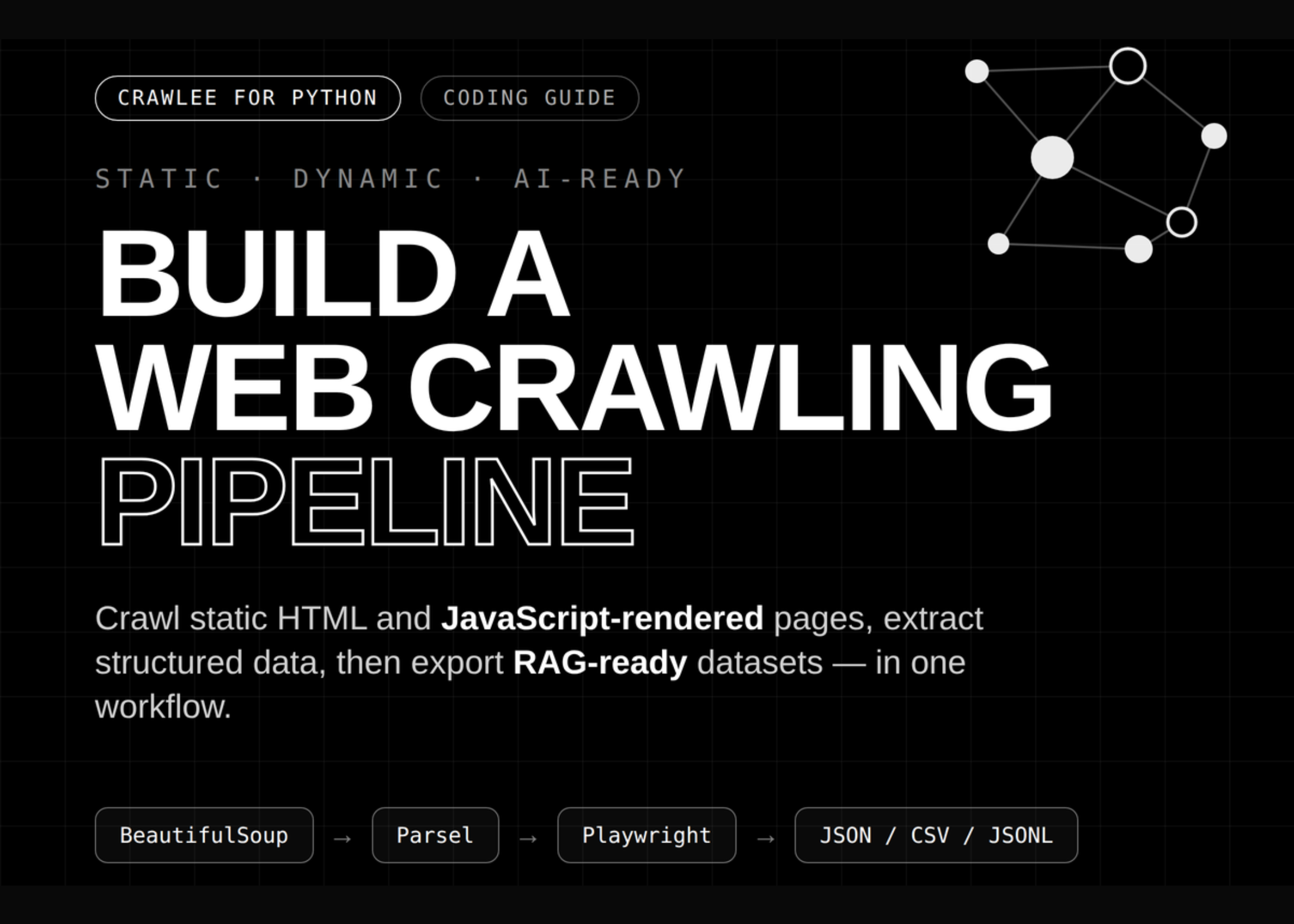
The Crawlee toolkit for Python now enables a full web crawling pipeline that handles robots.txt rules, generates link graphs, and exports data in multiple AI-ready formats. The tutorial demonstrates setting up a local test site and crawling it with three Crawlee crawler types: BeautifulSoupCrawler for static HTML, ParselCrawler for CSS selectors, and PlaywrightCrawler for JavaScript-rendered content. The workflow extracts structured data fields, metadata, page titles, and full-page screenshots. After scraping, it normalizes the data and builds a comprehensive link graph to represent site structure. Finally, the pipeline exports results as JSON, CSV, and chunked JSONL files formatted for retrieval-augmented generation (RAG) applications.
Why builders should care
Handling robots.txt rules automatically reduces legal and ethical crawling risks. Combining multiple crawler types in one workflow lets developers scrape diverse content reliably—from plain HTML to complex JavaScript-driven pages—without switching tools. The link graph creation surfaces site connection patterns, which can be crucial for SEO analysis, content mapping, or recommendation engines. Exporting data into RAG chunk formats signals a direct path to feed downstream AI tasks, such as semantic search or question answering models, without manual reformatting. The entire pipeline fits neatly into Python, which many teams use for AI and data engineering already.
The practical takeaway
This tutorial resets the bar for building end-to-end web scraping pipelines that directly support AI use cases. Developers gain a single platform to cover diverse crawling needs while ensuring compliance and rich data extraction. Linking site maps and prepping RAG chunks cut the friction out of moving from raw crawl data to AI-ready datasets. This workflow sharpens data quality and speed for builders working on intelligence, analytics, and search products. It also lowers risk by embedding robots.txt adherence and reduces the setup overhead from stitching together multiple crawler libraries.
What to watch next
Expect updates extending Crawlee’s integration with downstream AI tooling, possibly with out-of-the-box connectors for popular natural language processing frameworks. Follow potential improvements in crawler efficiency and scalability, especially around JavaScript-heavy sites, which remain a pain point across many scraping tools. Also watch for emerging best practices on maintaining crawler ethics and compliance as automated site data extraction becomes more sophisticated and widespread.
AI Quick Briefs Editorial Desk