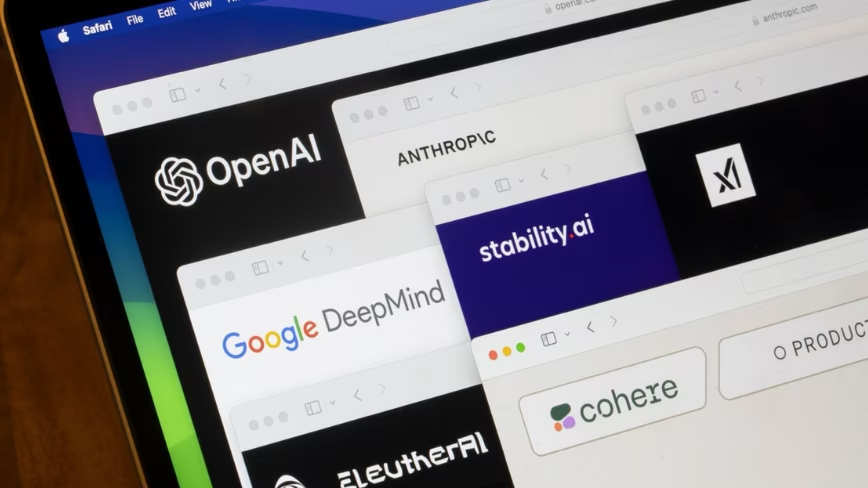
World leaders want American AI. They just don’t want America to be able to turn it off.

What happened
At the G7 summit, French President Emmanuel Macron and Indian Prime Minister Narendra Modi voiced concerns about the United States’ ability to instantly cut off access to American AI platforms. Their warnings gained new weight following the recent Anthropic service blackout, which demonstrated that U.S.-based AI companies have operational control over global AI availability. This ability to “turn off” AI access sparked alarm among world leaders who depend heavily on American AI technologies.
Why it matters
The incident exposes how reliant much of the world is on U.S.-hosted AI infrastructure and services. If American companies or government policies can abruptly sever access, it creates a critical vulnerability for countries and businesses worldwide. This power imbalance pressures governments outside the U.S. to demand more autonomy or parallel AI infrastructures to ensure uninterrupted service. For operators and investors, it signals a shift in geopolitical risks around AI, where dependency on a single country’s platforms could lead to sudden, costly disruptions.
What to watch next
Look for intensified international efforts to diversify AI infrastructure or build alternatives outside U.S. jurisdiction. National AI strategies may accelerate investment in domestic or regional AI capabilities to avoid exposure to unilateral shutdown risks. Watch for regulatory moves or international agreements aimed at limiting unilateral AI service blackouts. Providers with multi-cloud, geographic distribution, or open-source AI options could gain an edge as users seek reliable, fail-safe access.
AI Quick Briefs Editorial Desk