Genesis AI thinks the humanoid hype is wrong. Its wheeled robot is the counterargument.
What happened
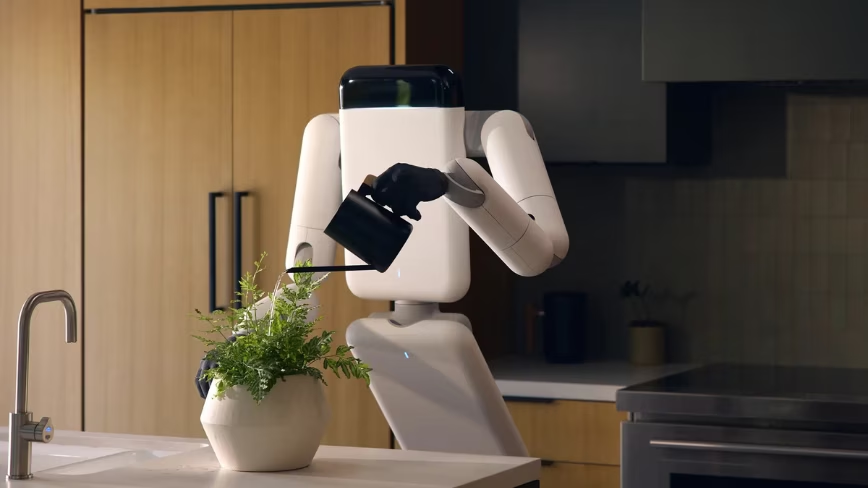
Genesis AI launched Eno, a wheeled robot with dexterous hands and a foldable tower, designed to operate with human-level manipulation abilities. Unlike most robotics companies investing heavily in humanoid, bipedal designs, Genesis AI is betting on a non-humanoid form factor. Eno uses a foundation AI model tailored for precision handling tasks, signaling a different approach to physical autonomy.
Why it matters
This launch exposes a critical flaw in the humanoid robot trend. Bipedal robots are expensive, complex, and slow to iterate because walking like a human is a deceptively difficult engineering challenge. By choosing wheels over legs, Genesis AI lowers hardware complexity and operational risks while improving mobility stability. Eno’s sophisticated hands and AI enable practical object manipulation, which matters more than humanoid form for most industrial, warehouse, or service robot applications. Investors and founders should rethink assumptions that humanoid shape equals human-level functionality.
What to watch next
Focus on how Eno performs in real-world tasks requiring adaptive manipulation and navigation. Watch whether robotics builders adopt non-humanoid designs to accelerate deployment and reduce costs. This could pressure players chasing bipedal robots to pivot toward simpler, more effective platforms. Keep an eye on whether Genesis AI can leverage its foundation model for flexible task programming and if Eno gains traction in environments where manipulation and stability trump humanoid aesthetics.
AI Quick Briefs Editorial Desk