Building an End-to-End Sentiment Analysis Pipeline with Scikit-LLM
What changed
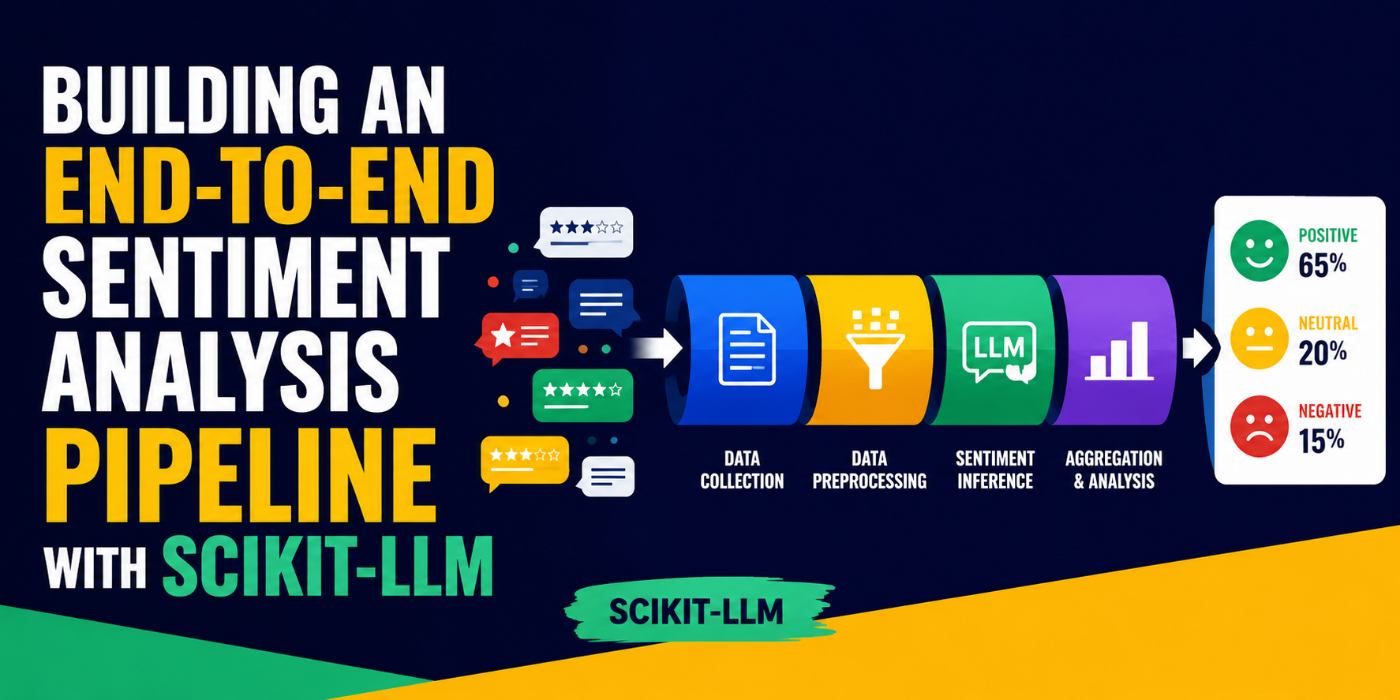
Scikit-LLM introduced a full sentiment analysis pipeline that moves beyond traditional approaches relying on fixed numerical features like TF-IDF or token embeddings. Instead, it integrates large language models (LLMs) directly into the pipeline for end-to-end text classification, streamlining the training and inference flow.
Why builders should care
This approach simplifies handling raw text data by reducing dependence on manual feature engineering and classical models such as logistic regression or support vector machines. For developers, that means fewer preprocessing headaches and better alignment with modern NLP capabilities baked into LLMs. The pipeline retains modularity and clarity but allows direct use of powerful language models for tasks like sentiment classification.
The practical takeaway
Using Scikit-LLM, operators gain a ready-made framework to build text classifiers that leverage LLMs without rebuilding orchestration layers from scratch. This makes it easier to deploy sentiment analysis models that can potentially adapt faster to changing word usage or contexts than traditional ML systems. The solution lowers costs on feature extraction and cuts time spent on trial-and-error model tuning tied to engineered inputs.
What to watch next
Look for how well this pipeline integrates with existing data science workflows and whether it supports fine-tuning or updating LLMs efficiently within the same framework. Adoption may hinge on how scalable and maintainable this LLM-centric pipeline proves compared to classical techniques, especially for businesses processing large volumes of text data. Operator feedback on accuracy gains, latency, and model updating will clarify whether this approach shifts sentiment analysis best practices.
AI Quick Briefs Editorial Desk