How to Build a Parsing Pipeline with Docling Parse for Layout-Aware Document Intelligence
What changed
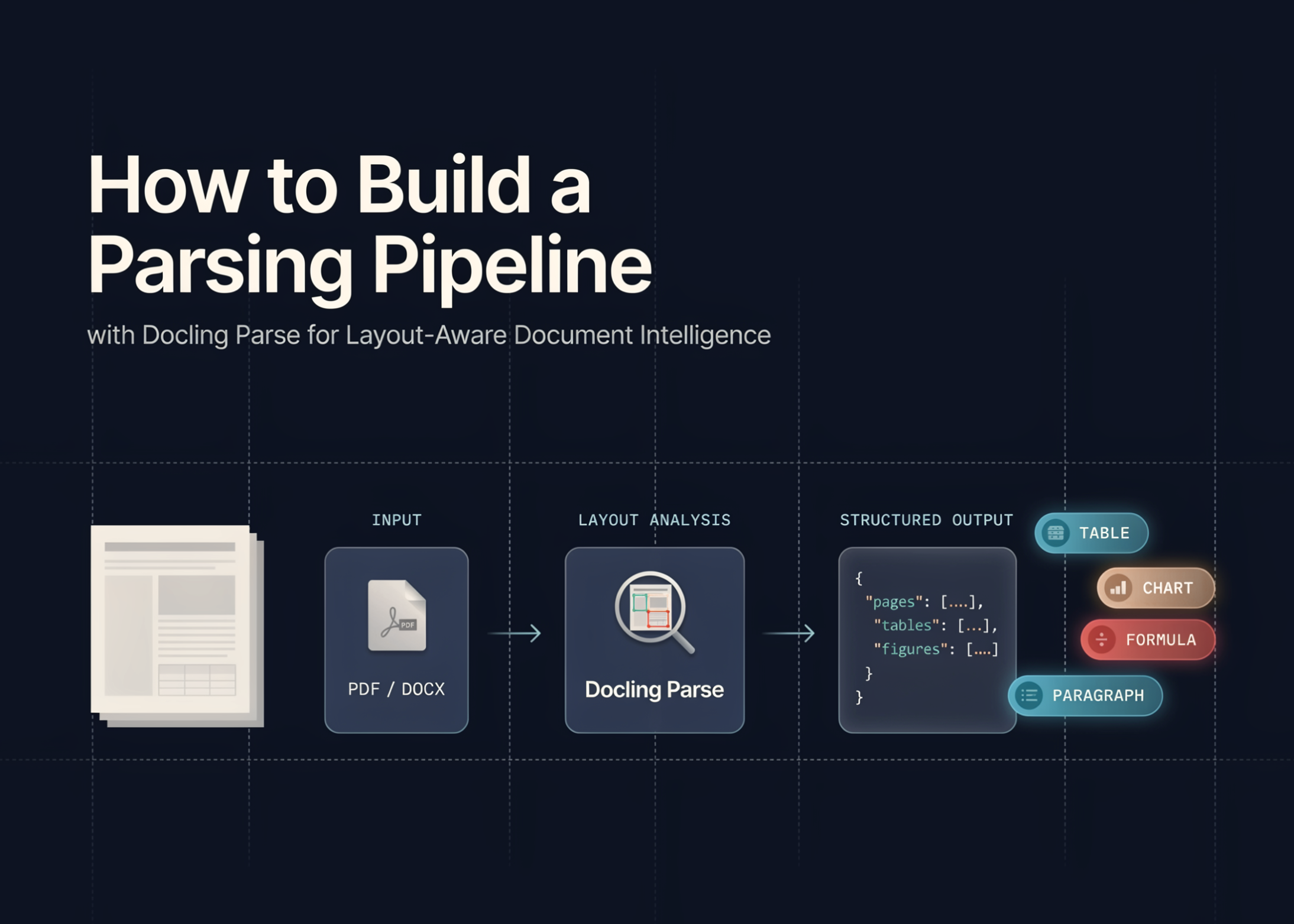
Docling Parse now offers a detailed parsing pipeline tailored for layout-aware document intelligence. It moves beyond simple text extraction and enables parsing at the structural level of PDFs. The pipeline supports recognizing words, characters, lines, multi-column layouts, table-like structures, vector graphics, and embedded images while preserving page-level coordinates. It also handles environment setup intricacies for Python, including workarounds for common dependency conflicts seen in Colab.
Why builders should care
Parsing complex documents with varied layouts has been a persistent challenge. Most OCR tools either miss subtle structural details or fail to maintain spatial context, which cripples downstream processing. Docling’s approach of multi-layer parsing improves accuracy and richness of extracted data, making it more useful for advanced document applications like automated auditing, compliance checks, or content repurposing. By supporting structured JSON and CSV exports, it integrates well with analytic workflows and machine learning pipelines.
The practical takeaway
For developers working on document intelligence, Docling Parse’s pipeline provides a ready blueprint to start breaking down multi-page PDFs into granular data points without losing layout context. Using their example code to generate custom PDFs with text, columns, tables, vector shapes, and images helps surface real-world document parsing challenges early. Handling coordinate-aware extraction means results can be visualized or leveraged for precision tasks like dynamic redaction or content indexing. This approach speeds development time and reduces trial-and-error around document preprocessing.
What to watch next
Keep an eye on how Docling scales this pipeline across diverse document types beyond PDFs and how it integrates with other AI models for semantic understanding or document classification. Watch for improvements in handling increasingly complex layouts like invoices, forms, or legal contracts at enterprise scale. Also monitor community adoption and open source contributions, which will shape the robustness and flexibility of layout parsing in production environments.
AI Quick Briefs Editorial Desk