Building Time-Series Machine Learning Models with sktime in Python
What changed
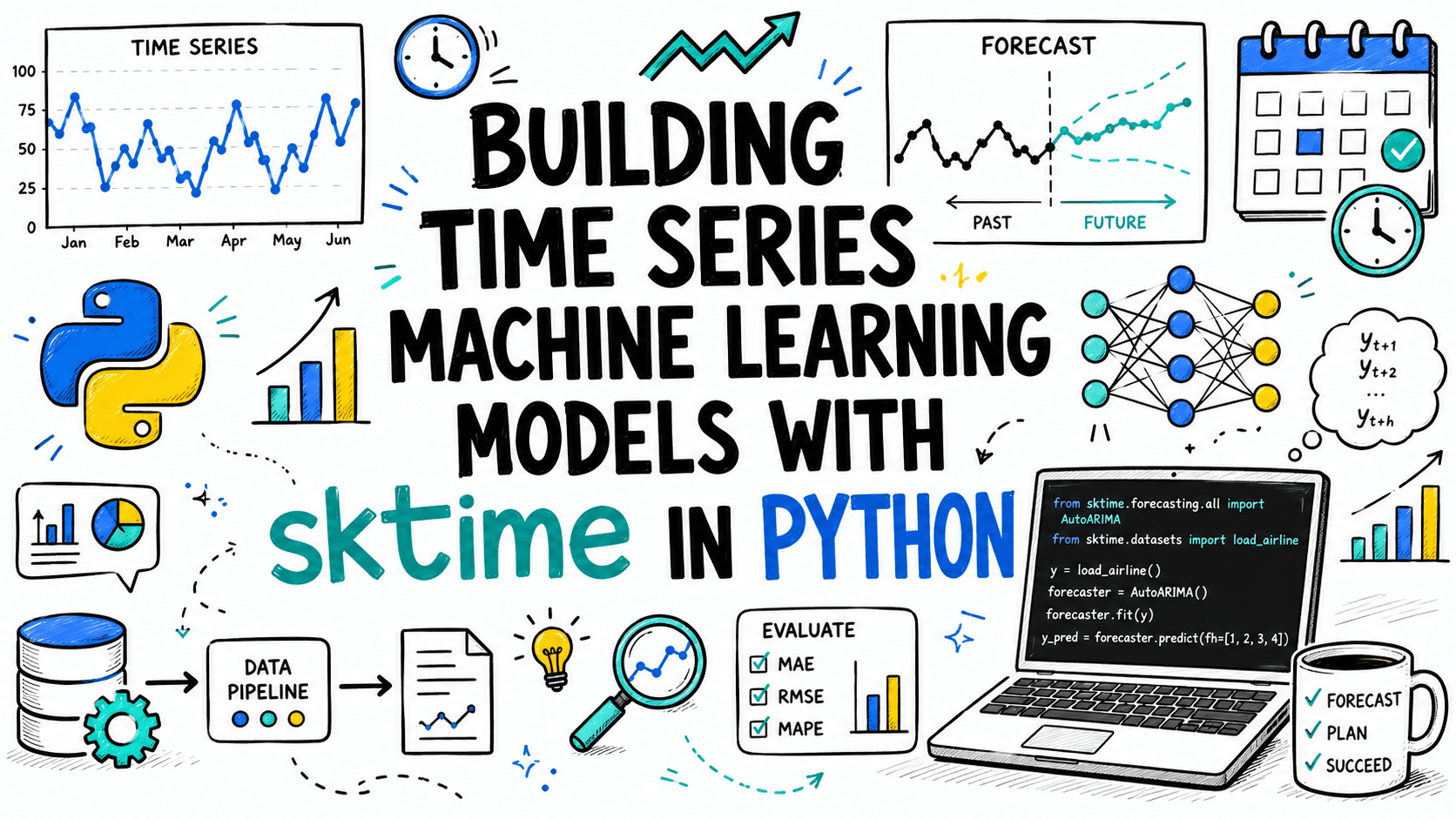
sktime, a Python toolkit for time-series machine learning, offers a streamlined approach for building forecasting models with standardized workflow components. It introduces core data structures designed specifically for time-series data, which simplifies the integration of classical machine learning methods with temporal features. The package supports loading, transforming, and modeling time series, minimizing manual preprocessing and enabling clearer, modular pipeline construction.
Why builders should care
Time-series forecasting often demands specialized tools outside typical machine learning libraries. sktime addresses this gap by wrapping traditional ML estimators so they can handle time-indexed data directly. This reduces the overhead of juggling separate data formats and inconsistent APIs, accelerating model development and experimentation. Operators managing demand forecasting, anomaly detection, or financial modeling can leverage sktime’s abstractions to build reliable, reproducible workflows without reinventing preprocessing steps.
The practical takeaway
Using sktime means faster iterations on time-series problems through unified interfaces that handle temporal dependencies. Builders can combine classical regressors, such as random forests, with time-based transformations like lag creation or seasonal decomposition inside one pipeline. This decouples feature engineering from modeling, increasing flexibility and transparency. For teams already using Python, sktime integrates well with scikit-learn and pandas, avoiding costly context switching or custom engineering. This lowers the barrier to operationalizing forecasting models across business units.
What to watch next
As sktime continues evolving, expect more features that improve model performance diagnostics, automated feature extraction, and pipeline deployment. Keep an eye on community contributions for domain-specific modules that address sectors like retail, finance, or IoT sensor data. Also, watch how sktime and similar tools fit into larger MLOps workflows to reduce friction around retraining, monitoring, and scaling time-series models in production.
AI Quick Briefs Editorial Desk