Why Apple built a third-party AI system for Siri and then refused to show it at WWDC
What changed
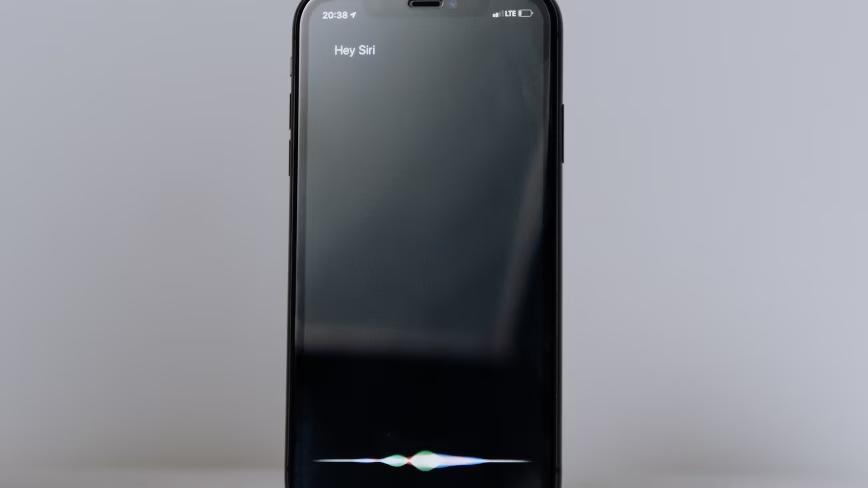
Apple’s latest iOS 27 developer beta contains a hidden Extensions framework for Siri that lets users plug in third-party AI models like ChatGPT, Anthropic’s Claude, and Google’s Gemini. This system would allow iPhone users to select which AI assistant powers Siri commands. Despite this underlying support, Apple did not reveal the feature during its WWDC keynote on June 8. The beta even includes a settings panel to manage these AI extensions, confirming it is more than just a backend experiment.
Why builders should care
This represents a significant shift in how Apple might open Siri to external AI innovation, loosening its historically strict control over Siri’s intelligence. Allowing users to swap in third-party models means AI innovation can happen faster and with more variety, without being bottlenecked by Apple’s own AI roadmap. It also opens up opportunities for developers to build extensions that integrate directly into one of the most heavily used voice interfaces on the planet. This framework could change the competitive dynamics between Apple’s in-house AI efforts and startups or other tech giants specializing in language models.
The practical takeaway
Operators and developers should prepare for a future where voice assistants become modular and customizable platforms, not closed systems. The ability to toggle between AI models inside Siri can alter user expectations for flexibility and quality in voice interfaces. For businesses, this means new routes to reach iPhone users through Siri extensions, potentially bypassing the usual App Store model or creating novel monetization strategies. Investors and founders in AI startups should monitor Apple’s moves as indicators of how tightly big tech will guard conversational AI or whether they will foster ecosystems of interoperable AI tools.
What to watch next
The big question is why Apple chose not to mention or demo this feature during WWDC, especially since it appears functional in the developer beta. Watch for clues in upcoming iOS updates or subsequent Apple events that might explain the delay, such as unresolved privacy issues, UI challenges, or product positioning conflicts. Also follow how third-party AI providers respond to these new integration opportunities. Apple could also still tweak or restrict the framework before public release, so adoption terms and technical details will be crucial to monitor.
AI Quick Briefs Editorial Desk