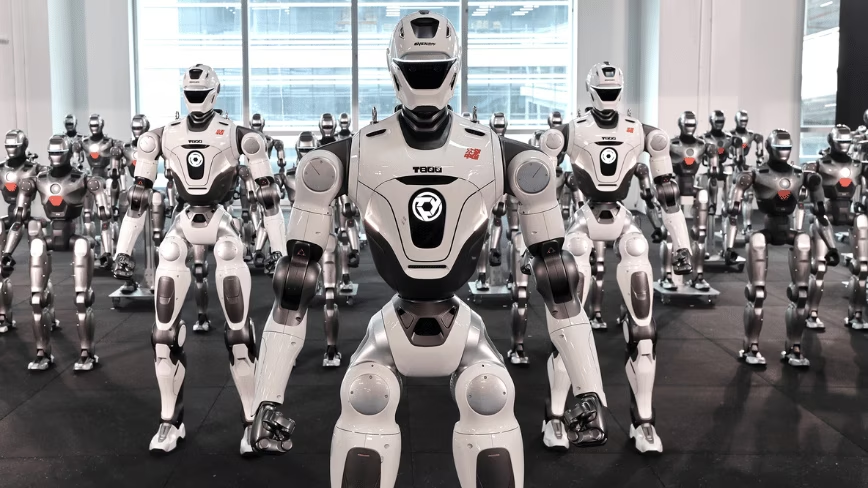
Visual Language Models Train Robots to Read Human Emotions

What changed
Researchers have developed a method for collaborative robots to read human emotions by integrating visual language models that go beyond simple facial expression analysis. These models combine visual cues with contextual language understanding to interpret emotions more accurately. This advancement prepares robots to better engage with humans in shared work environments by recognizing nuanced emotional states rather than relying solely on fixed facial signals.
Why builders should care
Human-robot collaboration is on track to become a common workplace scenario, especially where robots assist physically demanding or precision tasks. For developers, improving robots’ emotional intelligence means building machines that respond to human cues with more sensitivity and adaptability. This can reduce workplace friction, enhance safety, and improve productivity by enabling robots to adjust interactions based on workers’ moods or stress levels. Deploying robots that misread emotions or remain indifferent risks undercutting trust and operational efficiency.
The practical takeaway
Integrating visual language models into robots unlocks a layer of emotional awareness that can shape real-world robotics deployments. Builders need to focus on incorporating multimodal emotion detection to move beyond rigid, error-prone emotion recognition systems. This could become a competitive advantage in robotic design by improving human compatibility, ultimately lowering resistance to automation and opening wider acceptance in service, manufacturing, and healthcare roles where emotional context matters.
What to watch next
Look for developments in training datasets and model architectures tailored for nuanced human-robot emotional communication. Progress in real-time processing and privacy-preserving sensing technologies will also be critical. Industry adoption may hinge on early demonstrations of robots that adapt smoothly to dynamic emotional environments and clear evidence this improves workflow outcomes. Watch for partnerships between AI researchers and robotic manufacturers to accelerate these capabilities from labs to factory floors.
AI Quick Briefs Editorial Desk