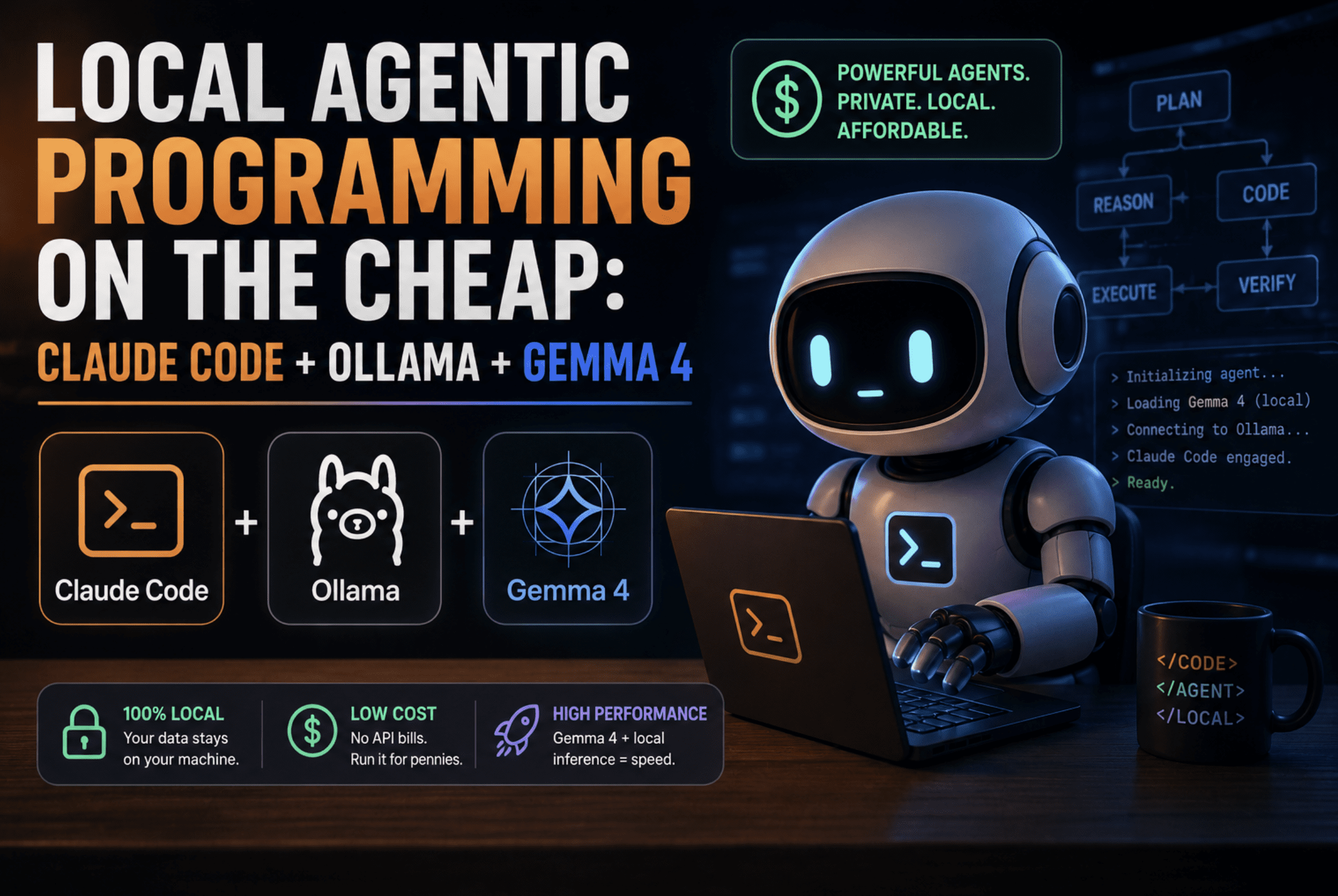
Local Agentic Programming on the Cheap: Claude Code + Ollama + Gemma4
What changed
A new local agentic programming stack has been built combining Ollama, Gemma 4, and Claude Code. This setup runs entirely on local machines rather than relying on cloud AI services. Ollama handles local model management, Gemma 4 acts as the interaction layer, and Claude Code supports agentic task execution and coding. The result is a full stack capable of handling complex AI workflows without internet dependency or expensive API calls.
Why builders should care
Agentic programming allows AI to act autonomously on user goals instead of just responding passively. Doing this locally reduces costs, improves data privacy, and eliminates cloud service limits. For developers and operators working with AI-driven processes or automation, this stack demonstrates how to build sophisticated agent workflows with commodity hardware and open tools. That lowers the barrier for experimentation, prototypes, or organizations that cannot expose sensitive data to the cloud.
The practical takeaway
Operators can now deploy agentic AI locally at a fraction of the usual cost and complexity. No need to pay for API usage or worry about throttling. This also means more control over data flows and security settings. The stack is strong enough to manage multi-step tasks, like generating code and iterating development cycles autonomously. Builders can focus on tailoring AI agents to specific needs without being locked into expensive cloud ecosystems.
What to watch next
Check how this local stack evolves in stability and feature depth. Watch for adoption signals in privacy-focused companies, startups constrained by cloud costs, or developers prioritizing customizable AI agents. The next questions are around integration with existing pipelines and expanding agent capabilities. Also monitor if bigger AI vendors respond with improved local deployment options or price adjustments that pressure this low-cost alternative.
AI Quick Briefs Editorial Desk