MIT’s ultrasound wristband tracks every finger movement and lets you control a robot hand in real time
What changed
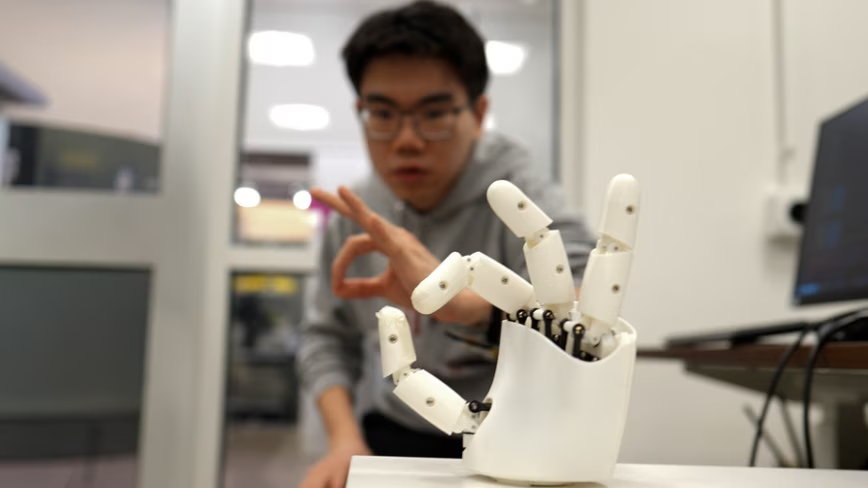
MIT engineers unveiled an ultrasound wristband capable of tracking 22 degrees of freedom in human hand movements. The device consists of a ring of miniature ultrasound transducers worn around the wrist, which capture detailed motion data in real time. Using this input, users can control a robotic hand with high precision, mirroring subtle finger positions and movements immediately. The research was published in Nature Electronics in March 2026.
Why builders should care
This wristband introduces a practical way to track complex hand motion without relying on bulky gloves or optical systems that require line of sight. Its form factor makes continuous, detailed hand-tracking more accessible for applications involving wearable robotics, teleoperation, prosthetics, and augmented reality interfaces. Unlike camera-based methods, the ultrasound approach works in varied lighting and environmental conditions, which broadens deployment scenarios for hand gesture controls and remote manipulation in robotics or VR.
The practical takeaway
Developers can now explore using this ultrasound wristband to build more intuitive and precise control interfaces. The technology lowers friction for real-time translation of natural hand movements into digital or robotic commands. This reduces the latency and errors common with vision-based systems or bulky sensors. For operators managing robots remotely or controlling assistive tech, this means potentially faster responses, richer interaction, and fewer setup constraints. It also opens doors to advancing gesture-based input in consumer and industrial devices without compromising mobility.
What to watch next
Check for commercialization milestones, including hardware availability and developer toolkits to integrate this wristband into existing tech stacks. Potential partnerships between MIT and wearable device makers or robotics firms could speed adoption. Look for progress in robustness under varied wrist sizes, motion speeds, and real-world interference. The capability of this wristband to scale beyond research labs into sectors like healthcare, manufacturing, or gaming will define its practical impact. Follow updates on improvements in ultrasound transducer miniaturization and power efficiency to enhance wearability and battery life.
AI Quick Briefs Editorial Desk