An ex-scooter founder raised $5M to build AI data centres in orbit, where the sun never sets
What happened
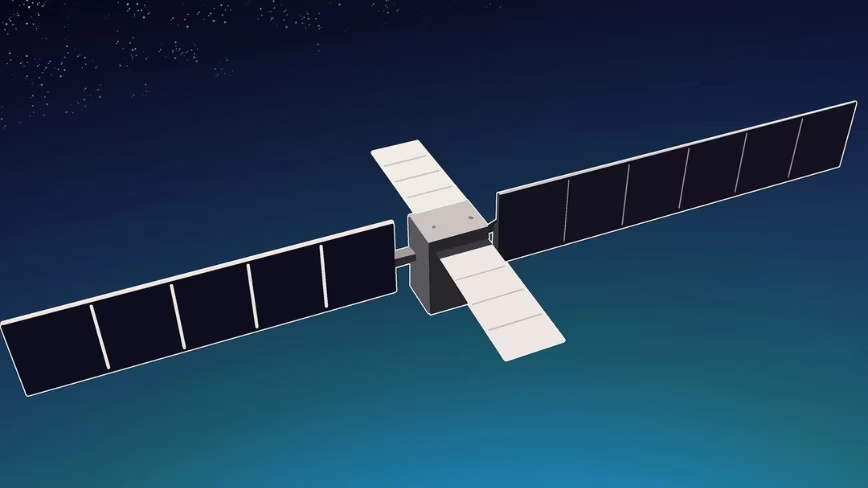
Orbital, a Los Angeles-based startup founded by a former scooter company executive, has raised $5 million in an oversubscribed pre-seed funding round led by a16z Speedrun. The company is developing artificial intelligence data centers placed in low Earth orbit, aiming to take advantage of the constant sunlight available in space.
Why it matters
AI workloads require vast amounts of power and cooling, creating major challenges for data center locations on Earth. By moving AI hardware into orbit, Orbital attempts to solve two critical problems: power scarcity and real estate constraints for data centers. Space-based solar energy can offer continuous power without the environmental and cost limits terrestrial facilities face. This could lower operational costs and improve energy efficiency for AI computation, a growing bottleneck for AI builders and operators worldwide.
Relying on orbital infrastructure also changes the economics and resilience of AI deployments. With data centers in space, companies might avoid costly land, cooling, and power setup fees, and reduce exposure to local power grid failures. However, this approach introduces new technical and operational complexities, such as data latency, satellite maintenance, launch risks, and regulatory hurdles. The $5 million funding will support Orbital’s initial prototypes and prove viability before major players consider orbit-based AI data centers as a practical option.
What to watch next
Track Orbital’s progress on satellite deployment and power management systems, which will determine if space-hosted AI data centers can deliver a reliable alternative to ground infrastructure. Watch for partnerships with cloud providers, AI hardware makers, or government agencies interested in decentralized, energy-efficient compute. Investors will also monitor whether Orbital’s space-based model can scale cost-effectively to compete with cheaper terrestrial clouds, and how it addresses data access speeds and operational risks.
If successful, this could pressure the AI infrastructure market to rethink long-term power sourcing and facility placement, especially as AI workloads continue to grow faster than Earth-based energy supply expansion.
AI Quick Briefs Editorial Desk