PhysicsX hits $2.4bn valuation as Temasek leads $300m round for the AI startup that cuts simulation times f…
What happened
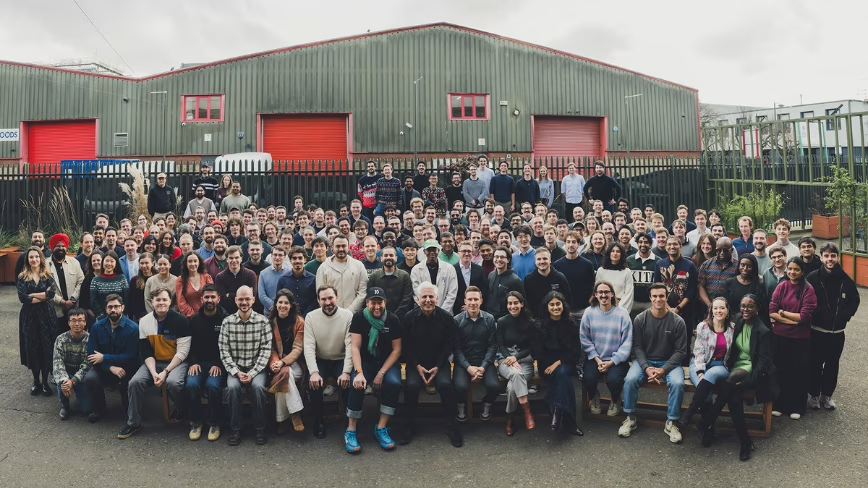
PhysicsX, a London-based AI startup that accelerates physics simulations, raised $300 million in a Series C funding round. The investment was led by Temasek, Singapore’s sovereign wealth fund, and pushed the company’s valuation to $2.4 billion. This more than doubles PhysicsX’s valuation from less than $1 billion just months ago after its Series B round. The funding round was oversubscribed, signaling strong investor demand.
Why it matters
PhysicsX addresses a key bottleneck for industries relying on physics simulations, such as energy, aerospace, and manufacturing. Traditional simulations can take days to complete, significantly slowing down product development and innovation cycles. By cutting simulation times from days to seconds, PhysicsX enables companies to iterate faster and reduce costs. This shift pressures existing simulation vendors to speed up or risk losing customers to AI-driven alternatives. It also changes the economics of R&D by making high-fidelity simulation accessible to smaller companies and faster projects.
Temasek’s lead investment signals growing confidence from large institutional investors in startups focused on AI-accelerated engineering tools—not just general-purpose AI models. It also raises the stakes for competitors in the simulation space to integrate AI capabilities more aggressively.
What to watch next
The key will be how quickly PhysicsX can scale customer adoption beyond early use cases and prove sustained cost and speed advantages in complex real-world scenarios. Watch for partnerships with large industrial players and possible moves toward industry-specific solutions. Also, funding this large means there will be high expectations for measurable ROI, so operational execution will be critical.
Competitors like traditional CAE (computer-aided engineering) software providers may respond with their own AI investments or acquisitions. Tracking how the simulation market adapts under pressure from AI-first startups will reveal if PhysicsX’s approach rewrites the rules for engineering workflows.
AI Quick Briefs Editorial Desk