Google DeepMind Releases Gemma 4 QAT Checkpoints: Q4_0 and a New Mobile Format Cut On-Device Memory
What changed
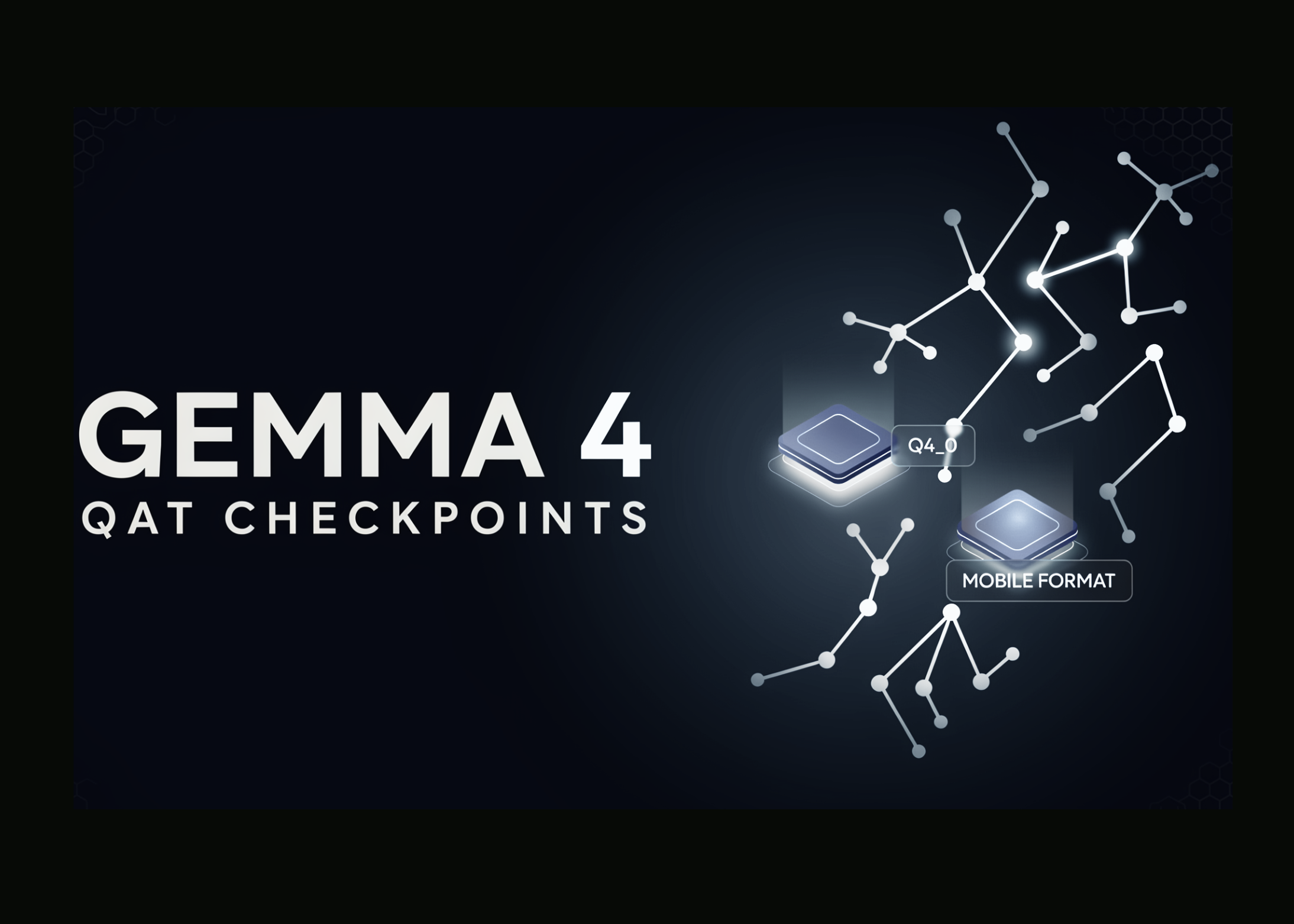
Google DeepMind introduced new quantized checkpoints for its Gemma 4 model, bringing two notable formats: Q4_0 QAT and a new mobile QAT variant. These come alongside the existing BF16 format. The Q4_0 format uses quantization aware training (QAT), which trades model precision for compression. The new mobile QAT format further reduces on-device memory footprint compared to the standard Q4_0, optimizing for mobile and edge deployment. Published figures highlight significant memory cuts between the BF16 format and the two quantized options.
Why builders should care
Quantization formats directly impact the efficiency and feasibility of running AI models on edge devices. BF16 requires the most memory and compute bandwidth, limiting portability and scale on constrained hardware. QAT formats cut memory usage substantially, enabling real-time inference on less capable devices without cloud reliance. The mobile QAT format specifically targets devices where every megabyte counts, reducing latency and energy costs while maintaining acceptable accuracy. For operators juggling latency, power, and model accuracy, these checkpoint options provide tailored tradeoffs. Builders can select a format that best fits their infrastructure and user environment rather than defaulting to larger, costlier model types.
The practical takeaway
Gemma 4’s new checkpoints reinforce that quantization is not a one-size-fits-all approach. The Q4_0 format offers a solid middle ground between full-precision BF16 and aggressive compression, while mobile QAT takes that further for resource-limited contexts. This deepens options for developers embedding language models into edge devices like phones, IoT products, or standalone AI assistants. Reduced memory demand translates to lower hardware costs and power consumption, essential for scaling AI applications off cloud infrastructure. Investors and builders focused on edge AI hardware and apps should factor these formats into their roadmap decisions. Selecting the right format can improve end-user experience and reduce operational expenses.
What to watch next
The practical performance differences in latency, accuracy, and power usage between Q4_0 and mobile QAT will be important to track. Also, adoption of these checkpoints by open source and commercial projects using Gemma 4 will signal how quickly edge AI models shift toward embedded quantized formats. Expect further innovation in quantization techniques as model sizes grow and edge use cases demand leaner deployment. Developers should watch for benchmarks and integration guides showing how these formats behave in real-world scenarios. The balance of compute capacity versus memory footprint will continue to drive design decisions for on-device AI in the coming year.
AI Quick Briefs Editorial Desk