NVIDIA AI Releases Dynamo Snapshot: A CRIU-Based Fast Startup System for AI Inference on Kubernetes
What changed
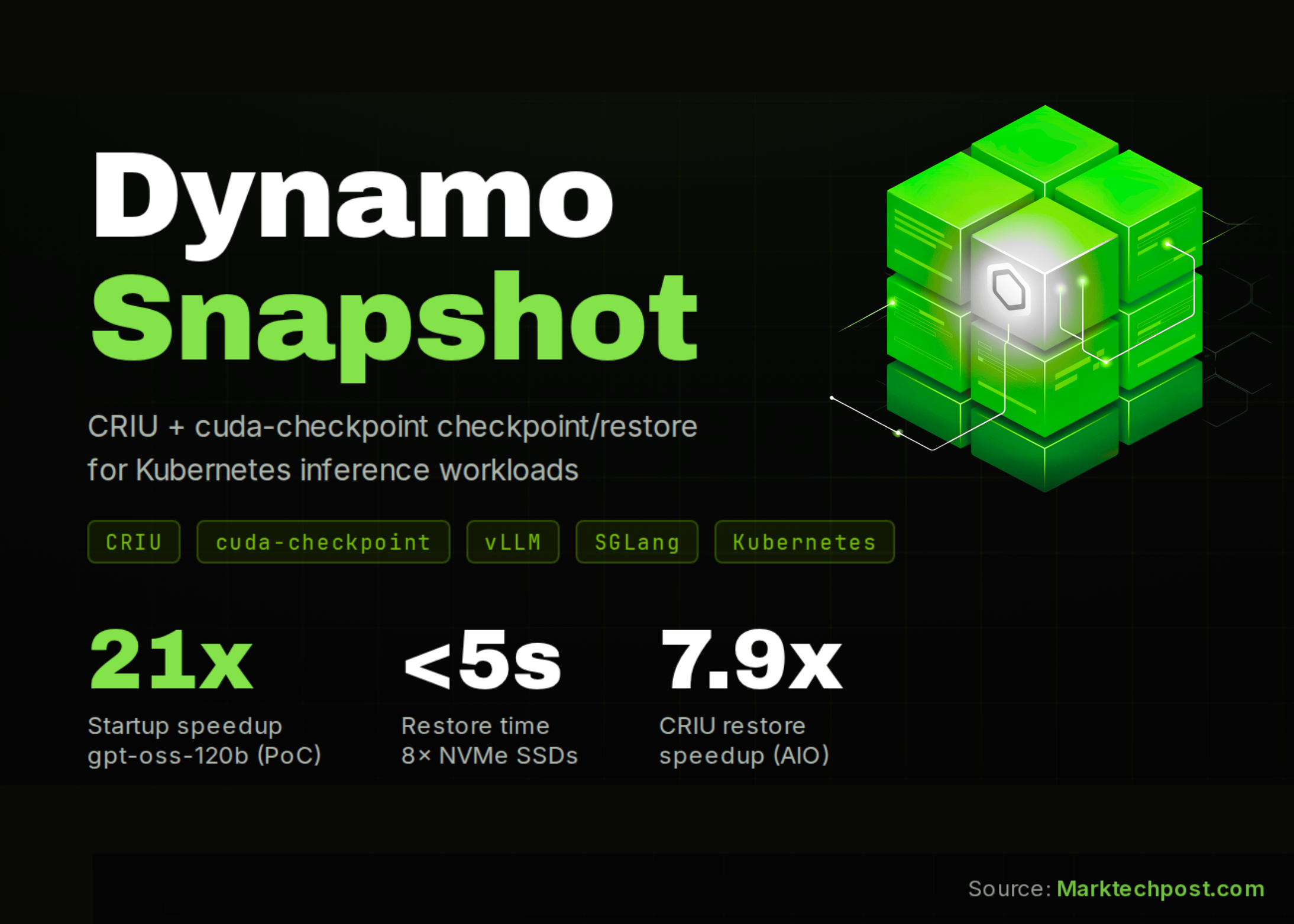
NVIDIA AI has released Dynamo Snapshot, a fast startup system for AI inference that uses CRIU (Checkpoint/Restore in Userspace) and the cuda-checkpoint tool to checkpoint and restore vLLM inference workers on Kubernetes. This means AI workloads running large language model (LLM) inference can pause and resume quickly without starting inference workers from scratch. The system integrates with Kubernetes orchestration, enabling efficient management of AI model instances at scale.
Why builders should care
AI inference startups and operators running Kubernetes clusters face delays when launching or scaling inference workers due to model loading times. Dynamo Snapshot lowers this friction by letting operators checkpoint a warmed-up inference worker and restore it instantly on demand. This speeds up Kubernetes pod startups for LLM inference, reducing latency and resource overhead tied to cold starts. For teams optimizing user experience or cost, cutting startup delays directly impacts service responsiveness and operational efficiency.
The practical takeaway
Integrating Dynamo Snapshot into an LLM inference pipeline reduces startup times and resource usage during scaling or recovering AI workloads. Kubernetes operators can rely on transparent checkpoints of GPU memory and running processes instead of provisioning fresh pods. The CRIU support ensures live process states are saved and restored, maintaining stateful inference continuity. This approach can improve autoscaling responsiveness and reduce downtime in production AI deployments.
What to watch next
Monitor how widely Dynamo Snapshot adoption spreads in the Kubernetes inference ecosystem. Watch for community contributions and integrations with popular AI serving frameworks beyond vLLM. Also, observe how NVIDIA’s tooling evolves to handle more diverse AI workloads and multi-node distributed setups. The speed and reliability benefits might pressure competitors to develop similar fast recovery mechanisms for real-time AI inference environments.
AI Quick Briefs Editorial Desk