Perplexity AI Introduces Hybrid Local-Server Inference Orchestrator for Personal Computer: Automatic On-Dev…
What it does
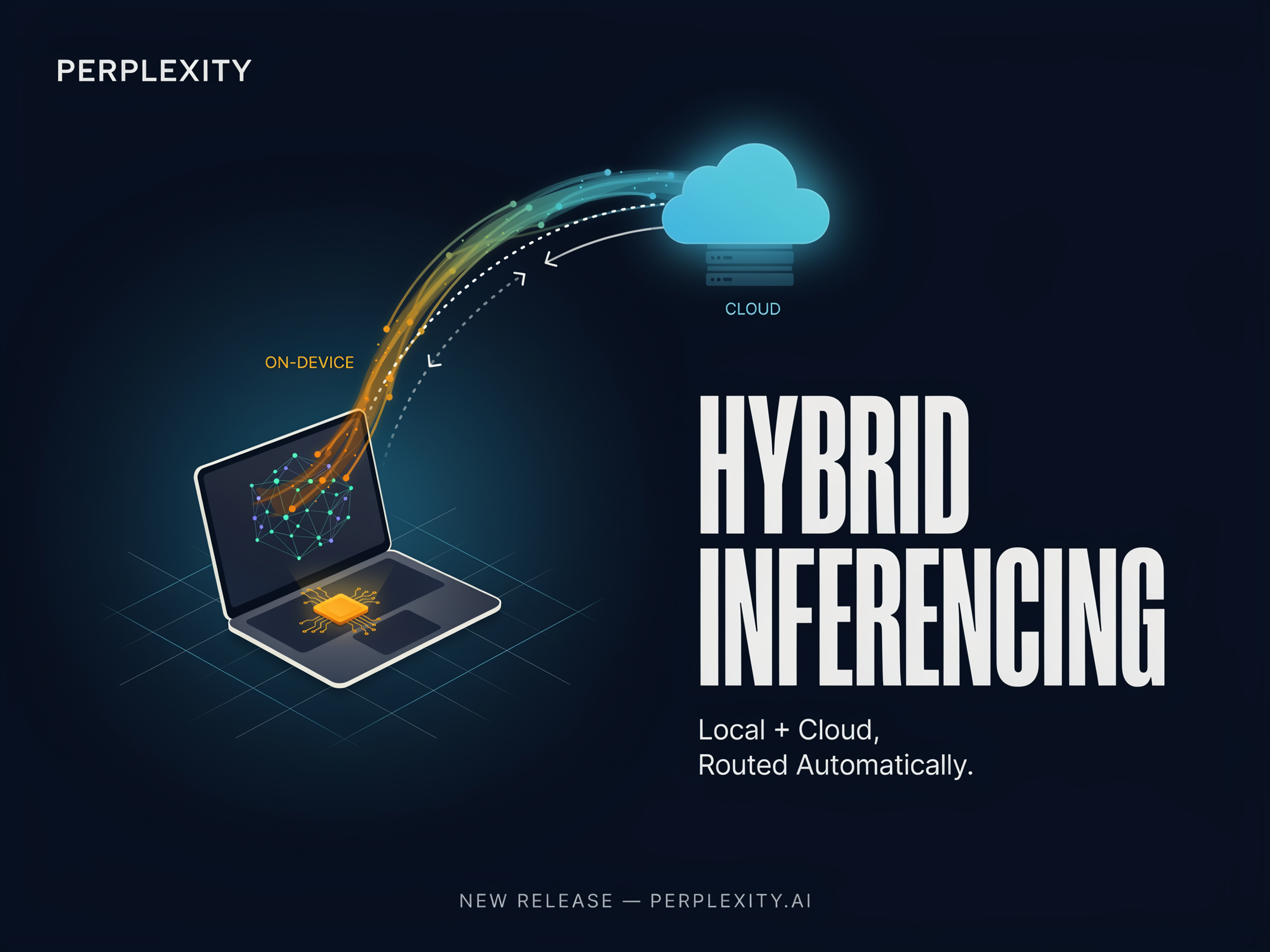
Perplexity AI has launched a hybrid local-server inference orchestrator for personal computers that automatically decides whether AI tasks run on the device or get routed to the cloud. This system splits workloads between on-device models and cloud services without manual user control. It manages inference dynamically, picking the most efficient or capable resource for each task.
Why it matters
This approach directly tackles the common trade-offs between latency, privacy, cost, and compute power in AI workloads. Local on-device inference reduces delays and prevents sensitive data from leaving the computer. Cloud inference supports heavier models requiring more horsepower. Automatically balancing the two means users and operators get faster responses without sacrificing model quality or risking privacy, all while avoiding unnecessary cloud costs.
For users, this could speed up AI-powered applications and reduce data exposure risks. For businesses, it lowers the infrastructure burden and cloud expenses by offloading lighter or privacy-sensitive tasks locally. The system effectively deploys sophisticated AI workflows even on modest hardware, broadening accessibility without compromising performance.
Who it is for
Builders developing AI applications for PCs and edge devices will find this orchestrator useful. It frees developers from manually splitting workloads between local and cloud models, streamlining deployment. Small businesses and independent operators who cannot afford dedicated cloud services can gain low-latency AI without heavy infrastructure. Investors and partners in AI infrastructure may see this as a useful hybrid inference pattern to watch as client-side AI grows.
The catch
Managing hybrid inference demands careful orchestration to avoid user confusion and conflicting outputs. The success of Perplexity AI’s tool hinges on smooth, transparent task routing without performance penalties. Security and system compatibility across various PC hardware and cloud options remain open questions. Users will want clarity about which data is processed locally versus remotely for compliance and trust.
What to watch next
The next signs of traction will be integrations into popular AI applications and developer tools showing real-world impact on latency and cost. How well the orchestrator handles diverse hardware setups and scales to different workloads will reveal its practical limits. Watch for competing hybrid inference frameworks from other AI platform providers aiming for similar gains. Privacy audits and user control features could also shape adoption.
AI Quick Briefs Editorial Desk