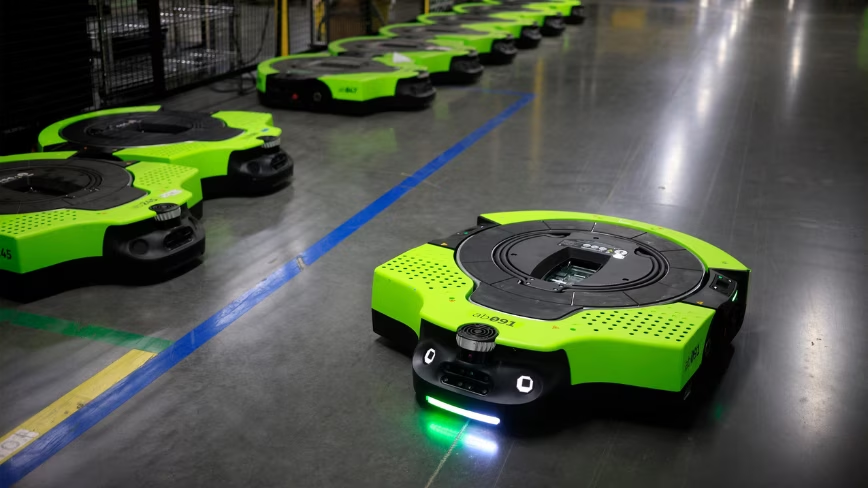
Nvidia’s Jensen Huang flags robotics as Korea’s next growth engine
The business move
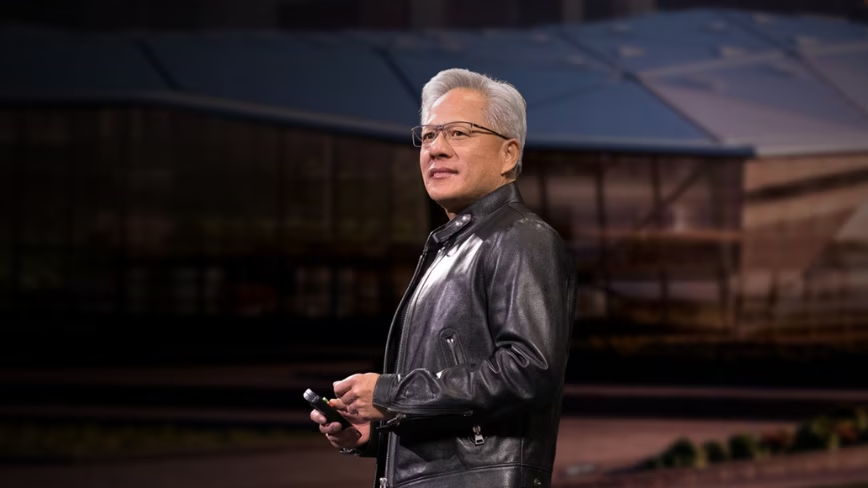
Nvidia’s CEO Jensen Huang arrived in South Korea for a four-day visit focused on pitching robotics and physical AI as the country’s next growth engine. His message aimed to broaden Korea’s tech focus beyond memory chips, which have long anchored Nvidia’s ties to the region. Huang made robotics front and center even before leaving Gimpo Airport, signaling a strategic push to embed Nvidia’s AI technology deeper into Korea’s manufacturing and industrial sectors.
Why it matters
Korea is a global power in electronics and memory chips but has lagged in integrating AI-driven robotics at scale. Huang’s visit signals Nvidia’s intent to accelerate AI adoption in physical systems, including factory automation and robotics platforms. Nvidia supplying more than just chips can reorient Korea’s tech ecosystem into higher-value AI hardware and software, increasing competitiveness against global rivals. This shift pressures Korean manufacturers and investors to prioritize AI robotics solutions or risk falling behind as physical AI gains ground.
Who gains and who gets squeezed
Korean robotics firms and integrators stand to gain from Nvidia’s expanded footprint and expertise in AI compute power. Hardware makers aligned with Nvidia’s AI tools could access faster AI chip innovation and developer support. Conversely, pure memory chip firms may face slower growth risk if investment shifts toward robotics and AI systems integration. Global competitors in robotics and AI hardware will watch closely as Korea potentially accelerates its AI-industrial momentum backed by Nvidia.
What to watch next
Monitor how Nvidia’s partnerships evolve with Korean manufacturers and robotics startups. The depth of integration between Nvidia’s AI stacks and Korea’s physical industries will reveal whether robotics can emerge as a significant new growth sector. Follow government moves to support AI robotics investments, which could amplify Nvidia’s leverage in the region. This visit will set the stage for whether Korea can pivot from being primarily a chip supplier to a leader in AI-driven robotics applications.
AI Quick Briefs Editorial Desk