What the Agentic Era Means for Data Science
What changed
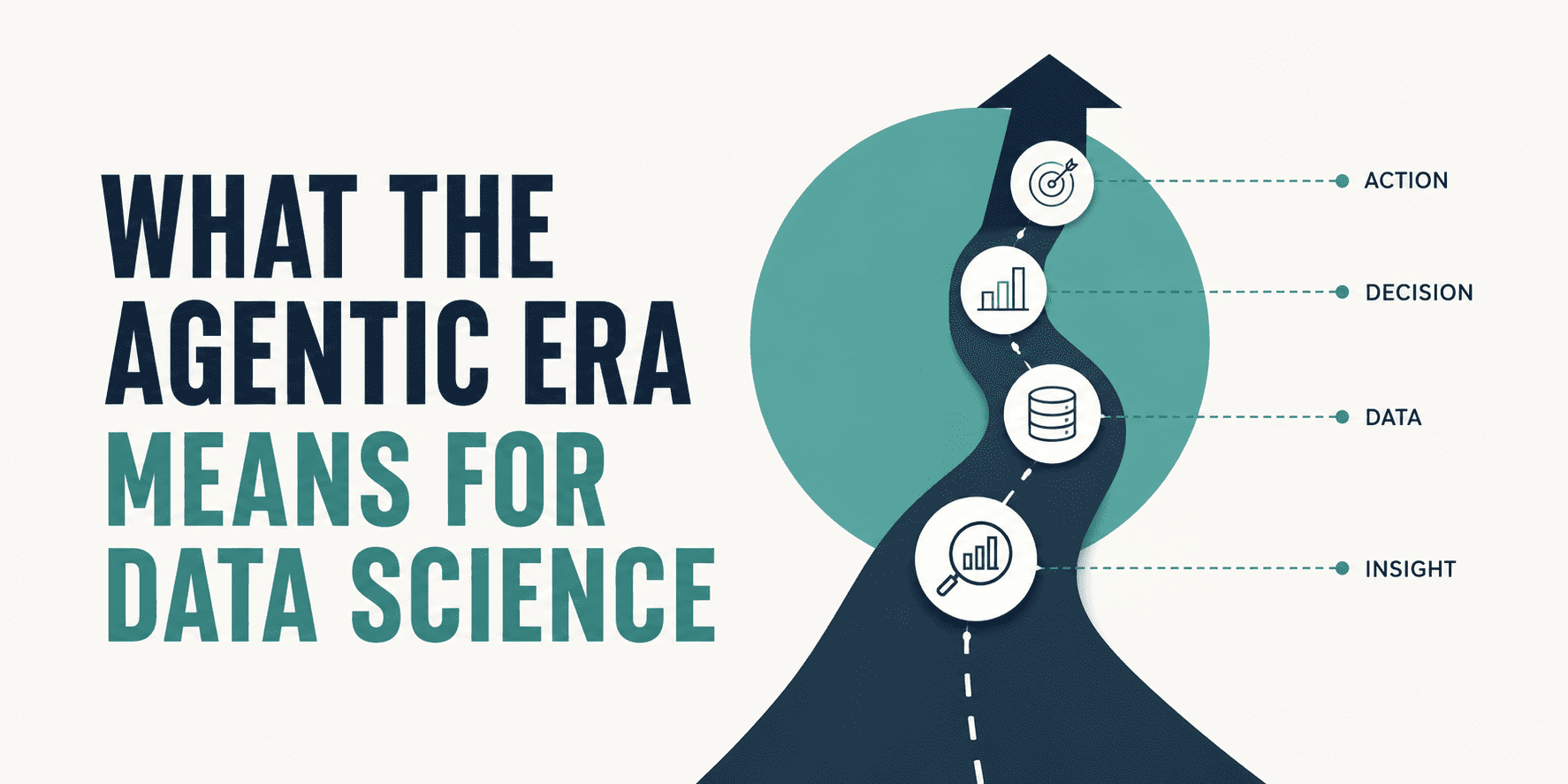
AI agents that act autonomously within workflows are starting to reshape data science. Instead of specialists hand-coding or manually exploring data pipelines, these agents can query, analyze, and iterate on datasets with minimal human direction. This shift marks the start of the “agentic era” in data science, where AI does much of the heavy lifting in data discovery, model tuning, and insight generation.
Why builders should care
The rise of agentic AI forces data scientists and engineers to rethink their role and skill sets. Routine data processing and model training become automated, pushing practitioners to focus on overseeing agents, defining high-level goals, and integrating agent insights into business decisions. This changes how teams allocate resources and prioritize tasks, demanding skills in prompt engineering, agent orchestration, and managing multi-agent workflows.
The practical takeaway
Data teams need to invest in tools and training that support working alongside autonomous agents rather than replacing them. Firms that embrace agentic workflows will reduce time spent on manual data cleaning and iteration, speeding up model deployment. However, reliance on agents also raises new risks around trustworthiness and interpretability since agents may act unpredictably or generate opaque outputs. Balancing automation gains with oversight becomes critical.
What to watch next
By 2026, expect agent-powered platforms tailored to specific industries that integrate deeply with existing BI and data infrastructure. Watch for standards and best practices emerging to govern agent behavior, especially around transparency and error handling. The skill gap in managing autonomous data agents will widen, pressuring education and hiring to adjust. Companies that fail to adapt risk falling behind in AI-driven data science productivity.
AI Quick Briefs Editorial Desk