Using Scikit-LLM with Open-Source LLMs
What changed
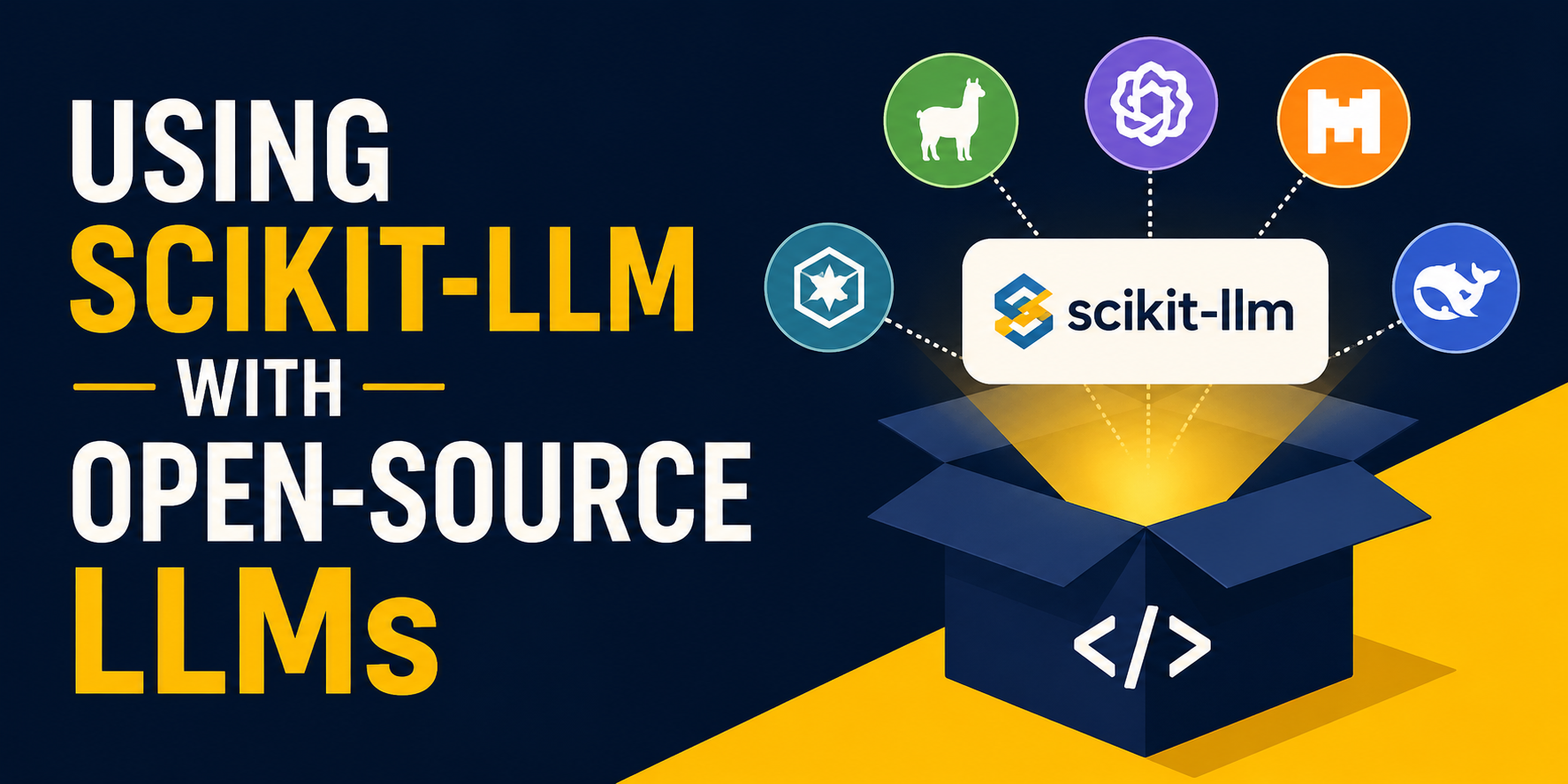
Scikit-LLM now supports integrating locally hosted open-source large language models (LLMs) like Mistral, Gemma, and Llama 3. Users can run these models for free through Ollama, a repository that manages local LLMs, combined with Scikit-LLM, a Python library designed to make LLM-powered tasks like text classification straightforward. This setup removes the reliance on cloud APIs or costly subscriptions, putting accessible AI capabilities directly on workstation or server hardware.
Why builders should care
Bringing manageable-sized LLMs on-premises cuts several operational headaches around data privacy, API costs, and network latency. For developers and data scientists, this setup allows closer control over the entire pipeline—from hosting models to running tasks—without sacrificing the power of modern large language models. This lowers the barrier to experiment with LLMs while keeping sensitive data in-house, which is increasingly important in regulated or competitive settings.
The practical takeaway
Anyone building NLP solutions can now prototype or deploy text classification and similar tasks without cloud vendor lock-in. Hosting models like Llama 3 locally means teams can iterate faster and test with real data unrestricted by API rate limits or pricing models. Getting started involves installing Ollama to access free LLMs and using Scikit-LLM’s Python interface to call those models for classification tasks. This bridged tooling accelerates AI adoption in companies aiming for cost-effective, private, and performant language applications.
What to watch next
The next step is expanding the library of local open-source LLMs compatible with Scikit-LLM and Ollama. Model quality and performance will also improve as smaller, more efficient LLMs evolve. Keep an eye on how this ecosystem might pressure API-driven AI providers by providing a low-cost, offline alternative that can be embedded into internal workflows. Tracking real-world adoption, especially in security-conscious or cost-sensitive sectors, will reveal if this approach shifts development preferences away from cloud-based LLMs.
AI Quick Briefs Editorial Desk