How to Build a Document Intelligence Backend with iii Using Workers, Functions, and Cron Triggers
What changed
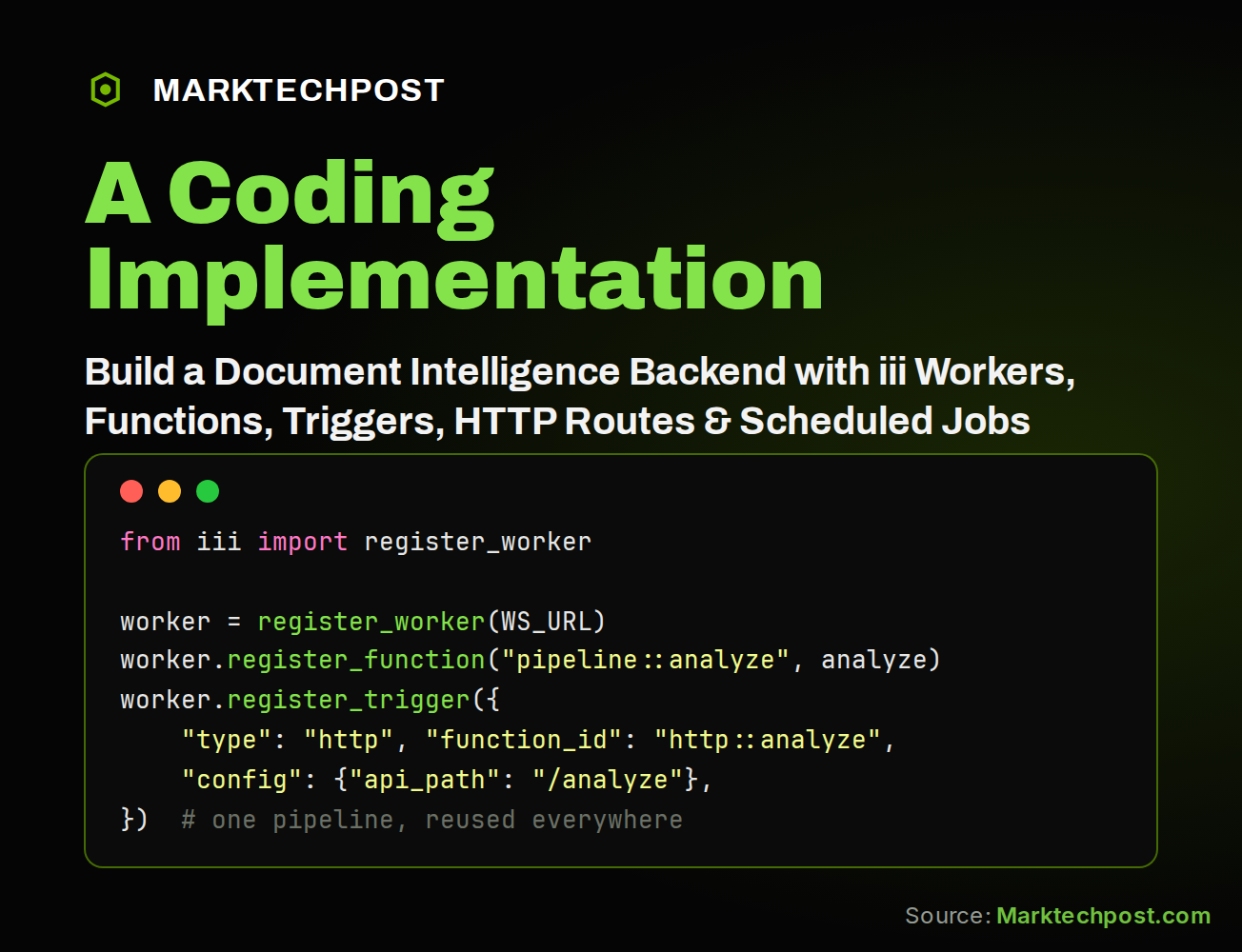
The open-source document intelligence platform iii now supports a backend built on modular workers, serverless functions, and cron triggers. This development lets operators register independent functions that handle specific document processing tasks and reuse them across multiple automated triggers. With this setup, the backend becomes more flexible and scalable for handling document insights.
Why builders should care
For developers and tech operators, modular functions reduce redundancy and simplify backend maintenance. Instead of writing monolithic code for each document processing event, builders can maintain a library of discrete functions. These functions execute independently and can be combined in different workflows triggered by cron schedules or events. This cuts development time and eases debugging.
Additionally, the workflow leveraging iii’s workers and cron triggers provides consistent, scheduled document parsing, extraction, and analysis. Automated and reliable processing pipelines matter for real-world applications like compliance document tracking, contract intelligence, and report generation, where stale or missed data hurts business decisions.
The practical takeaway
This approach means companies can build custom document intelligence backends that adapt as their document volume or processing needs change. The “write once, reuse many” pattern of modular functions lowers the bar for continuous improvement of backend logic. Automation triggers keep processing fresh without manual intervention.
Builders using iii can better integrate document extraction and AI parsing into existing systems with less overhead and more control over how and when data refreshes. This reduces operational risks tied to manual document handling or one-off code patches.
What to watch next
The next stage will be seeing how builders extend these modular iii backends with more advanced AI models, enhanced error handling, and deeper workflow orchestration. How well the platform supports integration with external APIs and document sources will also determine its adoption.
Watch for community extensions that add capabilities around natural language understanding, semantic search, and document classification. This modular backend pattern can push document intelligence beyond simple parsing toward full, automated document-driven workflows.
AI Quick Briefs Editorial Desk