MiniMax Releases MiniMax M3 with MSA Architecture Supporting 1M-Token Context, Native Multimodality, and Ag…
What it does
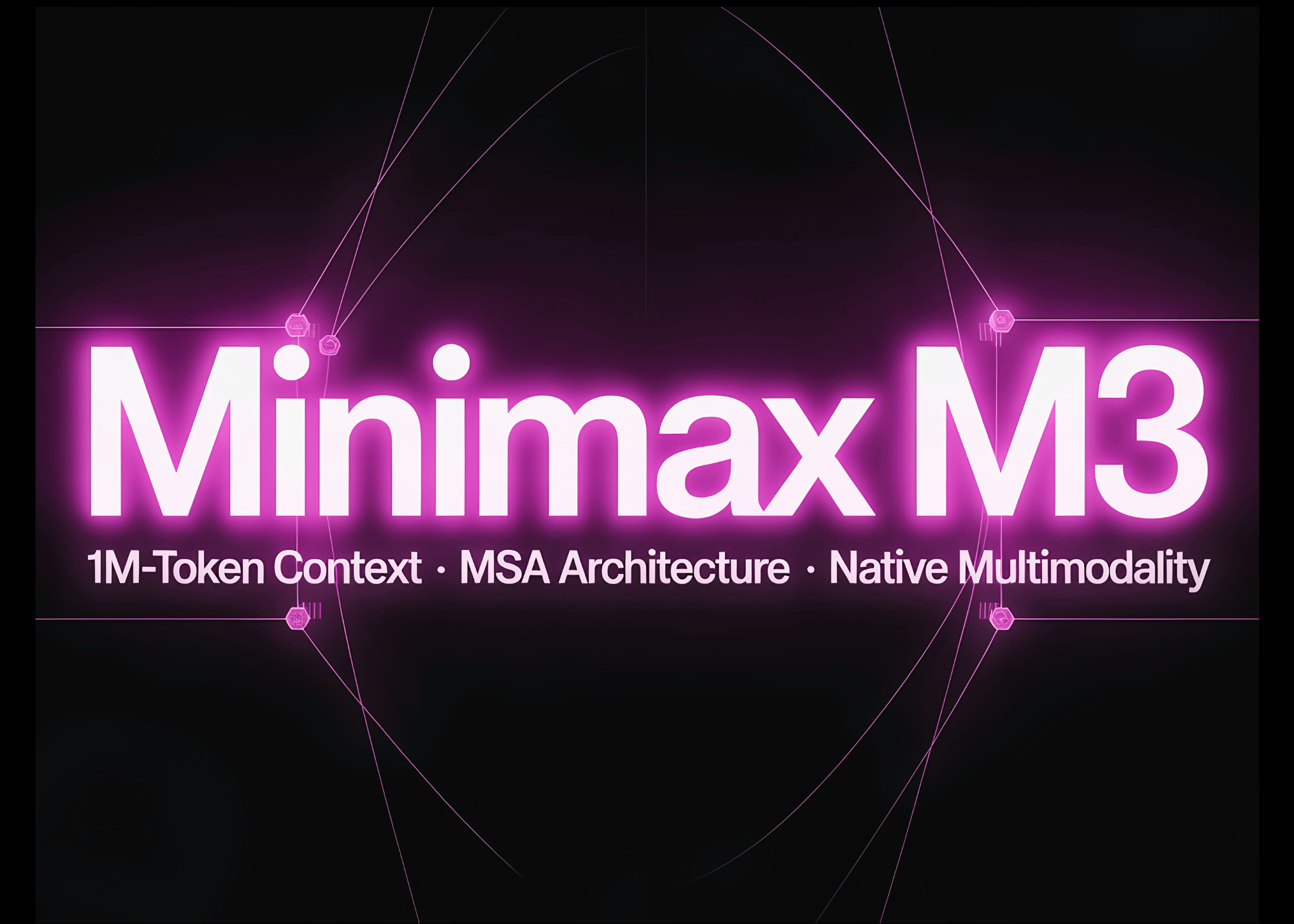
MiniMax launched its M3 model built on the new MiniMax Sparse Attention (MSA) architecture. It supports a massive 1 million-token context window and natively handles multimodal inputs including images and videos. The model also enables agentic coding, allowing more autonomous code generation and manipulation.
Why it matters
Handling 1 million tokens means MiniMax M3 can process and keep track of extremely large documents or datasets in one pass. This reduces the need to chunk or summarize data prematurely, enhancing accuracy and continuity for applications like long-form content analysis, large-scale codebases, or multimedia workflows. Native multimodality removes the friction of integrating cross-format inputs, making the model more adaptable for real-world tasks that combine text, visuals, and video.
Agentic coding accelerates automation in developer pipelines and software tooling by enabling the model to actively write, test, and debug code requests rather than just responding passively. That capability may push AI-assisted coding tools toward more independent roles in software development environments.
Who it is for
Developers building applications that require massive context windows—such as legal document review, scientific research, or multimedia content synthesis—will find MiniMax M3 compelling. Businesses relying on AI for multimodal analysis will benefit from native video and image support without separate preprocessing. Software shops exploring AI coding assistants can use agentic coding to cut cycle times or improve developer productivity.
Investors and operators tracking models pushing on context length and multimodality should keep an eye on how MiniMax M3 moves the needle on adoption and competitive performance benchmarks.
The catch
Supporting a 1 million-token context and multimodal inputs likely demands substantial computational resources, potentially limiting initial use to well-funded teams with access to high-end hardware or cloud services. The details around performance, latency, and pricing remain to be seen but will determine how broadly MiniMax M3 can scale beyond research or niche deployments.
Also, agentic coding raises questions about control and reliability in code generation. Integrators will need rigorous validation and guardrails before entrusting key software tasks to autonomous AI processes.
What to watch next
Track MiniMax’s announcements about access options, usage costs, and performance benchmarks. Watch for case studies illustrating real-world gains in multimodal workflows and developer productivity. See how competitors respond to the 1 million-token capability and native video/image support. Monitor progress on trustworthy and safe agentic coding practices, which will be critical for broader adoption.
AI Quick Briefs Editorial Desk


