Anthropic Ships Claude Opus 4.8 Alongside Dynamic Workflows and Cheaper Fast Mode, With Workflows Capped at…
What changed
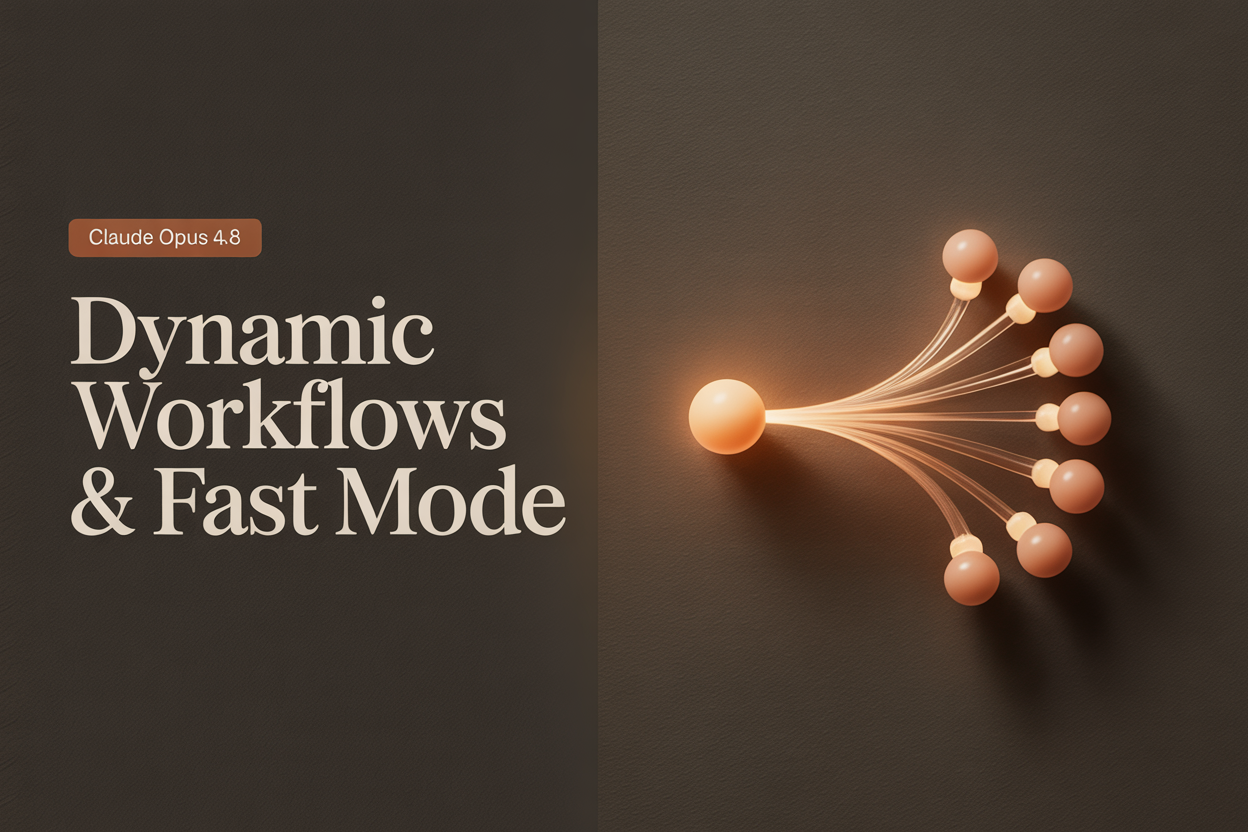
Anthropic released Claude Opus 4.8, introducing dynamic workflows and a cheaper fast mode to Claude Code. The dynamic workflows allow workflows to run with up to 1,000 subagents, enabling more complex and scalable multi-agent orchestration. Meanwhile, the cheaper fast mode reduces operational costs for agents running routine tasks, making Claude Code more cost-effective to deploy in production environments. These features are currently in research preview, signaling they are experimental but available for builders to test.
Why builders should care
Multi-agent systems often struggle with balancing cost and complexity. By capping workflows at 1,000 subagents, Anthropic sets a clear scalability boundary that forces developers to optimize task distributions and resource use. The dynamic workflows feature lets operators chain AI agents more flexibly based on task requirements rather than fixed pipelines. Cheaper fast mode opens the door to running larger agent fleets without proportional cost increases, which is critical for startups and teams building automation at scale. These changes lower the barrier for launching sophisticated AI-driven workflows without a ballooning cloud bill.
The practical takeaway
Operators running agent-based applications should prepare to redesign their workflows to harness the dynamic, multi-subagent structure. Instead of static, linear chains, workflows can now adapt in real-time to the needs of the task. The fast mode enables scaling up agent instances during demand spikes or repetitive command execution at a lower price point. However, the subagent cap means very large sprawling workflows will need architecture adjustments or segmentation to stay within operational limits. The research preview status also calls for cautious experimental use, as features may evolve or impose constraints as Anthropic gathers usage data.
What to watch next
The adoption pace of Claude Opus 4.8’s new capabilities will be telling. Operators should track how Anthropic further develops workflow scalability and cost controls. Expansion beyond 1,000 subagents or improvements in agent coordination efficiency could unlock greater complexity for automation tasks. Observing how the community leverages faster, cheaper modes in real-world use cases will also signal readiness for production use. Finally, attention should go to how Anthropic prices and regulates these features long term, as they can shift the economics of multi-agent AI solutions.
AI Quick Briefs Editorial Desk