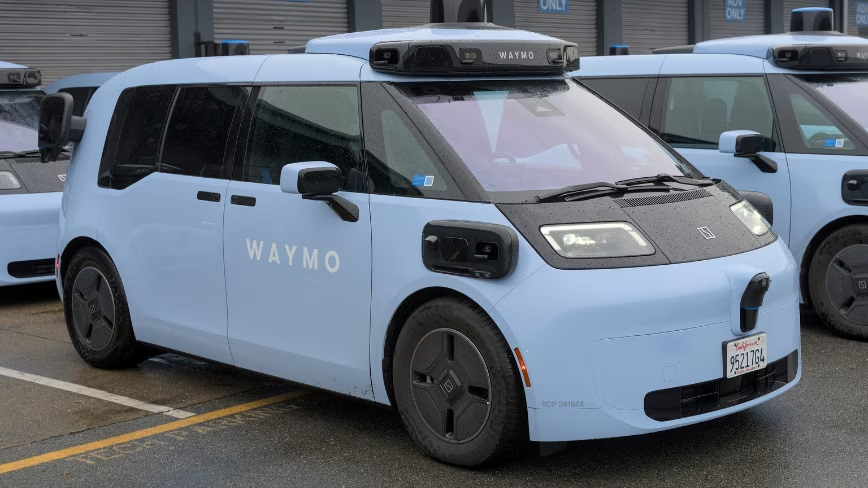
Here Comes Ojai, Waymo’s New Chinese-Made Robotaxi

What happened
Waymo rolled out its new Ojai robotaxi fleet, manufactured in China, now serving passengers in California and Arizona. These pale-blue vehicles begin picking up public riders today, marking a shift in Waymo’s hardware strategy with an imported assembly line rather than in-house builds. The Ojai models represent the latest generation of Waymo’s autonomous driving tech combined with a fresh vehicle design aimed at scaling robotaxi service across multiple states.
Why it matters
Ojai’s debut signals acceleration in robotaxi operations with production cost and supply chain changes. Outsourcing manufacturing to China potentially lowers vehicle costs and speeds build volume, which can pressure other players still relying on bespoke or US-based manufacturing. For operators, the new fleet marks a more scalable path to fleet expansion with mature self-driving systems already proven in testing. This means robotaxi services could reach more customers faster, nudging regulators and local markets to adapt to wider deployment.
The vehicles themselves deliver insights on how robotaxi fleets integrate design, sensors, and AI software into a production-ready package. For builders and investors, Ojai’s launch highlights shifting economics and operational efficiencies in autonomous vehicle rollouts, a necessary factor for long-term profitability. It also tightens competition in robotaxi availability in important regional markets.
What to watch next
Pay attention to real-world operational data from the Ojai fleet: ride reliability, safety metrics, and service area expansion will reflect the practical maturity of this approach. Also watch if other robotaxi companies follow suit by outsourcing vehicle manufacturing internationally, which could reshape supply chains and investment strategies. Regulatory response in California and Arizona will matter too, showing how local authorities adjust rules with increased public access to autonomous rides.
Ultimately, Ojai’s success or failure will reveal how heavy manufacturing partnerships influence robotaxi economics and whether public acceptance grows as these cars spread beyond pilot programs into everyday transportation.
AI Quick Briefs Editorial Desk