Perplexity AI Open-Sources Unigram Tokenizer That Achieves 5x Lower p50 Latency Than Hugging Face tokenizer…
What changed
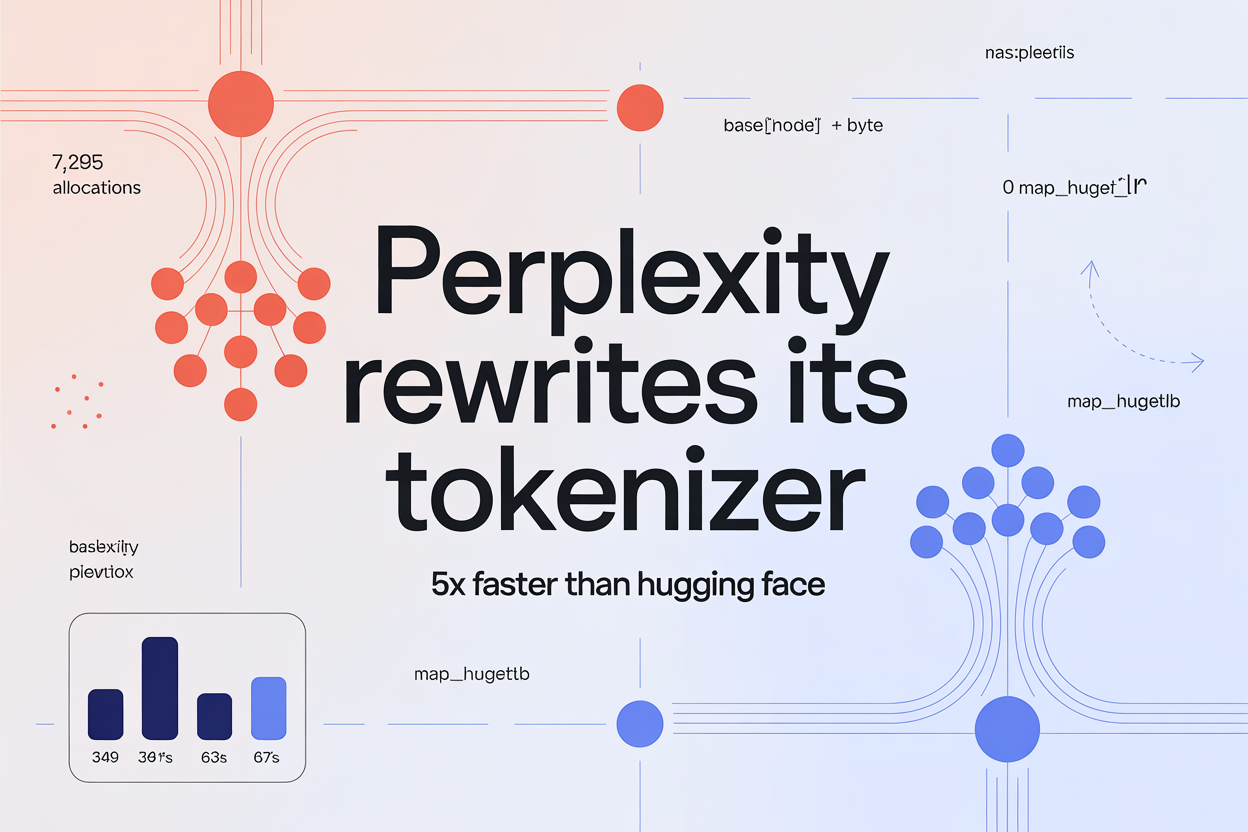
Perplexity AI released an open-source version of their rewritten Unigram tokenizer, which significantly outperforms existing options. This new tokenizer achieves five times lower median latency compared to the popular Hugging Face tokenizers crate. Beyond speed, it also reduces CPU usage by a factor of five to six when deployed in reranker models.
Why builders should care
Tokenization is a core step in NLP pipelines. Faster tokenizers lower inference times and reduce cloud computing costs by cutting CPU cycles. The gain here is concrete: quicker tokenization means faster model responses and cheaper, more efficient backend operations. For anyone running large-scale reranking or search models, this improvement translates to tangible operational savings and better user experience.
The practical takeaway
Swapping to Perplexity AI’s tokenizer can directly reduce latency bottlenecks in reranker-heavy applications. This lowers infrastructure bills and frees CPU resources for other tasks or higher throughput. Open-sourcing the tokenizer also offers developers the chance to integrate, audit, and tailor it without dependency on commercial or proprietary codebases.
What to watch next
It will be important to see how quickly the developer and AI ops community adopts Perplexity’s tokenizer in production environments. Monitoring updates for compatibility with major frameworks and extending benchmarks to more diverse models will clarify its broader applicability. Also watch whether Hugging Face or others respond with optimizations to close the performance gap.
AI Quick Briefs Editorial Desk