How to Build an MCP Style Routed AI Agent System with Dynamic Tool Exposure Planning, Execution, and Contex…
What changed
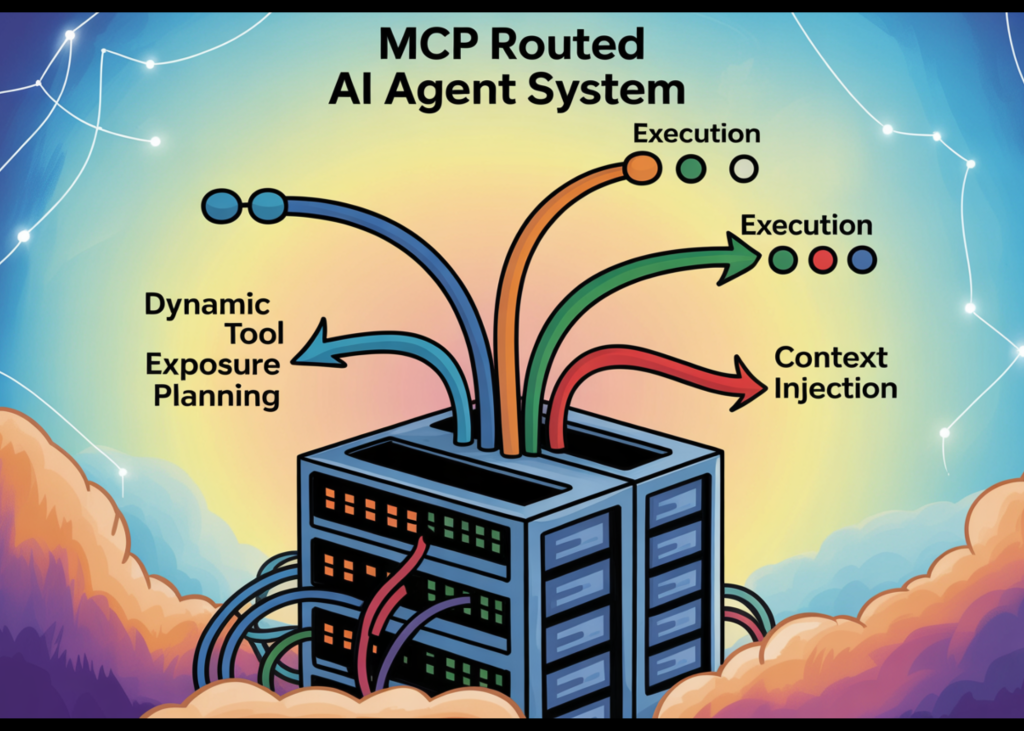
A new tutorial walks through building an MCP-style routed AI agent system from scratch, integrating multiple advanced elements into one workflow. The system relies on a modular tool server that dynamically exposes capabilities like web search, local data retrieval, dataset loading, and Python execution. It combines discovery, intelligent routing, structured planning, and execution with context-aware injection. This setup mimics modern routed agent architectures but is fully custom and modular instead of vendor-locked.
Why builders should care
This approach clarifies how to manage complexity in AI systems that need multiple tools and knowledge sources. Instead of hardcoding routes or static workflows, this method allows agents to dynamically identify which tool to use based on input context and plan steps accordingly. That improves flexibility and robustness when building agents for real-world tasks that span search, computation, and data access. It also exposes a path to operationalize routed agents using open modular components, reducing dependency on proprietary stacks.
The practical takeaway
Operators building complex AI workflows can apply this system to avoid brittle pipeline design. Dynamic tool exposure means adding or swapping capabilities requires minimal rewiring. Planning plus context injection prepares the agent to make smarter calls with relevant information at each step. The modular tool server provides a clear interface to expose and orchestrate heterogeneous capabilities like search APIs or local Python execution environments. This makes routed agent design more approachable and maintainable for integrations, experimentation, and scaling diverse AI-driven workflows.
What to watch next
Look for more tool server frameworks that package and manage capabilities dynamically with smart routing built in. Watch for integrations between routed AI agents and external data sources becoming easier and more standards-based. The evolution of adaptive context injection and structured planners will accelerate complexity management in AI agents for business automation, research, and software augmentation. Open, modular MCP-style agents could pressure vendor-locked systems, raising the bar on flexibility and operational control.
AI Quick Briefs Editorial Desk