How AI Agents Will Transform Data Science Work in 2026
What changed
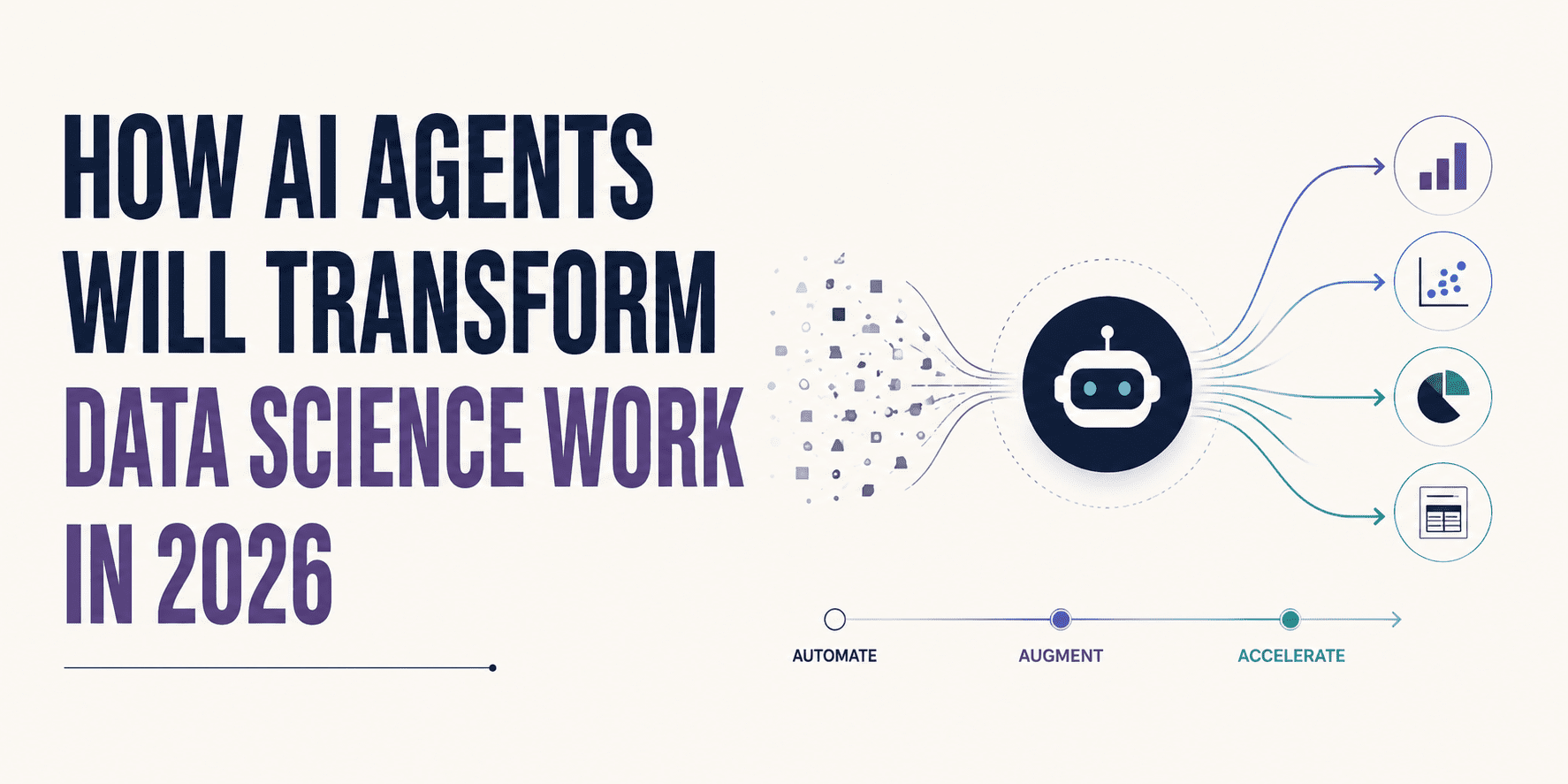
AI agents are set to reshape data science workflows by 2026, enhancing how analysts handle data tasks at scale. Unlike traditional tools that require hands-on coding and model tuning, these autonomous AI agents will manage complex processes such as data cleaning, feature engineering, model selection, and deployment with minimal human input. They will operate semi-independently across data pipelines, calling on specialized AI services to assemble insights faster and with less manual effort.
Why builders should care
The rise of AI agents puts pressure on data scientists to shift from routine execution toward higher-value activities like strategy, hypothesis framing, and interpretation. Rather than replacing analysts, these agents augment their productivity, reducing time spent on repetitive tasks and accelerating experimentation cycles. Builders of data science platforms and analytics tools must now prioritize integrating AI agents into their products to stay competitive and meet evolving user demands. This means focusing on interoperability, transparency, and controls that keep human experts in the loop without bogging down progress.
The practical takeaway
For data scientists, AI agents will cut the grind of data prep and model trial-and-error, allowing them to deliver insights more quickly while maintaining oversight. Businesses gain faster, smarter analytics capabilities without needing significantly more human talent. For tool makers, embedding AI agents requires balancing automation with explainability to avoid trust erosion. Builders who deliver smooth, human-centric agent workflows stand to gain customer trust and long-term engagement.
What to watch next
Keep an eye on emerging AI agent frameworks that enable modular, reusable intelligence layers across data science stacks. Watch how leading platforms incorporate agent-based automation and whether they offer fine-grained user control to prevent over-automation risks. Investor focus may shift toward startups developing AI agent orchestration tools, integration middleware, and productivity dashboards for analysts. The evolution of data science work will increasingly hinge on how well agents can partner with human experts, not replace them.
AI Quick Briefs Editorial Desk