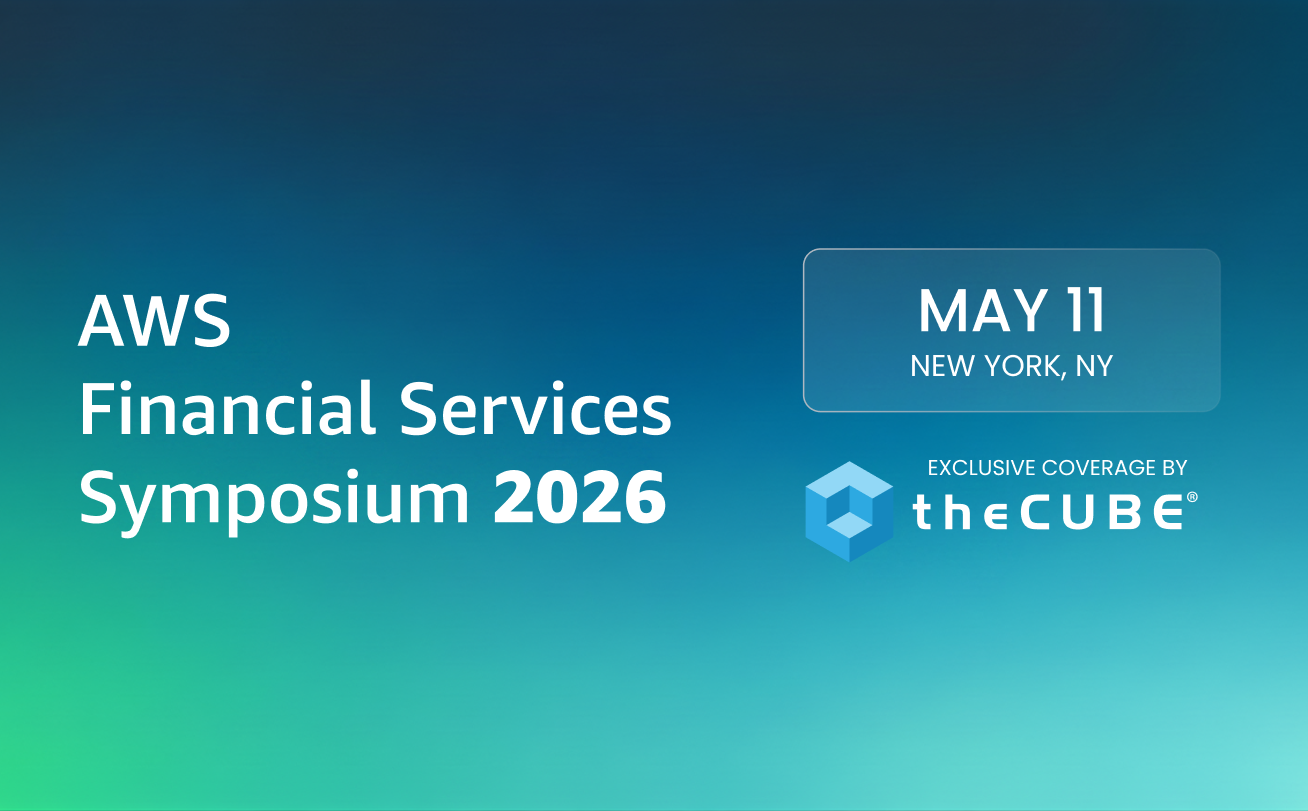
What to expect at the AWS Financial Services Symposium: Watch theCUBE’s exclusive on-demand coverage starti…
What happened
The AWS Financial Services Symposium is making on-demand coverage available starting May 11 through theCUBE. The event zeroes in on how AI is reshaping financial services, focusing on personalized, automated, and AI-driven solutions. A key topic is the trust gap in AI applications, where 67% of enterprises doubt their revenue data’s accuracy enough to base AI decisions on it. The summit will discuss agentic AI—automated systems making independent decisions—as a major shift and challenge for financial firms.
Why it matters
Trust in AI is a bottleneck in financial services innovation. Financial institutions manage sensitive data and require near-perfect accuracy; any error creates costly compliance, fraud, or reputational risks. If enterprises cannot trust their underlying data, their AI models become unreliable, which slows down adoption and forces more manual oversight. As financial services push toward agentic AI, where systems act without constant human direction, lack of trust raises the stakes. This skepticism pressures vendors to offer stronger data validation, auditing tools, and transparency or risk losing clients.
What changes in practice
Builders must prioritize data integrity and traceability in AI models. It is no longer enough to develop accurate algorithms; financial firms will demand tools that demonstrate the provenance and reliability of training data and AI outputs. Founders pitching AI in finance should focus their product roadmaps on explainability features, audit trails, and compliance integrations. Buyers should vet vendors for proven data governance and controls before committing, as inadequate trust mechanisms will increase vendor risk and could lead to costly compliance failures. Investors need clearer revenue proof from AI companies, since unreliable data undercuts valuation and funding. Security teams and regulators will intensify scrutiny on AI algorithms, pushing firms to embed monitoring for bias and error early in development. Overall, the symposium signals that AI adoption in financial services will require a new layer of operational rigor around data trust rather than just technology innovation.
Who should pay attention
Financial services organizations deploying AI should watch closely, especially those handling loans, payments, or risk modeling, where data errors cause major downstream impacts. AI vendors aiming at finance must reckon with higher customer demands for transparency and auditing capabilities. Regulators interested in financial stability and consumer protection need to track how agentic AI affects compliance and risk exposure. Investors funding AI startups in financial tech should weigh data trust factors heavily, since unreliable revenue inputs threaten ROI. Security and compliance teams in banks face more pressure to validate AI workflows continuously, making their roles critical in AI rollout success.
What to watch next
Keep an eye on vendor announcements that highlight new tools for data validation and explainability aligned with financial compliance. Look for case studies in the upcoming AWS Financial Services Symposium demonstrating how firms address AI trust issues in real deployments. Watch for regulatory updates or guidelines focused on agentic AI and data accuracy in finance. Evidence of accelerated AI adoption hinges on improved data governance frameworks or vendor partnerships integrating trust mechanisms. Conversely, if skepticism around AI trust persists without solutions, adoption may stall and funding for financial AI startups could tighten.
AI Quick Briefs Editorial Desk