Intel hires Qualcomm veteran Alex Katouzian to lead a new Client Computing and Physical AI group
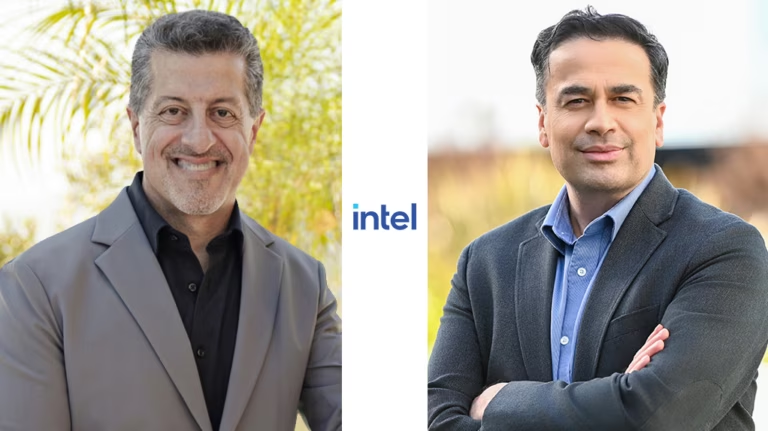
Intel has hired Alex Katouzian, a Qualcomm veteran with 25 years of experience, to lead a newly formed Client Computing and Physical AI group. Katouzian’s most recent roles at Qualcomm involved overseeing mobile, compute, and extended-reality businesses, giving him deep expertise in developing advanced chips and systems for these areas. This move fits Intel CEO Lip-Bu Tan’s strategy of recruiting top talent from competing companies and reorganizing the business to better compete in key tech sectors.
This hiring matters because it signals Intel’s commitment to strengthening its position in AI hardware, particularly in what is known as physical AI. Physical AI refers to integrating artificial intelligence more directly into physical devices and computing hardware, such as smartphones, PCs, augmented reality tools, and beyond. By creating a specialized group led by a leader with Qualcomm’s mobile and compute experience, Intel is making a clear push to innovate in this growing and competitive area. This could accelerate new products that make everyday tech smarter and more responsive by embedding AI directly within the devices people use.
Intel’s recent leadership changes and restructuring efforts have been focused on building a technically strong team able to rethink processor design and AI integration. Katouzian’s background is an excellent match for this goal because Qualcomm has been a leader in designing chips that manage power-efficient AI and mobile computing. Intel is aiming to catch up and lead in areas where chip design must serve AI at the edge—in user devices rather than just in cloud data centers. This is important because the future of AI involves more real-time, always-on, on-device processing, reducing reliance on internet connections and improving privacy.
Looking forward, Katouzian’s hire shows Intel is betting heavily on a new wave of AI that blends physical computing with intelligent software directly in client devices. This could also mean Intel is ready to challenge the dominance of Qualcomm and others in mobile and AR markets, areas critical to consumer electronics. Observers should watch how this team develops new chips or platforms and whether Intel pushes hard into augmented reality, mobile AI, or PC markets adding AI capabilities at the hardware level. Intel’s next moves will reveal how it plans to carve out a differentiated AI strategy in a crowded chip market.
— AI Quick Briefs Editorial Desk