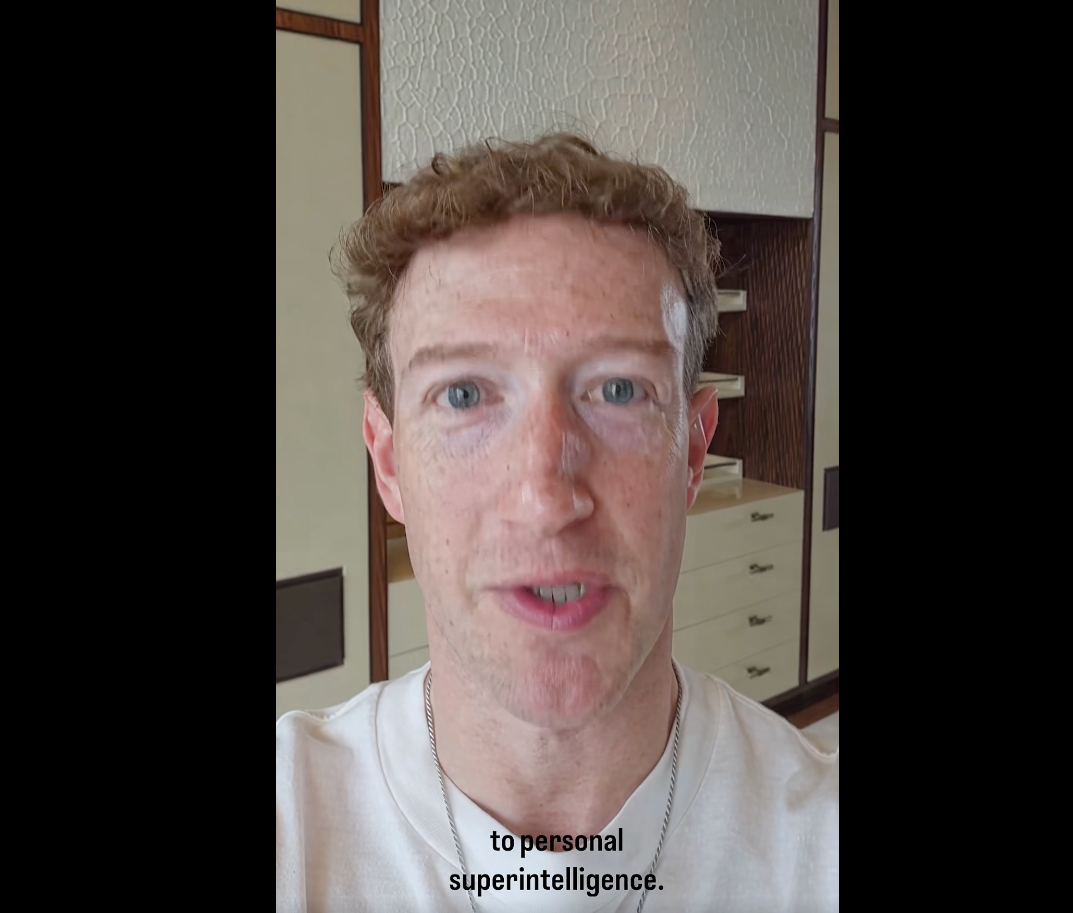
Mark Zuckerberg’s AI manifesto is exactly why people don’t like AI

What happened
Mark Zuckerberg released a 6,500-word manifesto outlining Meta’s vision for personal AI. The document focuses on the development of “personal superintelligence” systems designed by Meta AI. These AI agents are envisioned as highly personalized assistants that could help users with complex tasks, knowledge, and decision-making. Zuckerberg lays out both the potential benefits and the technical challenges involved.
Why it matters
Zuckerberg’s manifesto exposes why AI still triggers suspicion and resistance. His framing suggests a future where AI deeply integrates into everyday lives, raising concerns about privacy, control, and trust. The vision also highlights Meta’s intent to shift power toward AI-driven personal tools, which may disrupt existing app ecosystems and user behavior. For businesses, this signals a push toward AI as a platform for individualized productivity, raising expectations for data access, customization, and continuous learning from user inputs.
What to watch next
The manifesto puts pressure on competitors to clarify their AI ambitions and privacy models. Watch how regulators respond to Meta’s outlined strategies, especially on data security and personal autonomy. Builders should track the evolution of Meta’s AI tools and APIs, which could reshape the landscape for personal assistants and AI agents. Investors and operators should monitor user adoption patterns and partnership moves triggered by Meta’s aggressive push into personal AI.
AI Quick Briefs Editorial Desk