Specification Engineering: The New Skill After Prompt Engineering
Quick take
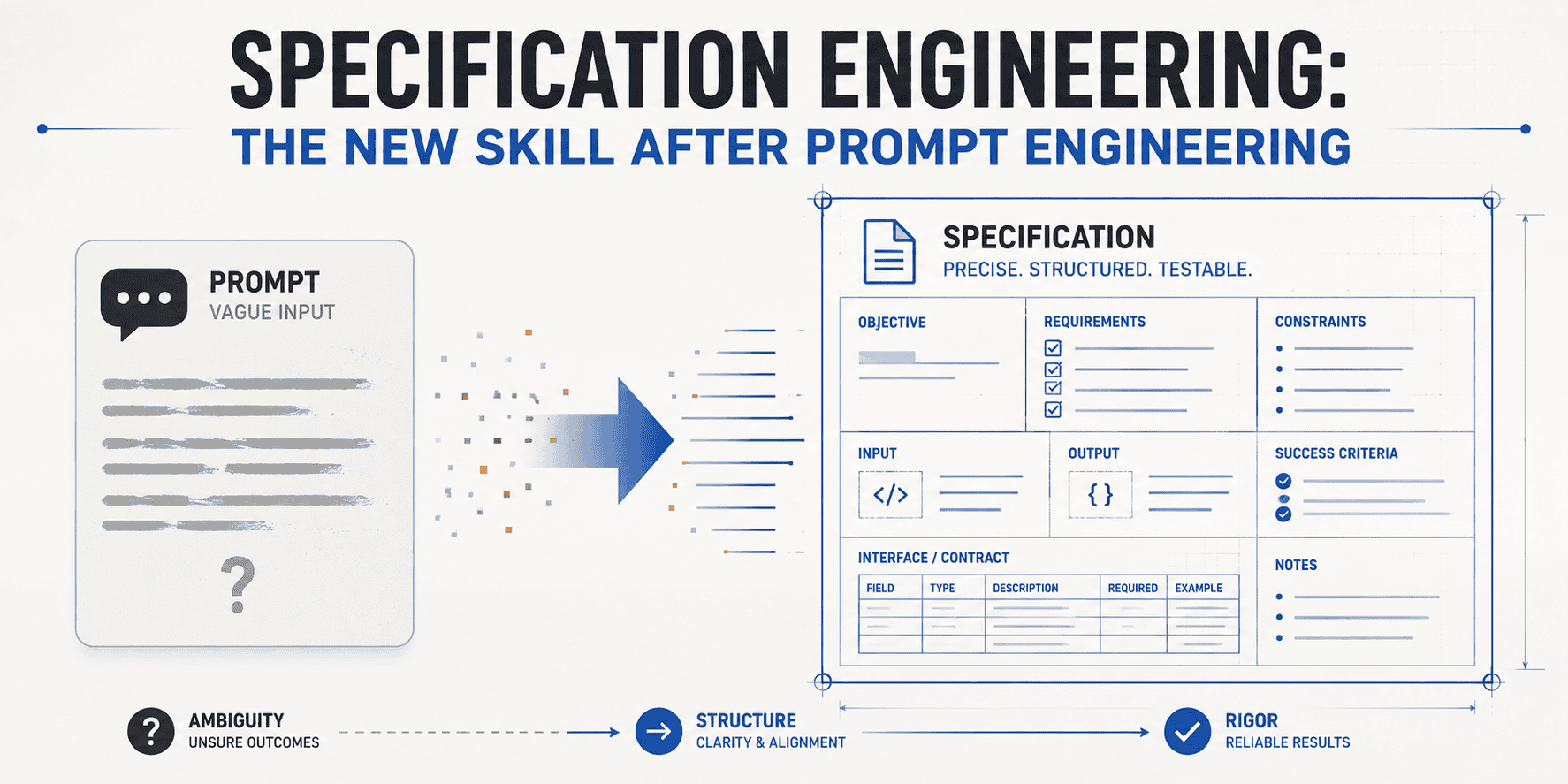
Specification engineering is emerging as the successor to prompt engineering in AI workflows. While prompt engineering focuses on crafting better questions to get useful AI responses, specification engineering shifts attention to exactly defining what the work output should be. It means creating clear, actionable requirements for AI tasks rather than relying on trial-and-error with prompts.
Why it matters
The practical shift to specification engineering tightens how businesses, builders, and operators use AI. It pressures users to focus on delivering specific outcomes, not just exploring query patterns or prompt styles. This change lowers wasted effort chasing vague or inconsistent AI outputs and raises the quality bar for integration into production workflows. Instead of hoping a prompt nudges the AI in the right direction, specification engineering demands concrete definitions that AI systems can follow more reliably.
For operators, it makes AI tools more predictable and easier to audit. For builders, it reshapes development toward formalizing outputs, which can simplify automation, reduce errors, and speed iteration. For investors and founders, it signals a market moving beyond early experimentation to embedding AI into defined business processes at scale. Overall, specification engineering strengthens control over AI tasks, reducing ambiguity and increasing trust in AI-driven results.
AI Quick Briefs Editorial Desk