Loop Engineering for Listing Questions: When the Answer Is Every Passage, Not the Top One

What changed
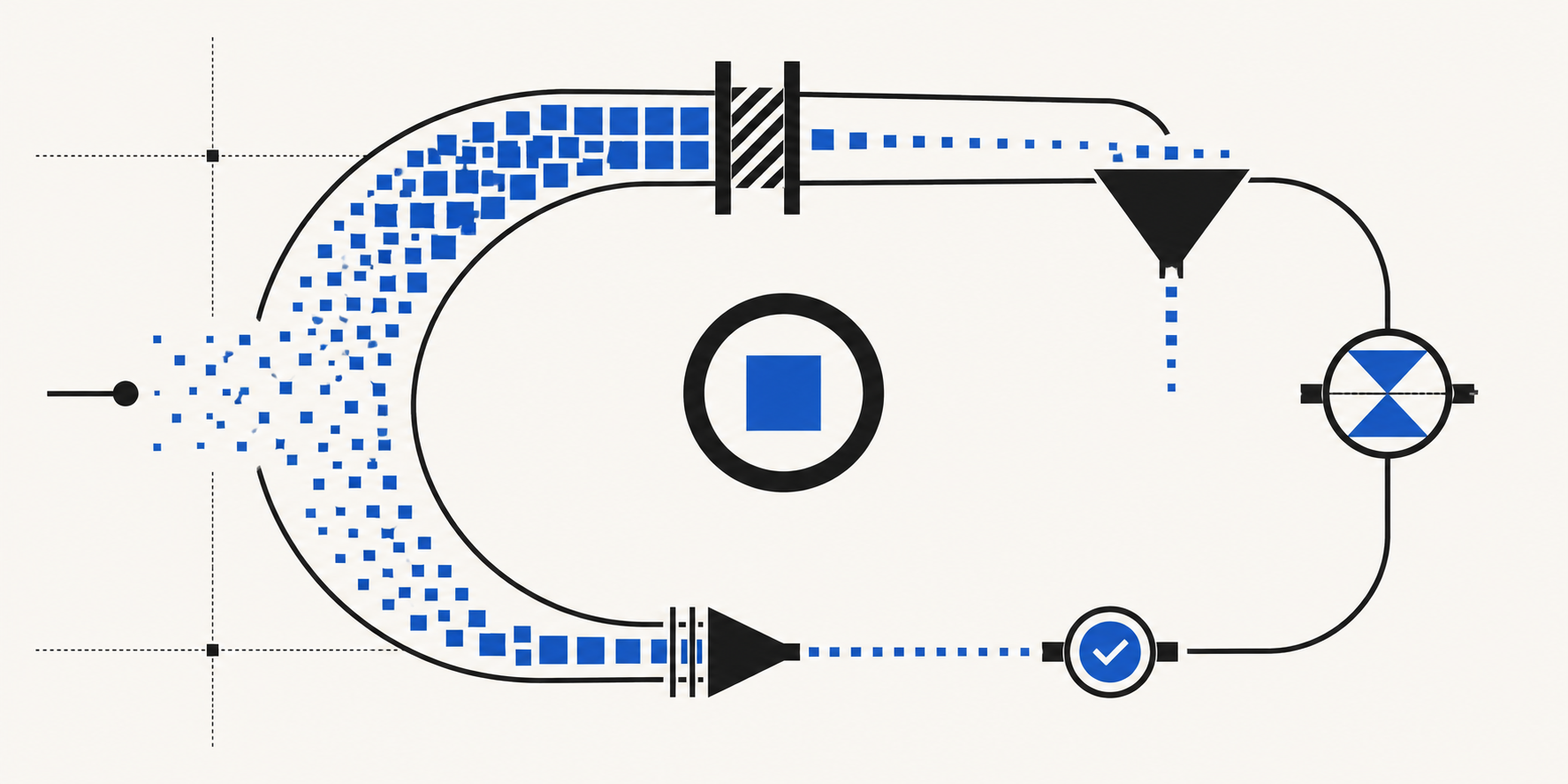
Most retrieval-augmented generation (RAG) pipelines for question answering rank passages and pick only the top one to answer queries. That works well for factoid or short-answer questions. However, for listing questions where the answer spans multiple passages, common RAG setups underperform because they fail to aggregate every relevant passage. The emerging alternative is a loop engineering approach that processes all relevant passages sequentially instead of selecting just one. This method loops through retrieved documents, extracting and compiling every matching piece of information to handle listing questions properly.
Why builders should care
Ignoring listing questions means missing a large category of real-world information needs. Many enterprise knowledge workflows and customer support bots rely on comprehensive answers—such as product features, compliance rules, or warranty policies—that pull from multiple text sources. Standard RAG can overlook critical details by locking onto a single highest-ranking passage, reducing accuracy and thoroughness. Loop engineering explicitly addresses this failure mode by changing the pipeline architecture to accumulate answers across the entire document set. Builders focusing on knowledge extraction, enterprise search, or conversational AI will need to rethink their pipelines if they want reliable answers for listing and multi-part queries.
The practical takeaway
Shifting to loop engineering means adopting an iterative retrieval and generation pipeline. It requires system redesign to chain response generation for each relevant passage and aggregate outputs coherently. This extra complexity translates to better coverage of listing questions but also impacts latency and resource use as multiple generation steps increase computational cost. Users balancing completeness with response time should consider whether their use cases actually demand listing-style answers. In contexts where missing any relevant passage weakens decision-making, this method tightens accuracy but also raises engineering and infrastructure requirements. It sets a new baseline for enterprise pipelines that must handle more complex question types reliably.
What to watch next
Development is ongoing in optimizing loop engineering to minimize overhead and maintain scalability. Look for improvements in how retrieval models score relevance as well as innovations in multi-step generation orchestration. Also, investigate hybrid approaches that combine looped passes with weighted ranking to prune less critical passages early in the pipeline. How vendors incorporate loop engineering into commercial RAG tools will determine adoption speed. Builders should track open-source frameworks and major cloud AI providers for emerging support that makes multi-passage aggregation easier to deploy at scale.
AI Quick Briefs Editorial Desk