Beyond Bots: Rethinking AI Support with a Hybrid AI Architecture
What changed
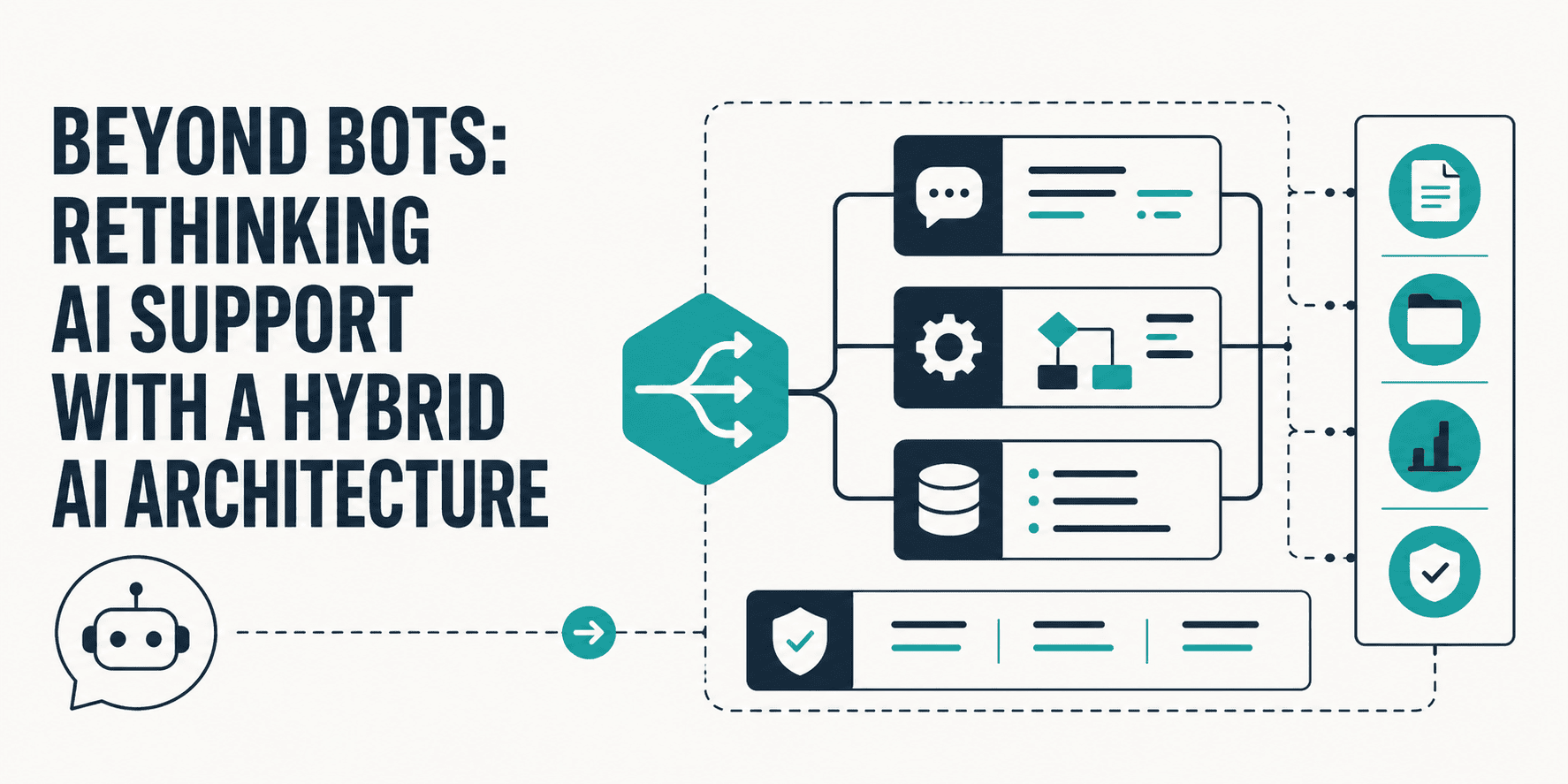
AI support systems are moving beyond pure chatbot models by combining retrieval augmented generation (RAG) and fine-tuning techniques into hybrid AI architectures. This approach mixes the strengths of pre-trained large language models with domain-specific data retrieval and targeted model adaptation. It allows AI support to tap into up-to-date, context-aware information while maintaining flexibility to specialize its responses.
Why builders should care
Traditional chatbots often fail because they either rely on static, fine-tuned models that quickly become outdated or on retrieval-only approaches that lack nuanced understanding. The hybrid architecture addresses these trade-offs by dynamically pulling relevant documents and combining them with generative capabilities tailored via fine-tuning. This means developers can build AI support tools that respond more precisely in specialized domains like customer service, technical troubleshooting, or knowledge management.
The practical takeaway
Adopting a hybrid RAG and fine-tuning approach forces builders to rethink the architecture of AI support tools. Instead of choosing between generic large language models or rigid domain-specific models, hybrid solutions enable continuous, real-time updates from external data and improved task focus. This changes the economics of AI support by reducing the frequency of expensive model retraining, speeding deployment, and improving user satisfaction with consistently accurate responses.
What to watch next
Look for new platforms and APIs offering seamless integration of RAG with fine-tuning workflows, lowering the technical barrier for hybrid AI support deployment. Also watch for how enterprises adopt this method to reduce support costs and improve customer experience. Finally, monitor open challenges like latency, data quality control, and maintaining user trust when dynamically generating answers from retrieval combined with adaptive fine-tuned models.
AI Quick Briefs Editorial Desk