7 Chunking Strategies That Decide Whether Your RAG Works
What changed
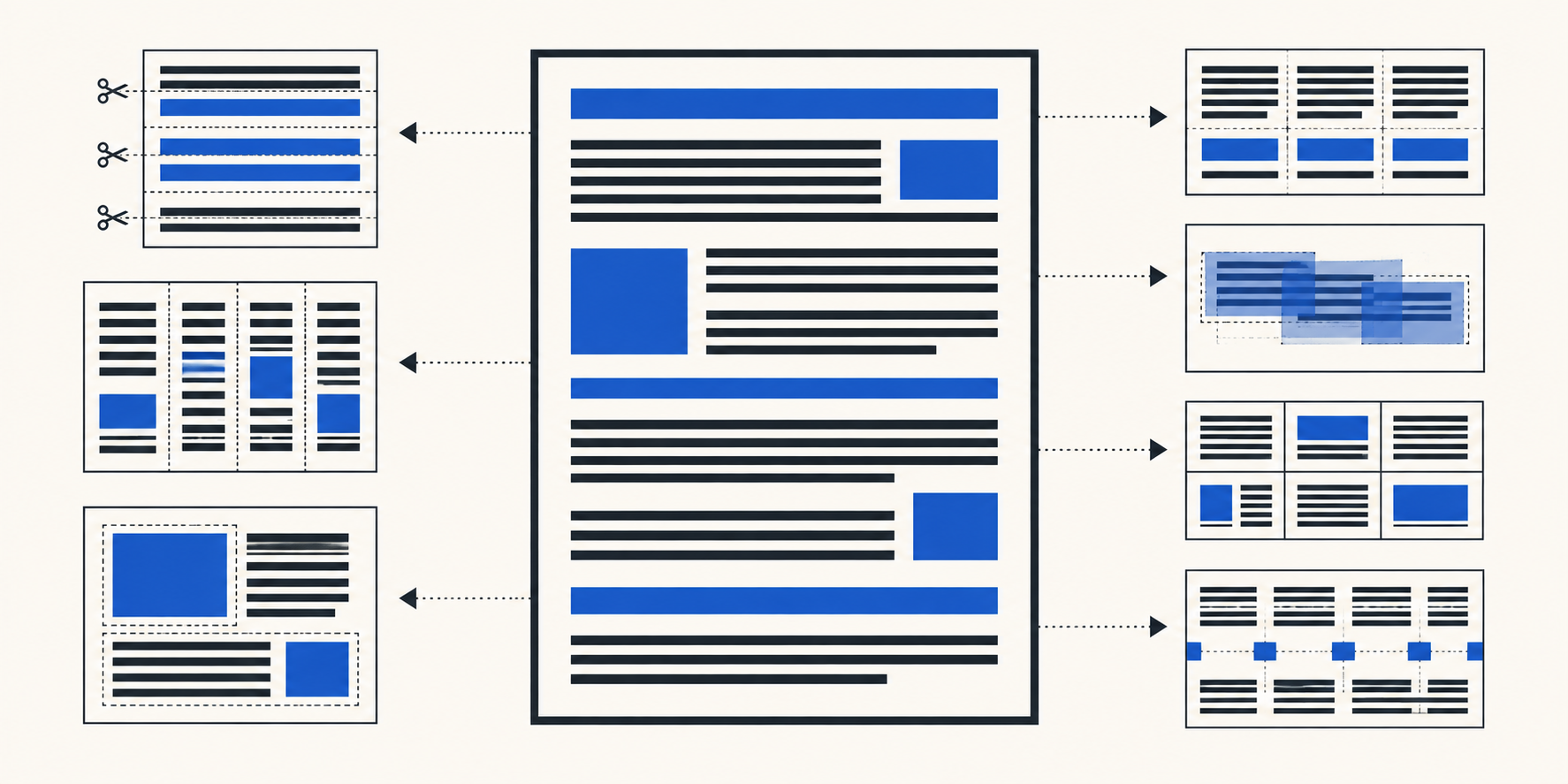
The core of Retrieval-Augmented Generation (RAG) models is the chunking strategy used to split data for retrieval and inference. After extended production use, chunking is no longer just a theory test. The reality of day 100 in production shows how the choice of chunking method directly affects retrieval accuracy, response relevance, latency, and cost efficiency. Seven distinct chunking strategies shape how well your RAG works, with trade-offs in chunk size, overlap, semantic coherence, and indexing speed.
Why builders should care
Builder teams often fixate on model architecture or vector stores but neglect chunking, which quietly governs data access speed and quality. Poor chunking eats up compute and memory resources while degrading output. Optimal chunking balances enough context per chunk to feed LLMs without overwhelming them or wasting bandwidth. How data chunks connect to retrieval also influences prompt reliability and error propagation. Getting chunking right on day 100 forces a rethink of initial assumptions and operational goals, especially around evolving document types and query patterns.
The practical takeaway
Operators need to prioritize chunking strategy adjustments as their RAG systems mature. Off-the-shelf chunking approaches may work early but degrade with scale and diversity. Smarter chunking moves beyond fixed-size text splits into semantically meaningful units or adaptive chunk sizes tuned to avoid information loss. This signals a shift toward ongoing tuning of chunk parameters, indexing, and embeddings as live feedback accumulates. Skipping this step means higher runtime costs, slower query responses, and eroded answer trust.
What to watch next
Watch for emerging tools that automate chunking optimizations using real-time production metrics, or RAG frameworks that integrate chunk tuning into the deployment pipeline. Also look for academic and industry papers quantifying day 100 maturity impacts across chunk strategies. As more architectures incorporate retrieval stages, chunking will become a central variable in RAG performance battles. Active adaptation rather than static chunking will define who scales RAG effectively in complex data environments.
AI Quick Briefs Editorial Desk