AI agents can’t yet do open-ended AI research
What changed
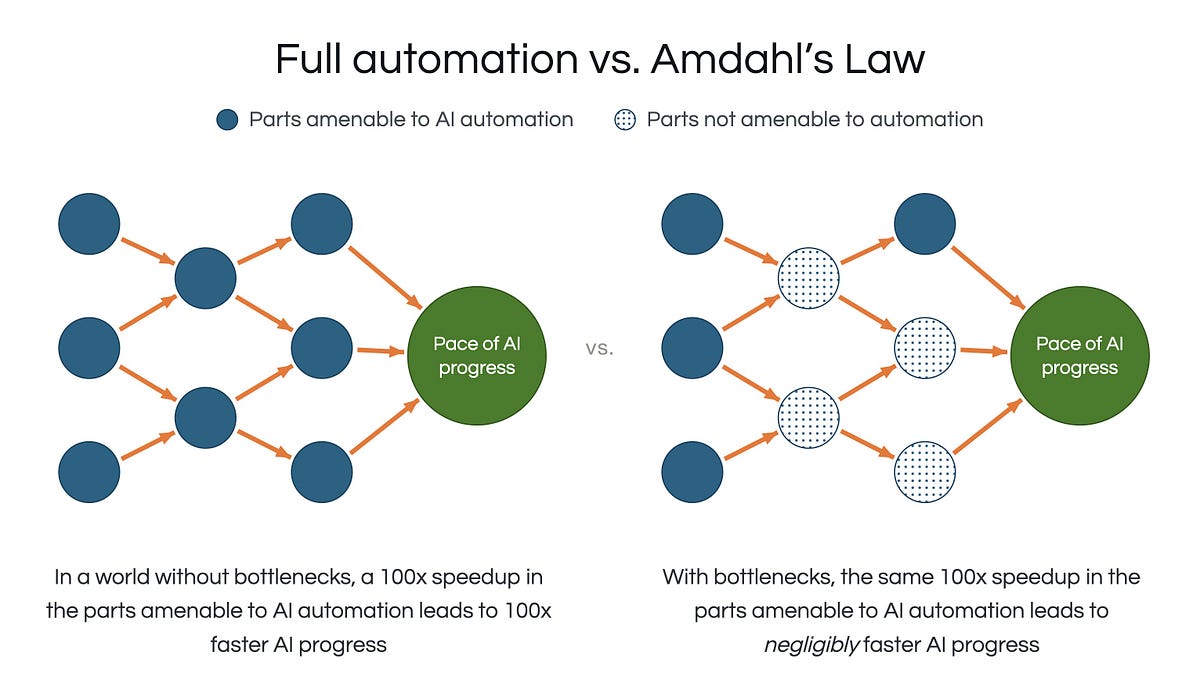
AI agents designed for open-ended research tasks have not yet proven capable of sustained, independent innovation. Two recent case studies testing autonomous AI systems revealed they struggle to formulate new hypotheses, design experiments, and iterate intelligently without significant human assistance. The systems stalled quickly or veered off track when tasked with genuinely open-ended research goals.
Why builders should care
Autonomous AI research agents are hyped as the next frontier for accelerating discovery, but these early results expose how far the technology still must go. Builders should recognize that current AI agents function best under tightly scoped tasks with clear rules and feedback loops. Without a human in the loop guiding priorities, judging outcomes, and refining strategies, these agents lack the judgment and contextual awareness critical for real innovation.
The practical takeaway
For operational teams exploring research automation, these findings caution against overreliance on open-ended AI agents. Early prototypes can help automate routine experimentation steps, but expecting them to independently navigate complex problem spaces will slow projects and raise costs rather than accelerate breakthroughs. Human oversight, iterative input, and domain expertise remain indispensable for meaningful AI-driven research.
What to watch next
Progress toward effective autonomous AI researchers depends on advances in long-term reasoning, self-directed learning, and creative problem solving. Watch for new architectures or hybrid human-AI workflows that bridge these gaps. Investors and operators focused on research productivity should track developments in agent evaluation frameworks measuring genuine exploratory capacity beyond task execution.
AI Quick Briefs Editorial Desk


