A startup says the AI bottleneck isn’t compute. It’s memory, and it ditched the GPU to prove it.
What changed
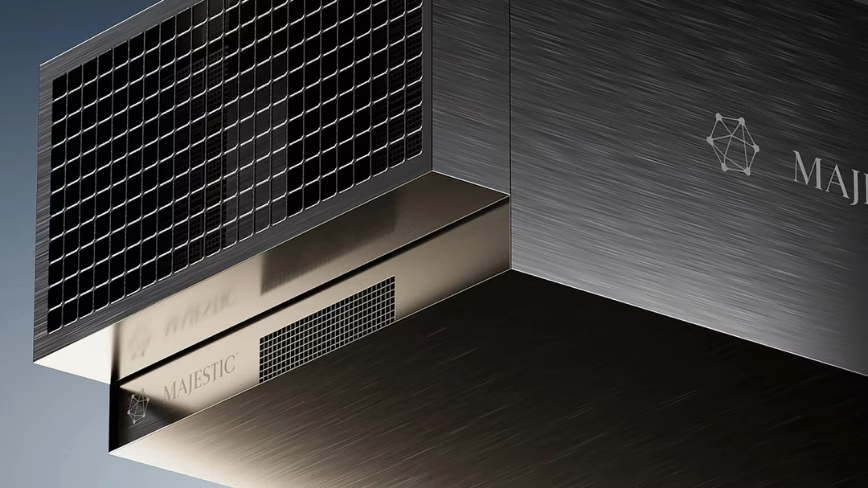
Majestic Labs, a Tel Aviv-based startup launched in 2023 by ex-Google and Meta engineers, has introduced a new kind of AI server that challenges the current focus on GPU-based compute power. Instead of relying on GPUs, their system tackles the AI bottleneck by prioritizing memory capacity and bandwidth. They claim their server can replace the compute work typically done by an entire rack of Nvidia GPUs, demonstrating that memory constraints—not raw compute—are the real limiter for scaling AI workloads.
Why builders should care
Most discussions around AI infrastructure fixate on increasing GPU compute power, but Majestic Labs shifts the conversation to memory. Larger AI models and more complex tasks often stall because existing hardware cannot feed data fast or large enough memory to GPUs. This means compute units sit idle waiting on data. By breaking free from the GPU architecture and focusing on memory, Majestic offers a solution that could reduce latency and improve throughput for large model training and inference. For AI researchers, operators, and cloud providers, this signals a potential new approach to hardware design that could cut costs and boost efficiency.
The practical takeaway
If memory bandwidth and capacity are the AI bottlenecks, investing solely in faster GPUs or more of them may hit diminishing returns. Switching to architectures like Majestic’s could lower operational costs and power usage by doing more with less compute. This matters for anyone running large AI workloads where memory limits training speed and scale. Startups, enterprises, and cloud hosts should watch this space closely, as the AI hardware stack may need rethinking beyond just compute chips. Budget and procurement decisions might soon pivot toward memory-centered designs for better performance at scale.
What to watch next
The key question is whether Majestic Labs can deliver on its promise at commercial scale and match Nvidia’s ecosystem maturity and software support. Early adoption by AI R&D teams or cloud providers will gauge viability. Also watch how Nvidia and traditional GPU players respond—whether they enhance memory systems or rearchitect their hardware. Progress on memory-driven AI servers could pressure the market to rethink hardware purchases, leading to new standards and products. Keep an eye on performance benchmarks and real-world deployments announced in the coming year.
AI Quick Briefs Editorial Desk