Booksellers fear their rarest books are being pulped to feed AI. The trail leads to a ‘recycler’.
What happened
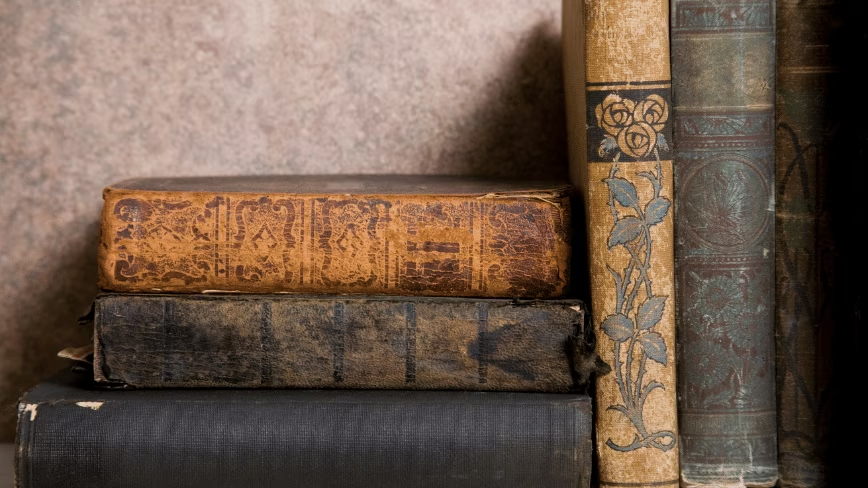
Secondhand booksellers in Australia are raising alarms over rare, vintage books being destroyed to supply AI training datasets. These books, printed before the internet era and free from AI-generated content, are highly sought after by AI companies for clean language data. The process reportedly involves a “recycler” who buys valuable books only to tear them apart and pulp them for data extraction.
Why it matters
AI models rely heavily on large volumes of text to learn language patterns. Pre-internet books are prized because they contain original human writing, untainted by AI output or internet noise. Destroying rare books to feed these models has two practical impacts. First, it accelerates the depletion of physical cultural assets with potentially unique content. Second, it signals a growing demand for niche data sources that drives unusual supply chains—raising costs and ethical questions for rare book markets. For businesses and investors, this reveals a hidden and destructive demand channel linked directly to AI training data sourcing.
What to watch next
Assess how AI training data procurement practices evolve as model developers seek pure and diverse text sources. Regulation or market backlash might follow if destructive practices like this continue. Watch for shifts toward digital or lawful licensed datasets that do not require physical destruction. Also, monitor how rare book dealers and cultural institutions respond—whether they try to block these sales or find new roles as guardians in AI’s data ecosystem. The move exposes the tension between AI training demands and preservation of irreplaceable human knowledge.
AI Quick Briefs Editorial Desk