Everyone else is shrinking satellites. K2 raised $500m to build giant ones, and put AI in orbit.
What happened
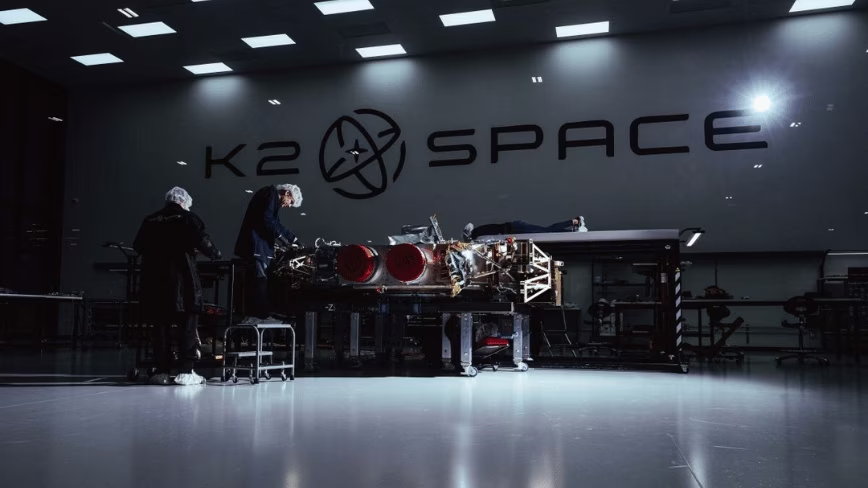
K2 Space raised $500 million in a Series D funding round, reaching a valuation of $6.8 billion. The round was led by Kleiner Perkins and ICONIQ, with additional investment from CapitalG, Alphabet’s growth fund, Lightspeed, and others. Unlike most satellite startups focusing on miniaturization, K2 is developing larger satellites equipped with AI technology in orbit.
Why it matters
The satellite market has largely been moving toward smaller, cheaper satellites that are easier to launch and replace. K2’s strategy to build bigger satellites runs counter to this trend, betting that scale combined with onboard AI will deliver stronger performance and new capabilities. Larger satellites can carry more advanced sensors and processing power, enabling faster and more complex data analysis in space rather than on Earth.
Adding AI in orbit changes the economics and timeliness of satellite data services. Instead of sending raw data back to ground stations for processing, satellites with AI can filter, interpret, and act on information immediately. This reduces latency, cuts down bandwidth costs, and opens new use cases in areas like surveillance, climate monitoring, and communications.
The hefty funding and high valuation signal investor confidence that bigger satellites plus AI will unlock higher value returns, even though they face steeper upfront costs and deployment risks. For operators and investors, this means satellite infrastructure might evolve beyond mass-produced smallsats to a more differentiated, tech-heavy model.
What to watch next
Observe how K2 deploys its AI-enabled large satellites and what results they produce compared to smaller constellations. Their success or failure will pressure other satellite companies to revisit size, capability, and onboard AI tradeoffs.
Watch if K2’s approach leads to faster or more affordable satellite data products that can threaten incumbent aerospace or earth observation players. Also track investor appetite for large satellite ventures in coming funding rounds.
Regulators and operators should monitor technical challenges around managing bigger satellites in crowded orbits and how AI autonomy affects safety and control in space.
AI Quick Briefs Editorial Desk