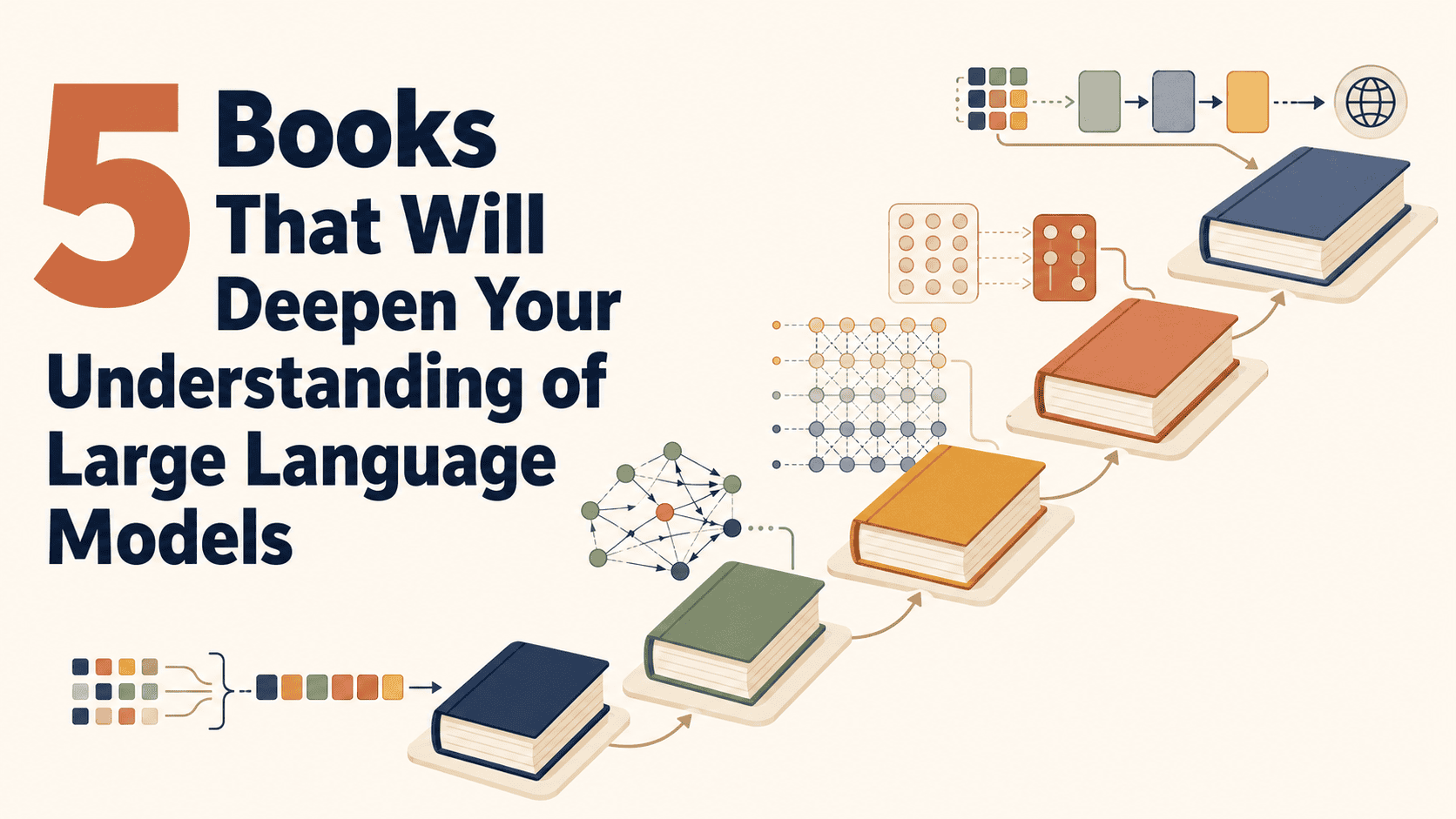
5 Books That Will Deepen Your Understanding of Large Language Models
Quick take
Five books offer concrete guidance for anyone building, fine-tuning, or deploying large language models. These titles unpack technical foundations, practical methods, and customization strategies that matter beyond theory. The focus is on what operators need to know to make LLMs work better in real applications and how to navigate the complexity of model training, scaling, and adaptation.
Why it matters
Understanding big language models is no longer optional for builders or decision makers investing in AI-driven products. These books pressure operators to move from superficial use toward more deliberate design choices around model size, tuning techniques, and deployment trade-offs. They expose how tricky it is to optimize performance without wasting resources or risking unexpected outputs. This knowledge helps bring down costs by selecting the right methods, cutting unnecessary complexity, and anticipating integration challenges.
On the builder side, these resources spotlight the shifting power dynamics in AI tooling. Organizations that grasp advanced LLM concepts and apply them strategically gain a competitive edge when scaling natural language interfaces or automations. For investors and founders, the books clarify where expertise bottlenecks remain and the skills needed to evaluate startups tackling language model innovation.
Effective adoption depends on Parseable insights into fine-tuning, prompt engineering, and operational risks. These guides grant operators the technical nuance needed to avoid overhyping LLMs while steering their teams to build robust, scalable solutions.
AI Quick Briefs Editorial Desk