OpenAI ‘open-sourced’ its AI security scanner. The scanner is still locked up.
What it does
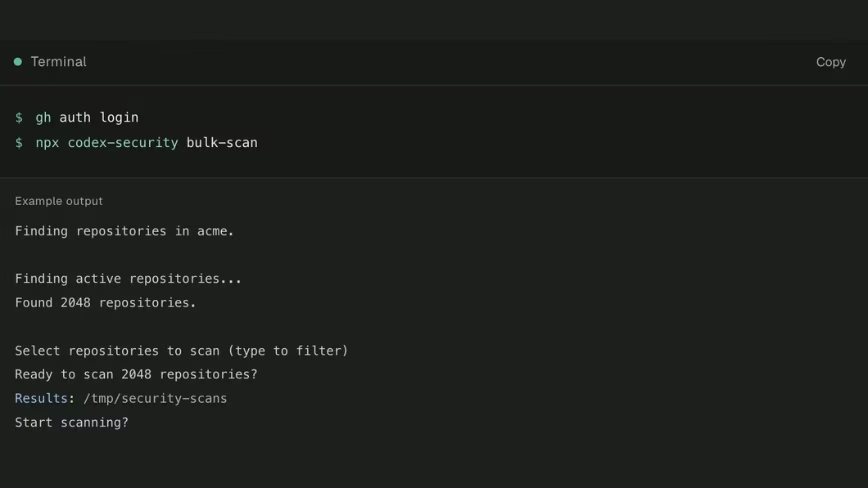
OpenAI released an AI security tool called Codex Security CLI as open source, designed to scan code for vulnerabilities. The tool’s code is publicly available under an open license, allowing developers to review, modify, and integrate it into their workflows. It promises automated detection of security flaws using AI models trained on codebases.
Why it matters
This release reveals a partial shift in how AI-driven security tools are shared. Even though the scanner’s core algorithms are locked behind OpenAI’s controlled access, the interface and supporting code are out in the wild. That mix changes the openness balance. Builders get practical access to tooling that plugs into their environments, but critical AI inference still requires cloud approval and usage controls. The move pressures competitors to be more transparent with their scanning tech or risk falling behind in developer adoption.
Who it is for
Developers and security teams hunting down code vulnerabilities stand to gain from this tool’s availability. The CLI format fits naturally into continuous integration pipelines and local developer machines. Founders and operators aiming to inject AI into security audits get a ready-made option that partially opens the AI scanning black box. Investors and ecosystem watchers gain insight into OpenAI’s hybrid model of openness combined with guarded core intelligence.
The catch
The crucial component that performs the actual vulnerability detection remains locked behind OpenAI’s API controls. This means that while the scanner’s framework is open, users still depend on OpenAI’s service for scanning. This limits offline use, control over detection logic, and possibly exposes users to operational costs or service interruptions. It also raises questions about how transparent or customizable the detection rules really are compared to fully open alternatives.
What to watch next
Watch whether OpenAI eventually opens the core scanning AI or if competitors launch fully open-source AI security scanners. Also track how adoption plays out—whether builders use this hybrid model or prefer fully open or proprietary options without API gatekeeping. The balance between openness and control here is a live glimpse of how AI tooling ecosystems might evolve, with trade-offs between scalability, trust, and user autonomy.
AI Quick Briefs Editorial Desk