Audi bet its future on EVs. Now it’s selling America a V8 with cupholders.
What happened
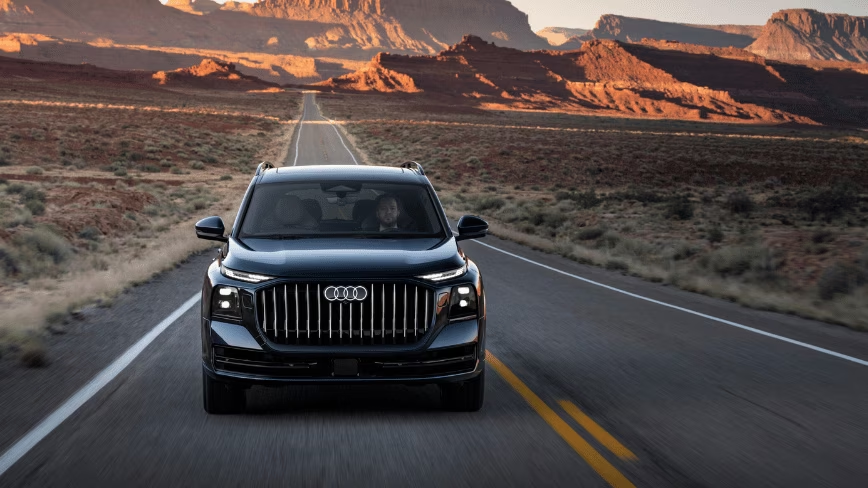
Audi unveiled its new flagship model for the US market, the Q9, a full-size three-row luxury SUV powered by a traditional V8 engine. This move comes after years of Audi pushing aggressively towards electric vehicles. The Q9 starts at about $89,000 and offers features like large cupholders and integration with an AI-powered assistant based on ChatGPT.
Why it matters
Audi’s decision to launch a V8 SUV in America contradicts its prior heavy investment in electric vehicles. This shift signals how tariff pressures, market demand, and regulatory environments can affect automakers’ strategies. The Q9 is designed explicitly for the US, where large gas-powered SUVs remain popular despite global EV trends. Introducing an AI assistant shows Audi is still pushing connected car tech, but the engine choice highlights cost and market trade-offs around EV adoption.
For buyers, this means heavy emphasis on comfort, familiar powertrains, and smart features rather than electric propulsion. For the industry, it raises questions about how quickly legacy automakers can pivot fully to EVs when regulatory and consumer dynamics vary by region. This also points to potential continued demand for high-margin gasoline vehicles that complicate the EV transition.
What to watch next
The Q9’s sales performance in the US will reveal if Audi’s bet on a luxury V8 SUV still pays off or if it delays their EV momentum. Watching how competitors respond—either doubling down on EVs or also offering larger gas SUVs—will indicate shifts in market segmentation. Tracking tariffs and policy changes in the US and China can explain if economic pressures push more brands to temporarily lean back on internal combustion engines.
On the AI side, monitoring how the ChatGPT assistant impacts user experience and dealer service models may reveal new paths for AI integration beyond vehicles’ drive trains.
AI Quick Briefs Editorial Desk