DoorDash gets FAA clearance for in-house drone programme, DoorDash Air
What happened
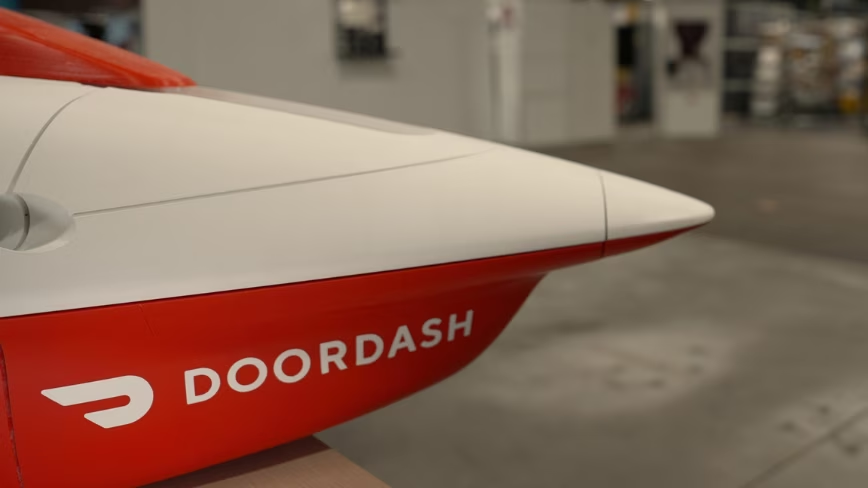
DoorDash received Federal Aviation Administration clearance to operate its own delivery drones under a new programme called DoorDash Air. The service will use a custom-built drone designed specifically for DoorDash rather than relying on external drone partners. The company announced the initiative on July 29 but emphasized that traditional human delivery remains the primary method for most orders.
Why it matters
FAA approval marks a major regulatory hurdle DoorDash cleared to bring drone deliveries in-house. This shifts some control and cost dynamics away from third-party drone operators toward DoorDash’s vertically integrated approach. Businesses relying on fast, local delivery should watch how this affects speed, reliability, and unit economics compared to human delivery or outsourced drones. DoorDash’s move pressures competitors to explore or expand drone operations and could accelerate innovation in last-mile logistics automation.
At scale, drones can reduce labor costs and bypass traffic issues, but prevailing limits on payload capacity and drone range keep widespread adoption a challenge. The FAA’s clearance indicates growing regulatory readiness for commercial drone deliveries, which may unlock faster, more flexible delivery options, especially in dense urban areas or where human delivery is inefficient.
What to watch next
Track DoorDash’s rollout milestones, including operational regions, customer adoption, and cost impact. Note any regulatory updates or expansion requests affecting drone delivery rules nationwide. Assess if this in-house model outperforms partnerships seen with other delivery firms, and how the balance between drone and human delivery evolves.
Investors and operators should also monitor the technological development of DoorDash’s custom drone platform, as it signals growing investment in proprietary automation hardware versus relying on third-party solutions. Finally, keep an eye on public reaction and safety or privacy concerns, which remain significant factors in drone delivery scaling.
AI Quick Briefs Editorial Desk