AMD calls its shot, but the real race is engineering velocity
What happened
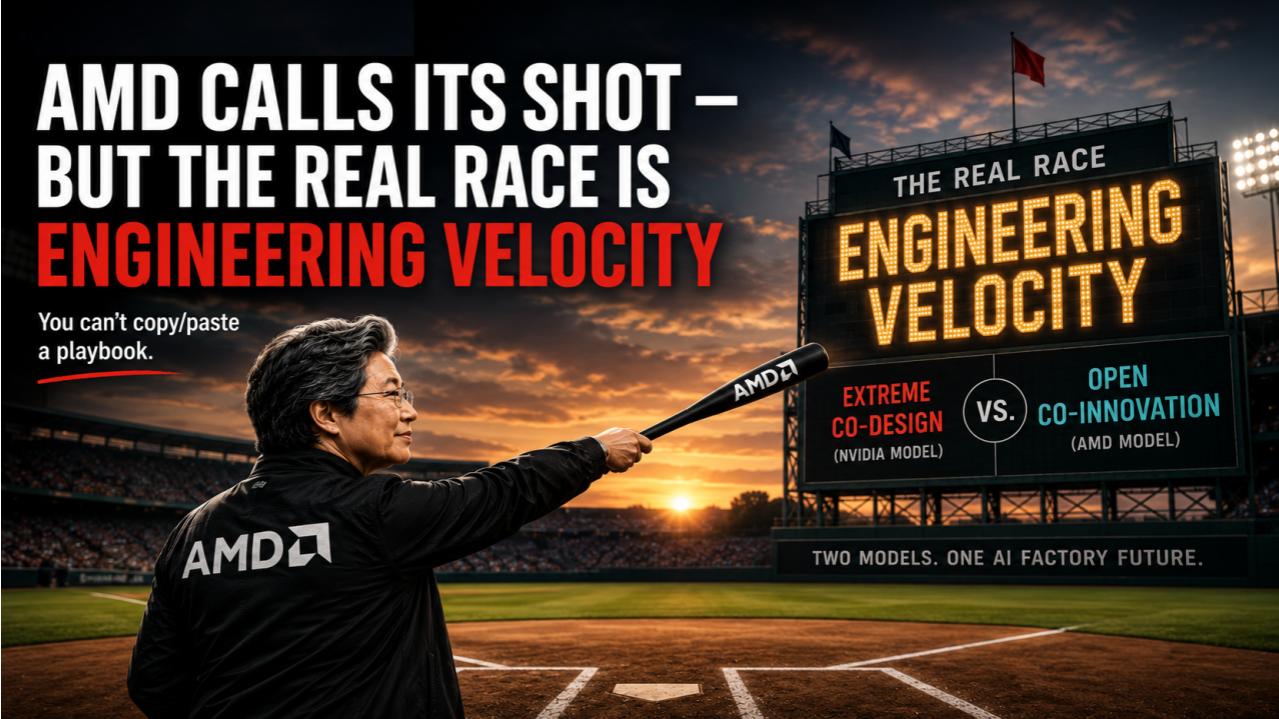
AMD publicly set a high-stakes goal for itself at its Advancing AI event when CEO Lisa Su confidently “called her shot,” signaling the company’s push to compete aggressively in AI hardware. The move channels the spirit of Babe Ruth’s famous home run call, but success depends heavily on AMD’s ability to execute engineering rapidly and at scale. The company’s latest strategy focuses less on surpassing Nvidia outright than on becoming the essential alternative AI platform for developers and enterprises.
Why it matters
The AI hardware market is not just about raw performance but also speed of innovation and delivery. AMD faces pressure to prove its design cycles and product iterations can match or outpace Nvidia’s well-established lead. The race is now centered on engineering velocity—how fast AMD can iterate on chips, software, and ecosystem partnerships to stay relevant. For builders and buyers, this means AMD could pressure Nvidia on pricing and availability if it accelerates development efficiently.
Faster innovation cycles from AMD would lower switching costs and create a more competitive AI hardware landscape. That shifts power toward buyers by forcing Nvidia to defend against a credible second platform, which has been rare. For investors and strategic buyers, AMD’s success or failure will clarify whether the AI market has room for multiple chip leaders or will consolidate around Nvidia’s dominance.
What to watch next
Look closely at AMD’s product launch cadence and ecosystem moves in the next 12 to 18 months. Engineering velocity will reveal itself in timely releases of next-gen AI chips and software tools integrated with popular AI frameworks. Watch partnerships with major cloud providers and AI startups for signs AMD is securing critical customer validation.
Also monitor how AMD handles supply chain and manufacturing scale. Promises only matter if AMD can deliver volumes of hardware at competitive costs. Industry reaction to AMD’s AI benchmarks and real-world deployments will signal whether the company is truly climbing the ranks or facing the limits of a catch-up game.
AI Quick Briefs Editorial Desk