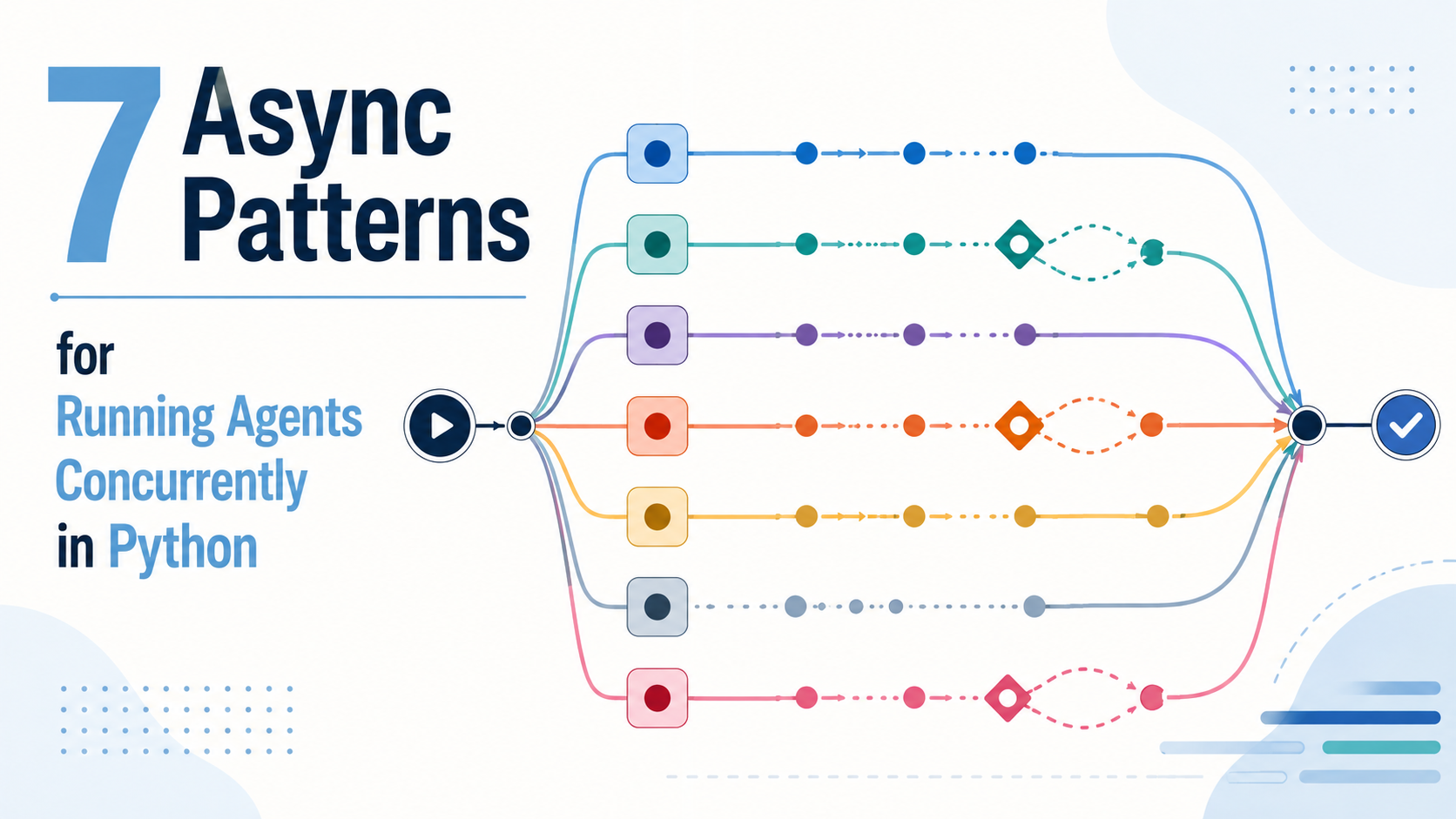
7 Async Patterns for Running Agents Concurrently in Python
What changed
Python developers now have a clear guide to seven asynchronous patterns for running AI agents concurrently. These patterns show how to organize multiple AI tasks in parallel using async programming. Each pattern suits different scenarios, from simple parallel calls to complex workflows with error handling and timeouts. The article breaks down production-ready approaches that help scale AI tasks efficiently, avoiding common pitfalls like blocking operations or excessive resource contention.
Why builders should care
Concurrency is critical for AI projects working with multiple agents or models simultaneously. Using the right async pattern speeds up processing, reduces latency, and optimizes resource use. These patterns clarify when to run agents concurrently, chain them, or coordinate their outputs without creating tangled, unmanageable code. That clarity saves developer time and lowers the risk of performance bottlenecks. For teams deploying AI in production, understanding these patterns means fewer surprises when scaling.
The practical takeaway
Picking the correct async pattern unlocks better AI throughput and reliability. For example, fire-and-forget suits non-critical background tasks, while gather lets you run several agents simultaneously and collect all results. Timeout wrappers prevent agents from hanging when external calls stall. Using async queues can smooth agent workloads adapting to fluctuating demand. Each pattern comes with a trade-off in complexity and control, so knowing which to choose based on your AI workflow prevents costly rewrites later.
What to watch next
Watch for more tooling and frameworks that embed these async patterns directly, abstracting concurrency details from operators. Also, observe if cloud AI platforms extend native support for concurrent agents, making it easier to scale AI-driven automation without needing a deep async programming background. As AI tasks grow more distributed and interactive, these concurrency strategies will become baseline skills for AI system builders.
AI Quick Briefs Editorial Desk


