5 Architectural Patterns for Persistent Memory and State in AI Agents
What changed
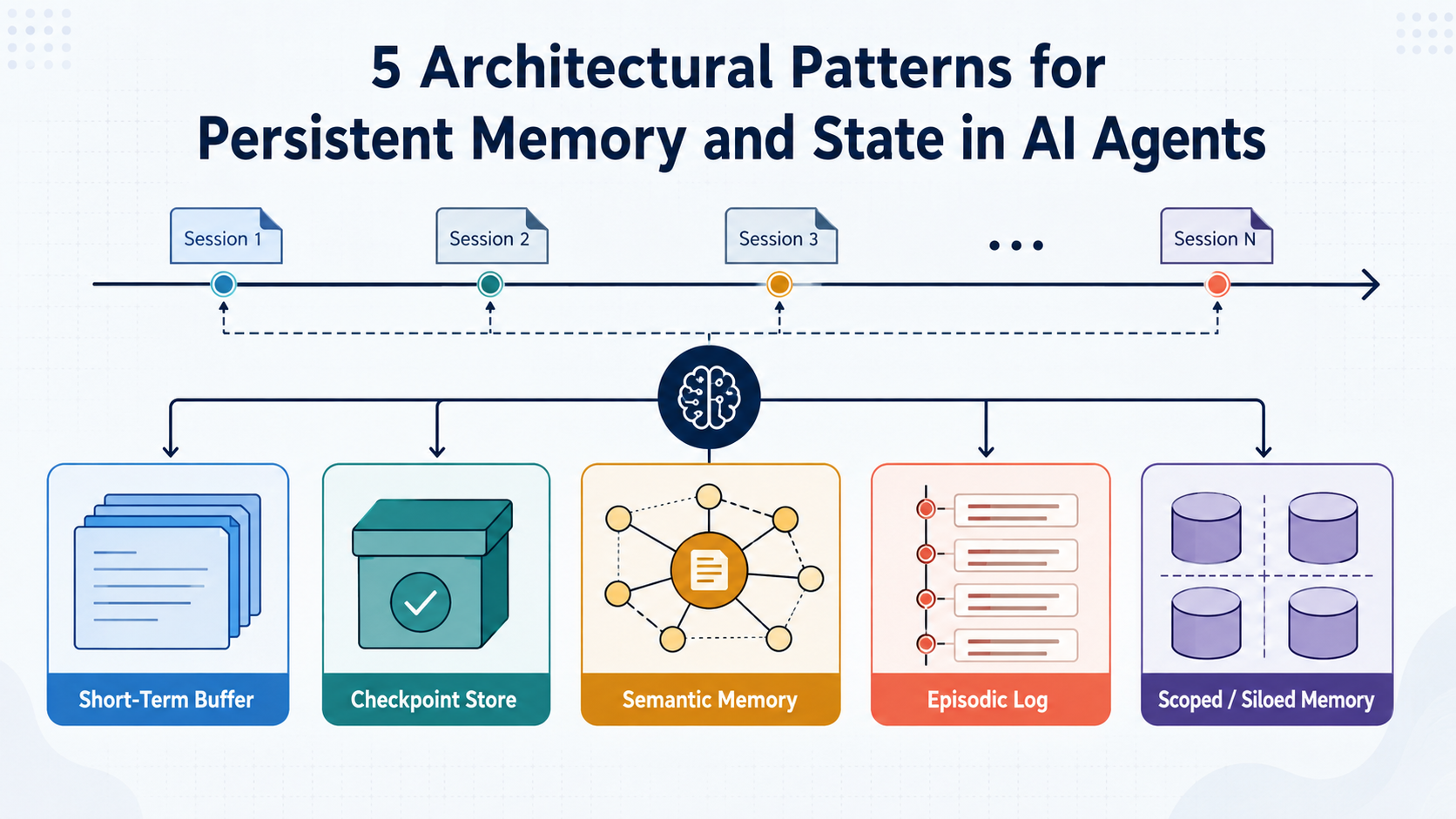
Storing persistent memory and state for AI agents remains one of the toughest challenges in building reliable, long-term AI systems. A recent overview from Machine Learning Mastery breaks down five architectural patterns developers use to tackle this problem. These patterns range from simple single-session memory to complex layered systems that combine episodic memory with long-term knowledge bases. They also highlight how agents track evolving context, user preferences, and external environment data.
Why builders should care
Without robust memory and state management, AI agents struggle to maintain coherence and relevance beyond short interactions. This gap limits use cases that require sustained reasoning and personalized experience over months, such as customer support bots, personal assistants, or autonomous business processes. Choosing the right architectural pattern shapes how expensive and complex the system becomes, how easily it scales, and how well it adapts to real-world conditions. Ignoring memory persistence forces costly workarounds or redesigns when deploying AI agents at scale and duration.
The practical takeaway
AI builders should assess the trade-offs of these patterns for their product goals. Simple content caching might suffice for quick tasks but falls short for multi-session workflows or evolving user models. Hybrid patterns that combine episodic and semantic memory help agents reconstruct context and deliver tailored responses without flooding the LLM with all previous input. Introducing external databases or vector stores for structured knowledge boosts scalability and retrieval speed but adds operational complexity. Experienced teams will bake memory persistence into design requirements early to avoid patchwork fixes that degrade user experience and increase run costs.
What to watch next
Following advances in AI agent architectures, expect new tools and frameworks focused on state persistence and memory integration. Vendors will compete by offering turnkey database connectors, vector search optimizations, and prebuilt memory modules tuned for LLM workflows. Watch for innovations that automate distillation of episodic experiences into compressed knowledge stores and fresh standards for memory interoperability. Practitioners should track which patterns gain traction as use cases grow in customer support, sales automation, and autonomous workflows, since persistent memory will separate practical from prototype agents in production.
AI Quick Briefs Editorial Desk